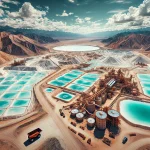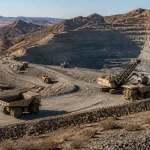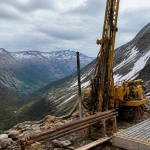
As Donald Trump prepares for a potential return to the White House, his nomination of Christopher Wright as Secretary of Energy signals a bold push to revive the U.S. uranium mining industry. This move comes at a pivotal time, following the Biden administration’s decision to ban Russian uranium imports. While intended to reduce reliance on Russian energy, the ban has exposed vulnerabilities in the U.S. uranium supply chain. Trump’s policies aim to address these issues and position the U.S. as a leader in nuclear energy.
Related News
- Antimony: Alaska’s Emerging Role in America’s Strategic Mineral Supply
- Canada’s Nuclear Future: Can the Nation Become a Uranium Superpower?
- Uganda Calls On Global Miners to Invest in Critical Minerals
A Global Supply Chain in Disarray
The global uranium market has experienced profound disruptions in recent years. Russia, which accounted for 44% of the world’s uranium conversion and enrichment capacity in 2023, has become increasingly unreliable due to geopolitical tensions. The U.S., historically reliant on imports, produced only 5% of its uranium domestically last year. The majority of its supply came from:
- Canada: 27%
- Australia and Kazakhstan: 22% each
- Uzbekistan: 10%
Further complicating the landscape, Niger, responsible for 5% of global uranium production, has limited French access to uranium crucial for its nuclear energy needs. Additionally, traditional transit routes through Russia face heightened risks, prompting Kazakhstan and Uzbekistan to seek costlier alternatives via China or the Caspian Sea.
Although the Biden administration allocated $2.7 billion to expand U.S. uranium resources and conversion capacity, it neglected domestic uranium mining—a critical oversight that Trump aims to correct.
The Untapped Potential of U.S. Uranium Resources
Under the Biden administration, the establishment of the Baaj Nwaavjo I’tah Kukveni National Monument in Arizona effectively blocked access to some of the richest uranium resources in the U.S. These Northern Arizona reserves are renowned for their high-grade ore, minimal environmental impact, and surface-level accessibility—qualities that make them among the most cost-effective and efficient sources globally.

Energy Fuel Resources, which operates Arizona’s only active uranium mine, describes these deposits as “clean energy assets.” However, their potential remains unfulfilled due to federal restrictions.
Private-sector initiatives have provided a glimmer of hope. For instance, Uranium Energy Corporation (UEC) recently acquired former Russian-owned uranium assets in Wyoming, adding 69 million pounds of uranium oxide reserves and in situ recovery facilities capable of producing 2.5 million pounds annually.
Trump’s Vision: A National Uranium Renaissance
Donald Trump has long championed the revitalization of the U.S. uranium industry. In 2020, he proposed a $1.5 billion plan to create a national stockpile of domestically mined uranium, citing national security concerns. He also issued an executive order promoting small modular reactors (SMRs), emphasizing their potential to meet energy demands from data-intensive industries like artificial intelligence and cryptocurrency.
The nomination of Christopher Wright as Secretary of Energy further underscores Trump’s commitment. A pro-nuclear advocate with ties to advanced reactor developer Oklo Inc., Wright has extensive experience in energy-intensive sectors, including leadership roles at Microsoft and Amazon. His focus on SMRs and nuclear power aligns with Trump’s vision to modernize the U.S. energy landscape.
Challenges and Opportunities
Reviving U.S. uranium mining will not be without obstacles. Key challenges include:
- Regulatory Delays: The Nuclear Regulatory Commission (NRC) has faced criticism for its lengthy approval processes, slowing the development of new projects.
- Public Opposition: Resistance to mining projects remains a significant barrier.
To address these issues, Trump plans to nominate two new NRC commissioners, whose influence could accelerate the regulatory timeline and shape the future of domestic uranium production.
Despite these hurdles, industry leaders remain optimistic. Scott Melbye, executive vice president of UEC and CEO of Uranium Royalty Corp., predicts a doubling of nuclear energy generation and uranium demand within the next two decades. “The fundamentals behind the supply and demand of uranium have never been more bullish,” Melbye said.
The U.S. uranium mining industry stands at a critical juncture. Geopolitical instability, rising energy demands, and restrictive federal policies have left the sector in limbo. Trump’s proposed initiatives could be the catalyst for a domestic uranium renaissance, reducing reliance on volatile international markets while securing the nation’s energy future.
If successful, these efforts will not only ensure energy security but also position the U.S. as a global leader in nuclear power. Leveraging technologies like SMRs and sustainable mining practices, the country can meet the energy challenges of the 21st century and drive innovation in the nuclear sector.