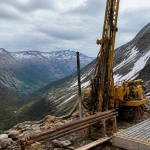
Caption: Nevada’s gold sector is entering a potentially important period of corporate restructuring and asset monetization.

By Penny Langford
Mining markets are entering the week with several competing narratives: gold producers are reshaping portfolios, copper developers are seeking strategic financing, uranium demand is being tied increasingly to nuclear power and artificial intelligence, and governments are supporting domestic critical-mineral supply chains.
This week’s power list focuses on five names with identifiable catalysts across gold, copper, uranium, rare earths and frontier exploration. The list is designed as a research framework, not a set of investment recommendations. Each company carries different levels of operating, permitting, financing and commodity-price risk.
Watchlist at a glance
| Company | Ticker | Sector | Catalyst to monitor |
|---|---|---|---|
| Barrick Mining Corporation | NYSE: B; TSX: ABX | Gold and copper | Newmont settlement clears a major obstacle to a North American gold-asset IPO |
| Copper Giant Resources | TSXV: CGNT | Copper and molybdenum | C$31 million Mocoa financing, Denarius stake and Trafigura offtake |
| Cameco | TSX: CCO; NYSE: CCJ | Uranium and nuclear fuel | Contract coverage, U.S. nuclear demand and the AI power nexus |
| MP Materials | NYSE: MP | Rare earths and magnets | U.S. policy support and execution of a mine-to-magnet supply chain |
| Amarc Resources | TSXV: AHR; OTCQB: AXREF | Copper-gold exploration | Freeport-funded drilling at the JOY district in British Columbia |
1. Barrick Mining: the North American IPO path
Barrick Mining Corporation, still widely referred to as Barrick Gold, is the week’s most important large-cap corporate-action watch.
More Read
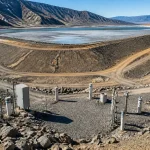
The company’s $1.95 billion settlement with Newmont resolves long-running disputes connected to Nevada Gold Mines. Under the agreement, Barrick will contribute the Fourmile project to the Nevada joint venture, while Newmont will contribute the Fiberline and Mike developments and pay Barrick $1.95 billion in cash.

Most importantly for investors and deal watchers, Newmont has consented to Barrick’s proposed initial public offering of its North American gold assets. Barrick has said the IPO remains on track for completion by the end of 2026, although the company has not yet announced the new entity’s ticker, exchange listing or pricing timetable.
The settlement gives the proposed vehicle a more coherent asset base anchored by Nevada Gold Mines, which Barrick describes as a nearly 100-million-ounce gold complex after the additions. Media reports have indicated that the assets earmarked for the new company could account for more than 60% of Barrick’s recent production, although the final perimeter remains subject to corporate and regulatory steps.

What to watch
- Further details on the IPO structure, asset perimeter and governance.
- Whether the $1.95 billion cash payment changes Barrick’s capital-allocation plans.
- The market’s valuation of a Nevada-focused gold company compared with the remaining Barrick portfolio.
- Any updates involving Fourmile development timing and Nevada Gold Mines operating performance.
The key issue is no longer whether the Newmont dispute remains an obstacle. It is how Barrick converts the settlement into a clearly valued public asset while preserving exposure to its broader gold and copper portfolio.
Read Skillings’ weekly investment and M&A outlook for additional context on consolidation across the sector.
2. Copper Giant Resources: Mocoa moves toward a funded development phase
Copper Giant Resources is attracting attention because its Mocoa copper-molybdenum project in Colombia now has both strategic capital and a proposed long-term marketing relationship.
The company announced a C$30.999 million non-brokered private placement at C$0.72 per share. Denarius Metals is subscribing for C$28.8 million of the financing, which would give it approximately 15.6% of Copper Giant after closing.
The financing is expected to close around Aug. 21, subject to regulatory approval. That timing makes the transaction a near-term event for the watchlist.
The financing is also linked to a separate agreement with Trafigura. The trading house would receive rights and obligations covering 20% of future copper concentrate and 20% of future molybdenum concentrate from Mocoa for 10 years after commercial production begins. The offtake agreement is conditional on the financing closing.
Copper Giant says the funds will support district-scale exploration and development work at Mocoa, including advancement beyond its preliminary economic assessment. The project is described as hosting an inferred resource of approximately 1.1 billion tonnes grading 0.51% copper equivalent, including copper and molybdenum mineralization.

Caption: Mocoa’s financing and offtake structure brings strategic capital closer to a large undeveloped copper system.
What to watch
- Completion of the Denarius-led financing.
- The final terms and effectiveness of the Trafigura offtake.
- Exploration results from Mocoa’s district-scale program.
- Progress toward a construction decision and future economic studies.
- Community, permitting and environmental developments in Putumayo.
The structure provides more than working capital. It links a project developer, a strategic shareholder and a global commodities trader. That alignment may reduce financing and marketing uncertainty, but it does not remove the technical, permitting or social risks associated with developing a large copper project in a sensitive jurisdiction.
3. Cameco: uranium contracts meet the AI power narrative
Cameco remains one of the clearest public-market proxies for uranium contracting and the broader revival of nuclear power.
The company reported that it has contracts in place for average annual deliveries of more than 28 million pounds of U₃O₈ between 2026 and 2030. Commitments are higher than the average in 2026 through 2028 and lower in 2029 and 2030, reflecting Cameco’s stated approach of layering in additional volumes while retaining exposure to future market conditions.
That contract book is significant because Cameco’s 2026 production guidance is 19.5 million to 21.5 million pounds, based on its share of production. The difference is expected to be managed through inventory, purchases, secondary supplies and production from its broader operating portfolio.
The next phase of the uranium story is increasingly connected to electricity demand. Utilities are still contracting below replacement requirements in many markets, while governments are supporting reactor life extensions, new-build programs and domestic fuel-cycle capacity. At the same time, the expansion of artificial-intelligence data centers is making reliable, high-volume power generation a central infrastructure issue.
Cameco’s ownership interest in Westinghouse gives it exposure beyond uranium mining. Westinghouse’s AP1000 reactor technology is being positioned for new nuclear projects, including projects expected to support expanding grid and data-center demand.

Caption: Uranium markets are being shaped by reactor demand, fuel security and rising electricity requirements.
What to watch
- New U.S. utility contracting announcements.
- Government support for domestic uranium conversion, enrichment and reactor construction.
- Cameco’s production and maintenance updates at its Canadian operations.
- Additional contracts tied to new nuclear capacity or large power users.
- The spread between spot uranium prices, contract prices and realized revenue.
The important distinction this week is between a contracting wave that is already fully visible and one that is still developing. Cameco has a substantial contract book, but the largest potential demand increase linked to new reactors and AI-related power consumption may still be ahead.
Skillings’ uranium price forecast provides further market context.
4. MP Materials: critical minerals policy becomes an execution test
MP Materials is a key name in the U.S. rare-earth supply chain because it combines upstream production at Mountain Pass, California, with a strategy to expand separation, metallization and magnet manufacturing.
The company’s agreement with the U.S. Department of Defense includes a 10-year price-floor commitment of $110 per kilogram for NdPr products, a $400 million preferred-equity investment, a planned $150 million loan for heavy rare-earth separation and a 10-year agreement covering magnets produced at its planned 10X facility.
MP Materials has said the 10X facility is expected to begin commissioning in 2028 and could lift total U.S. rare-earth magnet capacity to approximately 10,000 metric tonnes. The company is also expanding downstream magnet manufacturing in Texas.
That makes MP a useful indicator of whether the U.S. critical-minerals strategy is moving from policy announcements to operating capacity. The company must still execute construction, commissioning, qualification and customer ramp-up while managing volatile rare-earth prices and the technical complexity of an integrated supply chain.

Caption: MP Materials is building an integrated rare-earth platform around Mountain Pass and downstream magnet facilities.
What to watch
- Progress at the heavy rare-earth separation facility.
- Construction and financing milestones for the 10X magnet facility.
- Additional U.S. government or commercial offtake agreements.
- Customer qualification and magnet production volumes.
- Evidence that supply-chain diversification is translating into recurring revenue.
MP’s policy support is material, but execution remains the central variable. The company’s progress will also be relevant to ESG and supply-chain reporting because domestic production, traceability and reduced reliance on opaque overseas processing are becoming increasingly important to industrial customers.
Skillings has examined related issues in its coverage of ESG compliance and data quality in mining.
5. Amarc Resources: a funded frontier exploration program
Amarc Resources offers a higher-risk, earlier-stage counterpoint to the larger producers and developers on this list.
The company’s 2026 exploration program at the JOY copper-gold district in north-central British Columbia is being fully funded by Freeport-McMoRan through the joint venture company AuRORA Minerals. Freeport holds 60% of the joint venture and Amarc holds 40%.
The program includes step-out drilling at the AuRORA deposit, follow-up drilling at the TWINS discovery and geological, geochemical and geophysical work across the wider district. Amarc has said the 2026 JOY budget was increased to C$20 million.
The project’s exploration case rests on a pipeline rather than a single drill target. At TWINS, a 2025 hole intersected 300 metres grading 0.51 grams per tonne gold and 0.23% copper, including higher-grade intervals. At AuRORA, 2025 drilling expanded mineralization across an area measuring approximately 1.4 kilometres by 0.8 kilometres, with the system remaining open for expansion.

Caption: Amarc’s JOY program is testing multiple copper-gold porphyry targets with Freeport funding.
What to watch
- Assay results from 2026 drilling.
- Step-out results extending AuRORA’s known footprint.
- Follow-up results from TWINS and the PINE porphyry trend.
- Early metallurgical and preliminary project-development studies.
- The pace of Freeport-funded exploration and any resource-definition work.
Amarc’s appeal is tied to discovery potential, but the risks are equally clear: exploration results are uncertain, the project remains at an early stage, and future development would depend on technical studies, permitting, infrastructure and community relationships.
The framework for this week’s watchlist
Across the five names, the most useful question is not which ticker has the strongest narrative. It is which catalyst can be verified and what must happen next for that catalyst to affect operations, financing or project value.
For this week, the key checkpoints are:
- Corporate structure: Barrick’s IPO preparation and asset definition.
- Financing completion: Copper Giant’s Denarius-led placement.
- Contract visibility: Cameco’s uranium deliveries and new utility demand.
- Construction execution: MP Materials’ separation and magnet facilities.
- Technical proof: Amarc’s 2026 drilling and assay pipeline.
That combination gives the list exposure to established production, strategic financing, nuclear fuel, critical-mineral infrastructure and frontier exploration; without treating any single commodity cycle or corporate event as conclusive on its own.
Research note: This article is for information and monitoring purposes only. It does not constitute investment advice or a recommendation to buy or sell any security. Mining equities can be highly volatile and are exposed to commodity prices, financing conditions, permitting, operating performance, jurisdictional risk and dilution.
Social snippet
LinkedIn/X: Five mining tickers are entering the week with distinct catalysts: Barrick’s North American gold IPO path, Copper Giant’s Mocoa financing and Trafigura offtake, Cameco’s uranium contract book, MP Materials’ U.S. rare-earth build-out and Amarc’s Freeport-funded copper-gold drilling. A neutral watchlist for operators, investors and mining professionals.