By Charles Pitts

Critical minerals supply chains are being reorganized around security rather than cost alone. In 2026, governments are combining export controls, domestic-processing incentives, strategic stockpiles, recycling targets and allied trade agreements to reduce exposure to concentrated refining and manufacturing capacity.
The shift matters because mining is only the first stage of the value chain. A project may have a large resource, but it cannot provide supply security without chemical processing, qualified buyers, reliable transport, traceability and the technical workforce required to operate the facilities.
The International Energy Agency has identified refining as the most concentrated stage of critical-mineral supply chains. The average market share of the three largest refining countries rose from about 82% in 2020 to 86% in 2024. Under current policies, that share is projected to decline only modestly by 2035.
That leaves governments with three connected priorities: reduce trade vulnerability, build alternative corridors and increase the contribution of secondary materials through recycling.
Trade barriers are moving further downstream
Export controls are no longer limited to unprocessed ore. Governments are increasingly regulating concentrates, refined chemicals, processing technology, scrap and finished components such as permanent magnets.

The IEA reported that more than 200 export controls on minerals were introduced globally between 2018 and 2024, with roughly 40% introduced in 2023 alone. China’s restrictions on gallium, germanium, graphite, antimony, tungsten and rare earths have demonstrated how licensing requirements can affect manufacturers even when the underlying mineral remains available somewhere in the market.
The issue is not simply whether a country possesses a mineral deposit. It is whether customers can obtain the required chemical form, purity, alloy or component within a predictable timeframe.

That distinction is particularly important for rare earths and battery materials. Refining and separation capacity remains highly concentrated, while processing technology can be protected through licensing rules. For companies seeking to diversify, building a mine outside China does not automatically create a China-independent supply chain.
The United States has responded with a combination of domestic production measures and external partnerships. At its February 2026 Critical Minerals Ministerial, the State Department said representatives from 54 countries and the European Commission had joined discussions on secure transport, logistics, project finance and supply-chain diversification.
The meeting also marked the launch of the Forum on Resource Geostrategic Engagement, or FORGE, as the successor to the Minerals Security Partnership. The framework is intended to coordinate policy and projects among partner countries, while bilateral agreements are being used to address pricing, financing and priority supply-chain gaps.
The United States is also pursuing strategic stockpiling through Project Vault and has announced financing for domestic and overseas projects. These measures indicate that Washington is trying to create both supply and demand support for projects that may not be competitive against established low-cost processors.
Allied corridors must connect the whole value chain
An allied trade corridor is more than a rail line, port or diplomatic agreement. It must connect at least five functions:
- Resource access through mines, tailings recovery or recycled feedstock.
- Processing capacity capable of producing commercial-grade material.
- Transport infrastructure linking producers with refiners and manufacturers.
- Standards and traceability that verify origin and environmental performance.
- Bankable demand through offtake agreements, procurement or stockpiling.
If one link is missing, the corridor remains exposed. A new mine without a refiner can still depend on the dominant processing country. A refinery without qualified customers may not reach commercial scale. A port investment without transparent origin data may not satisfy defense, automotive or battery-sector procurement rules.
The United States’ February ministerial included new bilateral frameworks with countries including Argentina, Australia, Canada, the Democratic Republic of Congo, Japan, Mexico, the United Kingdom and Zambia. The announced objective is to develop secure flows of minerals, improve access to financing and reduce dependence on single suppliers.
The corridor approach is also visible in Africa, where copper and cobalt projects are being linked to rail and port infrastructure. For producer countries, the opportunity is to capture more value through refining and intermediate processing. For consuming countries, the objective is to secure dependable supply without relying on one dominant route or processing jurisdiction.
The European Union’s Critical Raw Materials Act uses a similar logic. Its 2030 benchmarks require at least 10% of annual strategic raw-material consumption to come from domestic extraction, 40% from processing within the bloc and 25% from recycling. It also sets a ceiling under which no more than 65% of annual consumption of a strategic raw material at a relevant processing stage should come from a single third country.
The European Commission approved 47 strategic projects inside the EU in March 2025 and 13 projects outside the EU in June 2025. The list includes projects covering extraction, processing, recycling and substitution across materials such as lithium, graphite, cobalt, copper and rare earth elements. Strategic projects also benefit from permitting timeframes of up to 27 months for extraction and 15 months for processing and recycling projects.

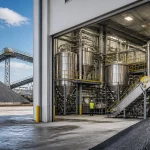
A critical-minerals processing facility showing the midstream infrastructure required for supply-chain diversification.
Recycling is becoming a security policy
Recycling is often presented as an environmental objective, but in 2026 it is increasingly being treated as a strategic supply measure.
The IEA estimates that accelerated recycling could reduce the need for new mining supply by 25% to 40% by mid-century, depending on policy and technology adoption. In an ambitious scenario, recycling could reduce new mine-development requirements by about 40% for copper and cobalt and by approximately 25% for lithium and nickel by 2050.
The immediate limitation is feedstock. Batteries, electric vehicles, wind turbines and permanent magnets have long operating lives, so the volume of end-of-life material will build gradually. In the meantime, recycling capacity is competing for manufacturing scrap, mine waste, tailings and used industrial equipment.
The G7’s 2026 declaration places recycling directly inside its supply-security framework. Leaders committed to supporting the supply and demand for recycled critical minerals, developing secondary raw-material markets and considering tools such as recycled-content requirements. They also highlighted digital traceability, extended producer responsibility and the recovery of minerals from mine waste and tailings.
For operators, this creates several commercial opportunities:
- Recovering by-product minerals from existing mine waste.
- Building domestic treatment capacity for battery black mass.
- Reprocessing tailings where historical recovery rates were low.
- Designing products and components for easier disassembly.
- Establishing long-term collection agreements with manufacturers.
- Using traceability systems to verify recycled content and origin.

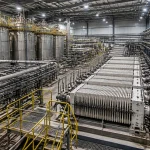
Battery recycling facilities are being developed as strategic sources of secondary lithium, nickel, cobalt and manganese.
However, recycling does not eliminate the need for mining. It reduces the volume of new material required over time and can provide a more geographically distributed source of supply. Primary production remains necessary to meet demand growth, replenish material lost during manufacturing and supply markets before large-scale end-of-life volumes become available.
The corridor test for mining companies
For operators and investors, the most useful question is whether a project can pass a practical corridor-readiness test.
| Test | Key question | Why it matters |
|---|---|---|
| Material | Can the project produce the required mineral form and purity? | Resource size alone does not guarantee usable supply |
| Midstream | Is there a qualified refiner or conversion facility? | Processing remains the principal concentration risk |
| Movement | Can material move through reliable rail, road, port and customs routes? | Disruptions can undermine otherwise competitive projects |
| Market | Is there an offtake, procurement or stockpile mechanism? | Bankable demand supports project finance |
| Verification | Can origin, emissions, labor and recycled content be demonstrated? | Standards and traceability are becoming market-access conditions |
This framework helps explain why policy support is increasingly directed toward integrated projects rather than isolated mines. A project with moderate resources but strong access to processing, infrastructure and customers may be more strategically valuable than a larger deposit with no route to market.
It also explains the growing importance of midstream assets. Separation plants, precursor facilities, metal-making capacity, magnet plants and recycling operations can determine whether a mineral is commercially useful to an allied manufacturer.
Skillings’ coverage of the US critical minerals strategy examines how Defense Production Act authorities, stockpiling and workforce programs are being combined with project finance. The publication has also tracked the implications of China-linked supply-chain restrictions for defense contractors and downstream manufacturers.
What changes for 2026 decision-making
The critical-minerals market is unlikely to become fully independent of China or any other dominant processor in the near term. New mines, refineries and recycling plants require years of permitting, construction, qualification and ramp-up.
The more realistic outcome is a layered system:
- Domestic capacity for the most sensitive materials.
- Allied corridors for minerals that cannot be produced locally.
- Strategic stockpiles for short-term disruptions.
- Recycling and tailings recovery to reduce future primary supply pressure.
- Common standards to improve traceability and market access.
This system will cost more than the lowest-cost global supply model. It may also create duplication, particularly where several jurisdictions subsidize similar processing capacity. Trade barriers can support new investment, but they can also raise input costs for manufacturers before alternatives are ready.
The key test will be execution. Governments must convert announcements into operating plants, reliable transport routes, qualified materials, skilled workers and transparent commercial arrangements.
For mining companies, the strategic question is no longer only whether a deposit contains lithium, copper, cobalt, graphite or rare earths. It is whether the project can sit inside a complete and verifiable corridor from feedstock to final customer.
In the critical minerals supply chain of 2026, security is being measured across the entire chain( not at the mine gate alone.)