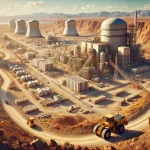
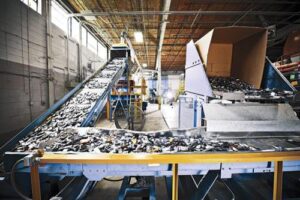
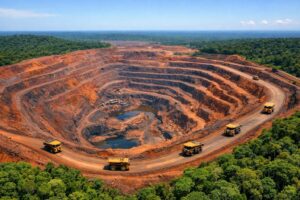
Rio Tinto has announced a $2.5 billion lithium investment to expand operations in Argentina, reinforcing its position as a major player in the global battery materials market. The Rincon project, located in Salta Province, will see a dramatic increase in production capacity. This addresses the growing demand for lithium, a vital component in electric vehicle (EV) batteries and renewable energy storage systems.

Scaling Production: Rio Tinto Lithium Investment in the Lithium Triangle
The Rincon project marks Rio Tinto’s first large-scale lithium investment. It sits in the heart of the Lithium Triangle, a region spanning Argentina, Bolivia, and Chile that collectively holds nearly 60% of the world’s lithium reserves. This investment forms a cornerstone of the company’s diversification strategy. According to the U.S. Geological Survey (USGS), the region boasts the largest concentration of economically viable lithium globally.
Output at Rincon will rise from 3,000 metric tons to 60,000 metric tons of battery-grade lithium carbonate annually by 2028. The expansion aligns with surging global demand for EVs and renewable energy solutions.
Related news
- Hexagon Bolsters Mining Portfolio with Indurad and xtonomy Acquisitions
- Dryden Gold Stock Surges as Centerra Gold Investment Boosts Ontario Gold Exploration
- Caterpillar Global Operator Challenge Showcases Construction Excellence
- Saudi Arabia Mineral Strategy Expands Its Energy Playbook to Minerals Amid Transition Challenges
Global Competition Intensifies with Rio Tinto’s Lithium Investment
Argentina’s growing role in the global lithium supply chain is underscored by this investment. The country ranked as the fourth-largest lithium producer in 2023, placing it alongside Australia, Chile, and China. Developments in Salta Province further highlight the region’s strategic importance.
Other major players are ramping up investments in the Lithium Triangle too. French mining firm Eramet, partnered with China’s Tsingshan, recently inaugurated a lithium plant in Salta Province to supply 15% of Europe’s lithium needs. Meanwhile, Bolivia has signed agreements with Russia’s Uranium One and China’s CATL, aiming for a combined capacity of 35,000 tons annually.
More Read

A Strategic Gamble: Rio Tinto Lithium Investment and Market Volatility
Lithium prices have seen recent volatility due to oversupply and slower-than-anticipated EV demand. Even so, Rio Tinto remains confident in Rincon’s long-term profitability. The company is leveraging direct lithium extraction (DLE) technology, which improves recovery rates while minimizing environmental impact compared to traditional methods.

CEO Jakob Stausholm emphasized the project’s importance, stating that the company is “well-positioned to support the growing global demand for battery materials” while maintaining resilience against market fluctuations.
Argentina’s Pro-Investment Climate Fuels Rio Tinto Lithium Investment
Argentina’s investment-friendly policies have played a key role in attracting foreign capital to its lithium sector. Programs like the Incentive Regime for Large Investments (RIGI) offer tax benefits and regulatory support, making large-scale mining projects such as the Rincon expansion more feasible.
More Read

This investment is part of a larger wave of foreign capital aiming to make Argentina a cornerstone of the global lithium supply chain and a key enabler in the transition to renewable energy.