By Charles Pitts

As the mining industry enters the second half of 2026, the divergence between project-level Net Asset Value (NAV) and public market valuations has reached a critical inflection point. While the “electrification of everything” remains the dominant long-term thesis, the capital markets are demanding more than just mineral reserves; they are rewarding fiscal stability, technological de-risking, and integrated energy strategies.
Today’s intelligence brief explores the significant P/NAV (Price to Net Asset Value) gap in tier-1 copper developments, the structural shift in Zambian resource governance, and the emerging “Copper-Nuclear Nexus” that is redefining the term “critical minerals.”
The 0.34x Reality: Rio Tinto’s Los Azules Strategy
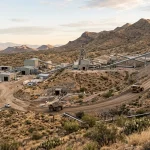
One of the most telling data points in the current market is the valuation of Rio Tinto’s entry into the Los Azules copper project in San Juan, Argentina. Despite a 2025 feasibility study estimating a post-tax NPV of US$2.9 billion, the implied market valuation of the project remains stuck at a deep discount.
Recent financing rounds through McEwen Copper, where Rio Tinto (via its Nuton LLC subsidiary) holds a 17.2% stake, valued the equity at roughly US$984 million. This represents a P/NAV of approximately 0.34x. For institutional investors, this gap signifies two things: a persistent “Argentina risk” premium and a massive opportunity for majors to capture value before construction ramps up later this year.

Rio Tinto’s interest in Los Azules isn’t just about the 180–205 ktpa of copper production targeted for 2029. It is a testing ground for their Nuton leaching technology, which aims to recover copper from primary sulfides with a significantly lower carbon and water footprint. As the industry faces the “consolidate or die” reality: analyzed in-depth in our report on the strategic rationale behind the 2026 M&A frenzy: Rio Tinto’s incremental stake-building is a blueprint for low-risk, high-reward entry into tier-1 jurisdictions.


The ZCCM-IH Royalty Pivot: A New Model for State Participation
In Zambia, the structural transformation of ZCCM Investments Holdings (ZCCM-IH) has reached a milestone. Moving away from the legacy model of holding minority equity stakes: which often carried heavy capital expenditure obligations and operational risks: ZCCM-IH has pivoted toward a royalty-centric portfolio.
By swapping equity for production-linked royalties at key assets like Kansanshi and Mopani, the Zambian state has secured a more predictable revenue stream while reducing its exposure to the volatility of mining operations. For operators, this “Royalty Pivot” removes a passive state partner from the governance equation and replaces them with a fiscal stakeholder whose interests are aligned with production volume. This shift has already begun to improve the financeability of Zambian assets in the eyes of Western capital, marking a significant departure from the resource nationalism of the previous decade.
The Copper-Nuclear Nexus: Powering the AI Age
Perhaps the most significant thematic shift in 2026 is the convergence of the copper and nuclear industries. We call this the Copper-Nuclear Nexus. The massive expansion of AI-driven data centers globally has created a demand for baseload power that intermittent renewables cannot meet alone. This has brought nuclear energy, and by extension uranium, back to the center of the energy transition.
The nexus is two-fold:
- Infrastructure Demand: Nuclear expansion, particularly with Small Modular Reactors (SMRs), is incredibly copper-intensive. From grid connections to the complex wiring of the balance-of-plant systems, a nuclear-heavy decarbonization path is structurally bullish for copper.
- Operational Stability: Miners are increasingly looking at SMRs to provide stable, low-carbon baseload power for remote sites. This reduces Scope 1 and 2 emissions and de-risks the energy supply for power-hungry processing plants.
This synergy is driving a new class of investors who are overweighting jurisdictions like Canada and Australia, where both copper and uranium are abundant and nuclear policy is supportive.

2026 Commodity Price Forecasts: Silver and Uranium
As we look toward the remainder of the year, two commodities stand out for their divergent but equally compelling drivers: silver and uranium.
Uranium: The Multi-Year Bull Run Continues
The structural deficit in the uranium market has not abated. With utility contracting resetting at higher levels and financial vehicles continuing to mop up spot supply, our Uranium Price Forecast for 2026 remains robust.
- Base Case: US$75–$85/lb U₃O₈.
- Bull Case: US$110+/lb, triggered by any further delays in the Kazakh supply ramp-up or faster-than-expected SMR deployments.
Silver: The Industrial-Precious Hybrid
Silver is currently navigating the tension between its role as a monetary hedge and its massive industrial utility in the solar PV sector. As explored in our 2026 Silver Price Prediction, the “50-dollar case” is no longer a fringe theory.
- Base Case: US$28–$34/oz.
- Bull Case: US$45+/oz, driven by a “perfect storm” of gold reaching new highs and a supply crunch in silver-paste for next-gen solar cells.
Market Snapshot: 2026 Mining Indicators
| Commodity / Metric | 2026 Base Case Price | Implied P/NAV (Dev. Projects) | Strategic Outlook |
|---|---|---|---|
| Copper | US$4.85/lb | 0.35x – 0.55x | Accumulate on dips; M&A target zone |
| Uranium | US$82.00/lb | 0.70x – 0.90x | Supply-side tightness; structural bull |
| Silver | US$31.50/oz | 0.40x – 0.60x | High volatility; industrial demand hedge |
| Gold | US$2,850/oz | 0.65x – 0.85x | Monetary safety; stable dividend focus |
M&A Outlook: Consolidate or Die
The current valuation gap between the “Haves” (majors with cash flow) and the “Have-Nots” (single-asset developers) is the primary engine of the 2026 M&A frenzy. For juniors, the path to production has never been more expensive or technically demanding. Those who fail to find a partner or a buyer risk becoming stranded assets in a market that increasingly favors scale and integrated energy solutions.
We expect to see more “staged entries” like Rio Tinto’s Los Azules investment, where majors use technology and minority stakes to de-risk projects before committing to full control. This trend will likely extend into the uranium space as diversified miners look to capitalize on the nuclear resurgence.
Conclusion: The Intelligence Edge
In a market defined by the P/NAV gap and the Copper-Nuclear Nexus, the winners will be those who recognize that the energy transition is not just about mining more metal: it is about the intelligent integration of technology, capital, and energy.
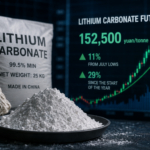
Don’t get left behind. Pre-order the 2026 Skillings Lithium Power Map now for exclusive access to the projects defining the next supply cycle.