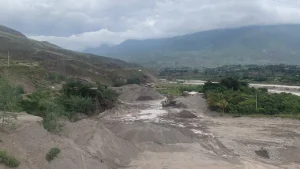
Mined grassland restoration is emerging as a national imperative in China following revelations that over 187,000 tons of carbon have been lost from semi-arid grassland ecosystems due to surface coal mining. This stark figure, from a new peer-reviewed study in Scientific Reports, underscores the critical role these landscapes play in climate regulation—and how quickly they’re being compromised.

The study highlights the direct consequences of mining-induced land degradation on China grassland carbon loss, revealing a pattern of ecological disruption that threatens national carbon neutrality goals. As the world’s second-largest economy doubles down on its “double carbon” targets, restoring mined landscapes could prove central to reversing the carbon deficit and stabilizing fragile steppe environments.
Related News
- Europe’s Critical Minerals Push Stalls Amid Poor Public Perception
- Stardust Power’s Oklahoma Lithium Facility Avoids Wastewater Permit with Closed-Loop System
- Carney Assembles Economic Team with Ex-Goldman Banker and Quebec Power Broker
- Sanatana Resources Secures Gold Strike Two in Yukon Mining Project Expansion
Surface Coal Mining Drives China Grassland Carbon Loss
The study spans 21 years (2002–2023), employing remote sensing, land classification, and the InVEST carbon model to assess land use impacts across 16 categories, including forests, grasslands, and mining sites. Results confirm that surface coal mining is the single most significant driver of carbon loss in the study area, converting high-carbon-density grasslands into barren land with minimal sequestration value.
Quantitatively, the region’s total carbon storage dropped by 187.15 kilotons, with an average annual loss of 8.91 kilotons. While 73% of land remained stable, 23.63% experienced significant carbon loss, with mining expansion as the dominant cause. Only 3.37% of the area saw carbon gains—mainly in zones undergoing mined grassland restoration or pilot reclamation programs.
Grasslands, which occupy 41.7% of China’s territory and store about 10% of global terrestrial carbon, are disproportionately affected. Mining disrupts both aboveground biomass and soil organic carbon, triggering rapid declines in ecological function and resilience.
Policy Measures Have Slowed, But Not Reversed the Trend
Since 2011, Chinese policymakers have introduced a raft of ecological restoration mandates, mining limits, and land reclamation incentives aimed at curbing further degradation. However, the report argues these efforts—while directionally sound—lack enforcement and scale, particularly in the country’s vast, under-monitored interior.

The study warns that China grassland carbon loss will persist unless restoration is integrated more tightly into land-use planning, energy policy, and carbon accounting frameworks. The gap between policy ambition and field-level impact remains substantial, according to correlation analysis between policy implementation years and actual restoration outcomes.
Seven Strategies for Scalable Mined Grassland Restoration
To combat both localized degradation and climate-level carbon loss, researchers propose seven scalable restoration strategies:
- Revegetate Degraded Areas
Reintroduce native grass and shrub species adapted to arid environments to jumpstart biomass recovery. - Adopt AI-Powered Remote Sensing
Leverage satellite and drone imaging to monitor restoration progress and identify priority zones. - Convert Exhausted Mines into Storage Assets
Develop pumped hydro and other clean energy storage systems within mined land to create new climate-positive uses. - Enforce Reclamation Laws More Rigorously
Require carbon accounting as part of mining permits and measure reclamation success by carbon stock recovery. - Suspend Mining in High-Density Carbon Zones
Institute conservation zones in grasslands with dense underground carbon pools to prevent irreversible losses. - Launch Carbon Credit Markets for Grassland Restoration
Enable verified sequestration projects to trade in carbon markets, creating financial incentives for ecological recovery. - Engage Local Communities as Restoration Stewards
Equip residents with training and resources to manage lands, offering long-term employment and ecological guardianship.
These strategies not only target mined grassland restoration, but also help China meet its broader environmental and climate commitments.
Conclusion: A Tipping Point for China’s Grasslands
The study delivers a clear signal: without immediate, scaled-up restoration of mined ecosystems, China grassland carbon loss will continue undermining national and global climate objectives. While mining has fueled decades of economic growth, the associated environmental costs are reaching critical levels.
Transforming degraded lands into carbon sequestration assets through targeted restoration, technology, and governance could offer China a path forward. Failure to act decisively risks leaving behind not only scarred landscapes but also a critical opportunity to lead on ecological recovery in the post-carbon era.