By Charles Pitts
JOHANNESBURG : Gold Fields Ltd. (JSE, NYSE: GFI) has issued a stark warning to the global mining community, detailing a significant “oil shock” that is poised to inflate production costs across its multi-continental portfolio. In an operational update released Saturday, the bullion producer revealed that surging fuel and energy prices: driven largely by geopolitical volatility in the Middle East: could add between $40 and $50 per ounce to its All-In Sustaining Costs (AISC) through the remainder of 2026.
The warning comes as diesel prices at major mining hubs in Ghana, Australia, and South Africa have spiked by 30% to 70% since February. Despite this inflationary pressure, the company has reaffirmed its full-year 2026 production guidance of 2.4 million to 2.6 million ounces, bolstered by a record-breaking performance at its high-altitude Salares Norte project in Chile.
The Energy Squeeze: Diesel and LNG Volatility
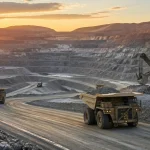
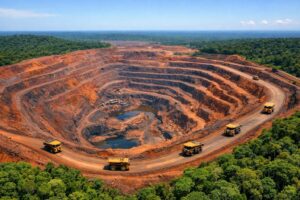
The primary driver of the cost revision is the deepening energy crisis stemming from the ongoing Iran conflict, which has disrupted global supply chains for refined petroleum products. For an industry that relies heavily on massive haulage fleets and remote power generation, the impact of diesel inflation is immediate and severe.
More Read
According to the Gold Fields report, liquefied natural gas (LNG) prices have also climbed by approximately 30%, further straining margins at sites that have transitioned away from coal-based power. The $40-$50 per ounce AISC impact represents a significant headwind, even as gold prices test new historical highs.

“We are essentially facing a dual-track reality,” said an internal analyst source familiar with the company’s strategy. “On one hand, the top line is protected by record gold prices. On the other, the ‘oil shock’ is eating into the margin expansion we expected from our newer, low-cost mines.”

More Read

Salares Norte: The Growth Engine
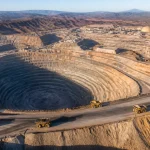
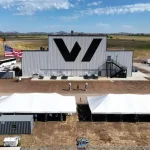
While energy costs present a challenge, the operational success of Salares Norte has provided a necessary buffer. Located at 4,500 meters in the Atacama region of Chile, the mine delivered 173,000 gold-equivalent ounces in the first quarter of 2026: a staggering 245% increase compared to the same period last year.
The mine’s ability to operate uninterrupted through the harsh Andean winter months has been a critical milestone for Gold Fields. Following capital overruns and technical delays in 2024 and 2025, the project has finally reached steady-state commercial production. Modifications to the plant, including enhanced heat tracing and structural encapsulation, have allowed the facility to withstand sub-zero temperatures that previously crippled throughput.
| Metric | Q1 2026 Performance | YoY Change |
|---|---|---|
| Group Gold Production | 615,000 oz | +12% |
| Salares Norte Production | 173,000 oz | +245% |
| Diesel Price Inflation | 30% – 70% | High Volatility |
| Estimated AISC Impact | +$40 – $50/oz | New Headwind |
| 2026 Guidance Range | 2.4M – 2.6M oz | Reaffirmed |
Market Snapshot: Precious Metals and Energy Drivers
The broader mining sector is watching Gold Fields closely as a bellwether for how large-cap miners handle the decoupling of commodity prices from operating costs. While gold price crash drivers remain a topic of debate among macro-analysts, the current floor for the yellow metal remains robust, providing a “safety net” for high-cost producers.

Investors are particularly focused on whether this “oil shock” will trigger a new 2026 buyout wave as companies seek to acquire low-cost, Tier-1 assets to blend down their average AISC. Gold Fields’ current AISC guidance remains between $1,800 and $2,000 per ounce, which still leaves significant room for profitability given current market spot prices.
Strategic Mitigation: The Shift to Renewables
To combat long-term energy inflation, Gold Fields is accelerating its transition to renewable power. At Salares Norte, a feasibility study for a 2MW solar farm is scheduled to commence later this year. The company is also reviewing waste heat recovery systems for its diesel power plants to maximize thermal efficiency.
These initiatives are part of a broader five-year capital allocation strategy aimed at decarbonizing its global footprint and reducing reliance on volatile fossil fuel markets. In Australia, the company’s Granny Smith and Agnew mines already serve as industry benchmarks for renewable integration, featuring massive solar and wind arrays coupled with battery storage.
“The current energy crisis validates our strategy to move toward self-generation,” the report noted. “Renewables are no longer just an ESG metric; they are a fundamental tool for cost control in an increasingly unstable geopolitical environment.”

Operational Control and Efficiency
The company is also leaning on digital transformation to squeeze efficiency from every liter of fuel consumed. From its centralized control rooms, Gold Fields engineers are using real-time telemetry to optimize haulage routes and reduce idle time for its ultra-class truck fleets.
“Efficiency is the only hedge against inflation when you can’t control the price of the input,” said an operations manager. By integrating data across its global portfolio, Gold Fields aims to offset at least 15% of the projected energy cost increases through operational refinements alone.

Outlook and Risks
Looking ahead to the second half of 2026, the primary risk remains a further escalation of regional conflict in the Middle East, which could push diesel prices beyond the 70% inflation mark already observed. Additionally, while Salares Norte has performed admirably, any unforeseen technical issues at its high-altitude processing plant could jeopardize the company’s ability to meet its 2.6 million ounce target.
However, with the gold market entering what some call the “100 Silver Era,” the premium on secure, reliable gold production has never been higher. For Gold Fields, the challenge is now one of precision: navigating an “oil shock” without losing the momentum generated by its Chilean growth engine.
As the industry moves deeper into 2026, the focus remains on resilience over geology. Gold Fields’ ability to maintain guidance in the face of a $50/oz cost spike will be a defining test of its modern operational playbook.