Western mining companies are making a case for increased metal prices in order to stay competitive against producers with Chinese connections, as the global competition for critical minerals heats up. Amid mounting worries about China’s control over the manufacturing and refining of crucial metals needed for clean energy technologies and electric vehicles, there is a renewed effort to address this issue.

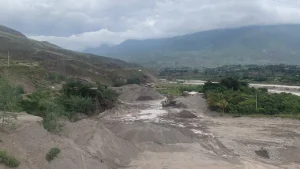
It is quite remarkable that despite substantial investments, the sole cobalt mine in the United States, situated in northern Idaho, continues to remain inactive. The reopening of the mine is dependent on the increase in cobalt prices to a point where operations become financially feasible, according to Jervois Global, the mine’s owner.
Related News
- Top 20 Movies About Mining You Must Watch
- Cleveland Port’s Iron Ore Conveyor System to Undergo $5M Modernization
- Global Collaboration Drives Advances in Sustainable Mining Practices
- Bear Creek Mining’s New VP Enhances Strategic Partnership with Sandstorm Gold
The situation underscores the difficulties Western miners encounter when trying to compete with Chinese-backed operations. These operations frequently enjoy lower production costs and less strict environmental regulations, posing a challenge for their Western counterparts. With the increasing demand for critical minerals, Western countries are now recognizing the strategic importance of securing stable supplies of these resources. This is driven by the global transition to renewable energy and electric transportation, which continues to grow.
This development takes place in the context of recent initiatives by Western governments to decrease reliance on supply chains controlled by China. The United States, specifically, has been enacting measures to enhance domestic production of vital minerals and forge stronger alliances with friendly countries to ensure resource security.
The emphasis on increasing metal prices by Western miners highlights a larger geopolitical competition for dominance over resources that are vital for upcoming technologies. As this situation continues to develop, its impact on global trade relations, supply chain resilience, and the progress of the clean energy transition cannot be underestimated.