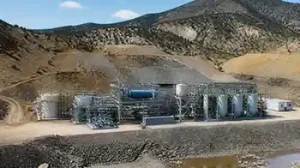
President Donald Trump has ordered the United States to withdraw from UNESCO for the third time, with the decision set to take effect on December 31, 2026. The move reverses the Biden administration’s 2023 re-entry, which restored U.S. participation after a five-year hiatus. For the mining sector, the announcement reopens a familiar question: how does the absence of global cultural oversight affect high-stakes projects like uranium mining near the Grand Canyon?

The Grand Canyon, inscribed as a UNESCO World Heritage Site in 1979, has long sat at the intersection of resource ambition and ecological preservation. Uranium reserves north of the park remain attractive to U.S. miners seeking domestic supply security as spot uranium prices climb above $90 per pound (Cameco, 2024 filings). Yet conservation groups and Indigenous communities have fought to maintain the 2012 federal moratorium on new uranium claims in the region.
UNESCO involvement has historically provided international leverage against mining expansion. Trump’s renewed withdrawal decision means that after 2026, that external layer of pressure will once again vanish.
UNESCO’s Influence – and the Gap That Follows
UNESCO’s World Heritage designation carries no binding legal force in U.S. courts. But politically, the organization has mattered. When UNESCO threatened to place the Grand Canyon on its “in danger” list in 2010 due to uranium exploration, the U.S. Interior Department extended its temporary ban into a 20-year moratorium.
Without U.S. participation, future UNESCO warnings will carry less weight in Washington. That dynamic has already played out at other resource-rich sites, such as Yellowstone National Park, where UNESCO opposition helped stall gold exploration in the 1990s.
More Read
The Trump administration frames its decision as resistance to “politicized, anti-Israel bias and globalist agendas” within UNESCO (Reuters). For mining companies, the practical outcome is simpler: a diminished risk of international condemnation tied to high-profile U.S. sites.

Industry Sees a Strategic Window
With uranium now classified as a critical mineral by the U.S. Department of Energy, companies argue that domestic production near the Canyon strengthens supply chains otherwise reliant on Kazakhstan and Uzbekistan. Energy Fuels Resources, operator of the Canyon Mine near Tusayan, has positioned itself to benefit if restrictions ease.
“UNESCO’s involvement was once a significant hurdle,” said a senior executive at a U.S.-based uranium company, speaking on background. “That hurdle is now diminished, at least for the foreseeable future.”
More Read
But reputational risk remains. Global investors increasingly weigh ESG exposure, particularly when mining projects encroach on Indigenous territories or cultural landscapes. Several European funds already exclude uranium entirely from their portfolios, citing both environmental and social concerns. Analysts warn that Rio Tinto’s 2020 Juukan Gorge disaster remains a blueprint for reputational damage.
“Leaving UNESCO doesn’t eliminate accountability—it just shifts the battleground,” said Dr. Anya Taylor, policy analyst with Earthworks.
Federal Land Policy and Political Volatility
Domestically, the fight is far from settled. Arizona lawmakers have pushed to lift the 2012 moratorium, citing uranium’s role in national security and nuclear power. At the same time, litigation around the Endangered Species Act and reforms to the National Environmental Policy Act (NEPA) signal that U.S. environmental guardrails are politically unstable.
“What was once an international standoff is now a domestic policy fight,” said environmental researcher Marybeth Holleman. “And that’s a fight industry believes it can eventually win.”
For miners, the risk calculation is twofold: near-term opportunity as global scrutiny weakens, versus long-term exposure if political winds shift or if the U.S. re-engages internationally under a future administration.
Broader Implications Beyond the Canyon
The Grand Canyon is not alone. UNESCO sites in Yellowstone, the Everglades, and Mesa Verde all overlay areas of mining interest. Without U.S. participation, UNESCO lacks a key member to push back on extractive projects in globally sensitive landscapes.
That absence also sidelines Washington’s ability to shape how new World Heritage Sites are designated. For mining companies, this could mean fewer protective designations at home—but more unpredictability abroad, where U.S. influence is now diminished.
Skillings Analysis
- Short-term opening for U.S. uranium miners. Trump’s withdrawal reduces external friction for projects near the Canyon, but only until 2026 and potentially longer if policy holds.
- Reputational risk migrates to markets. ESG scrutiny from investors, insurers, and media will replace UNESCO’s absent voice, making reputational management critical.
- Global leadership void. U.S. absence at UNESCO weakens multilateral checks, but also undermines Washington’s capacity to defend industry interests abroad.
Outlook
The clock is ticking: UNESCO oversight will lapse again at the end of 2026. Between now and then, uranium developers will likely intensify lobbying to lift the moratorium around the Grand Canyon, banking on a temporary deregulatory window. For mining professionals, the question is not only whether projects advance—but how long before global and financial scrutiny reasserts itself.