Nickel is at the heart of a geopolitical tug-of-war, fueled by its essential role in electric vehicle (EV) batteries and broader energy transition goals. With global demand projected to triple by 2030, largely driven by EV production in the West, securing a reliable nickel supply chain has become a strategic priority for North America. Yet, the dominance of Indonesia, bolstered by Chinese investments, poses a significant challenge.

Indonesia’s Nickel Monopoly and Its Implications
Indonesia, the world’s leading nickel producer, has leveraged its position to undercut Western competitors. Since late 2022, the nation has driven nickel prices down by over 50%, causing a wave of mine closures, particularly in Australia. Indonesia’s comprehensive approach—spanning mining, refining, and battery production—has solidified its control over the global nickel supply chain.
This consolidation raises concerns in the West, particularly as Indonesia begins importing nickel ore from the Philippines to augment its already substantial output. By 2023, over half of Indonesia’s nickel production was controlled by Chinese majority-owned companies, further intertwining the two countries’ interests.
Western economies fear Indonesia might wield its dominance as leverage, much like China’s recent export restrictions on critical materials like antimony and gallium. Without alternative sources, the West’s EV ambitions—and its national security—remain vulnerable.
Related News
- Rare Earth Elements in Greenland: Geopolitics, Arctic Dominance, and Economic Ambitions
- Lithium-Ion Battery Recycling: A Game-Changer in Economic and Technological Stakes
- Nickel Prices Hit Four-Year Low Amid Economic and Supply Challenges
- Revitalizing the U.S. Uranium Mining Industry: A Strategic Imperative
The U.S. Push for Nickel Supply Chain Independence
In the United States, the Inflation Reduction Act (IRA) incentivizes domestic EV production and mandates that 50% of battery mineral content originate from North America or free-trade partners. Indonesia, lacking such a trade agreement with the U.S., is excluded, intensifying the need for regional sources to secure a sustainable nickel supply chain.
More Read

Domestically, efforts to bolster nickel production are underway. The Eagle Mine in Michigan, the U.S.’s sole operating nickel mine, recently extended its life to 2029. Meanwhile, the U.S. Department of Defense has invested $20.6 million in Talon Metals’ proposed Tamarack Nickel Project in Minnesota. However, these efforts barely scratch the surface of projected demand. In 2023, the U.S. imported 159,000 tons of nickel—far outpacing Eagle Mine’s 17,000-ton output.

Canada’s Growing Role in North America’s Nickel Supply Chain
Canada, which supplied 46% of U.S. nickel imports in 2023, is poised to become a linchpin in North America’s critical minerals strategy. With a robust mining infrastructure and government-backed incentives, Canada is ramping up production to support the nickel supply chain.
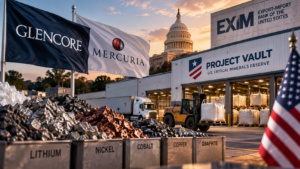
- Vale and Glencore, major players in the region, have expanded operations, including the Voisey’s Bay and Sudbury mines, to boost output.
- Canada Nickel Company, with its Crawford project, holds the largest nickel reserve in North America and aims to lead in zero-carbon nickel production.
Further collaboration between the U.S. and Canada, including a $250 million Defense Production Act fund, underscores their shared commitment to reducing reliance on geopolitically sensitive supply chains.
The Race Against Time
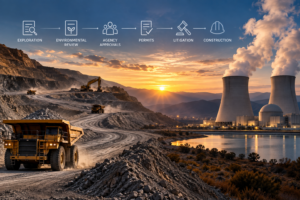
While the West scrambles to secure its nickel supply chain, the clock is ticking. Permitting new mines in the U.S. takes nearly three decades, leaving few short-term options to counter Indonesia’s dominance. As EV adoption accelerates, high-nickel chemistries like nickel-manganese-cobalt-oxide (NMC) remain the standard in the U.S. and Europe, driving demand for this critical mineral.
By 2030, Benchmark Minerals projects nickel-based batteries will account for 85% of production capacity outside China. Electric battery demand alone could reach 1.5 million tonnes annually—far outpacing current supply.
A Strategic Imperative for the Nickel Supply Chain
The stakes for North America go beyond EVs. Nickel is crucial for defense, aerospace, and data centers, underscoring its role in national security. Companies like Tesla, Glencore, and Canada Nickel are positioning themselves to capitalize on the supply chain shift, but long-term solutions require immediate action.
Mark Selby, CEO of Canada Nickel, emphasized this urgency:
“The Crawford Nickel Project represents a strategic opportunity to secure a stable, ethically sourced nickel supply for the United States. Our commitment to zero-carbon nickel production aligns with the urgent need for sustainable materials in the EV and renewable energy sectors.”
As the EV revolution gathers pace, the nickel supply chain’s strategic importance is only growing. For North America, securing nickel resources is no longer just an economic necessity—it’s a matter of national security. With Indonesia tightening its grip and global demand surging, the race for nickel is shaping up to be one of the defining economic and geopolitical challenges of the decade.