By Charles Pitts

The global mining industry is entering a new supercycle, but unlike the commodity booms of the early 2000s, this era is defined as much by digital bits as it is by physical ore. As of May 2026, the transition toward critical minerals and the massive copper demand required for the global energy transition have pushed operational efficiency to the top of the executive agenda.
At the center of this shift is the “autonomous frontier”: a suite of technologies ranging from self-driving haulage fleets to robotic drilling rigs that are fundamentally rewriting the cost curve of mineral extraction. For operators and investors, the move toward autonomy is no longer a futuristic pilot project; it is a prerequisite for competitiveness in a high-inflation, labor-constrained market.
Autonomous Haulage: The Engine of Productivity
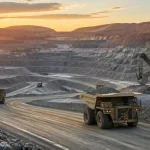
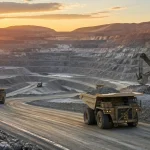
The most visible sign of the autonomous revolution is the ultra-class haul truck. Companies like Caterpillar and Komatsu have moved beyond the trial phase, with over 1,500 autonomous trucks now operating globally. In large-scale open-pit mines, particularly in the Australian Pilbara and the Canadian oil sands, autonomous haul trucks cost savings have become a documented reality.
Recent data from 2025 and early 2026 operations indicates that autonomous haulage systems (AHS) can deliver a 10% to 30% reduction in load-and-haul costs per tonne. These gains are driven by several factors:
More Read

- Continuous Utilization: Autonomous fleets do not require shift changes, lunch breaks, or bathroom stops. They can operate effectively for 22 to 24 hours a day, maximizing the return on multi-million dollar assets.
- Predictability and Precision: Self-driving trucks follow optimized paths with centimeter-level accuracy. This consistency reduces tire wear: a significant Opex item: and minimizes damage to haul roads.
- Fuel Efficiency: AI-driven speed profiles ensure trucks maintain optimal momentum, leading to a 5% to 15% reduction in fuel consumption per tonne compared to human-operated counterparts.


Precision at the Bit: Autonomous Drilling Systems
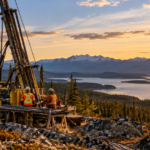
While haulage often grabs the headlines, autonomous drilling is providing the foundation for downstream efficiency. Modern autonomous drill rigs can operate with minimal human intervention, utilizing high-precision GPS to navigate to hole locations and sensors to adjust drilling parameters in real-time based on rock hardness.
The impact of autonomous drilling extends far beyond the blast hole. By ensuring perfectly consistent fragmentation through precise drill patterns, mines can optimize the performance of the entire value chain. Better fragmentation leads to faster loading cycles for shovels and lower energy requirements for crushers and mills.
More Read

This level of integration is a core component of the 2026 Opex standards, where artificial intelligence and condition-based maintenance are merging to eliminate unplanned downtime.

The Safety Imperative: Mine Safety Technology 2026
Beyond the balance sheet, the primary driver for automation is the mitigation of human risk. Mine safety technology 2026 has shifted the paradigm from “safe operation” to “remote operation.” By removing personnel from the proximity of heavy machinery and unstable pit walls, operators are seeing a dramatic decline in recordable injuries.
Autonomous systems utilize a “defense-in-depth” sensor suite, including LiDAR, radar, and high-fidelity cameras, to maintain 360-degree situational awareness. Unlike human operators, these systems do not suffer from fatigue, distraction, or reduced visibility due to dust or night conditions. In areas fully converted to AHS, haulage-related accidents: historically a leading cause of fatalities in open-pit mining: have dropped toward zero.
The relocation of workers from the cab to a Remote Operations Center (ROC) also addresses the industry’s looming labor shortage. By creating high-tech roles in urban centers, mining companies are becoming more attractive to a new generation of workers who might otherwise avoid remote site-based roles.
Economic Outlook: The ROI of Automation
As the industry grapples with the 2026 P-NAV gap and the complexities of the copper-nuclear nexus, the capital expenditure required for autonomy is being viewed through a more favorable lens. While the initial investment in wireless infrastructure and hardware retrofits is significant, the payback period for a typical ultra-class fleet is now under three years in high-volume operations.
For investors, autonomy provides a “margin buffer” against fluctuating commodity prices. A mine that can operate with a 20% lower cost base is significantly more resilient to market volatility. Furthermore, the data generated by these autonomous systems: millions of data points on machine health and ore grades: is being leveraged to improve resource estimation and project de-risking.

The 2026 Outlook: Scalability and Integration
The “Autonomous Frontier” is now expanding beyond the world’s largest mines. In 2026, we are seeing the emergence of “AHS-Lite” solutions: more affordable, modular systems designed for mid-tier miners and smaller equipment classes.
We are also seeing the convergence of autonomy and electrification. The precise control required for autonomous navigation is perfectly suited for battery-electric or trolley-assist trucks, where energy management is critical. This synergy allows mines to simultaneously pursue productivity gains and decarbonization goals, meeting the increasingly stringent ESG requirements of global capital markets.
The next mining supercycle will not just be about who has the most ore; it will be about who can extract it with the highest precision, the lowest cost, and the greatest safety. In 2026, that answer increasingly lies in the hands of the machines.