By Charles Pitts

The global mining landscape is currently undergoing a structural transformation driven by geopolitical friction and the aggressive pursuit of supply chain security. From the International Energy Agency’s (IEA) stark warnings on rare earth concentrations to the revival of colonial-era rail links in Central Africa, the movement of critical minerals is being rerouted away from historical dependencies. This week’s developments underscore a shift toward vertical integration and the rapid deployment of development finance to insulate Western downstream sectors from potential export shocks.
1. IEA Warns: China's Rare Earth Export Curbs Threaten $6.5T in Global Production
The International Energy Agency has issued a definitive warning regarding the vulnerability of global downstream production. According to the IEA’s latest assessment, the full implementation of China’s rare earth export controls could put approximately $6.5 trillion in annual economic value at risk across sectors including automotive, high-tech, defense, and renewable energy.
China, which controls over 90% of global permanent magnet production and nearly 60% of rare earth mining, expanded its licensing requirements and export controls last year. While the implementation of the most restrictive measures was delayed, the structural risk remains. The IEA notes that the U.S. and Europe face the highest exposure, with each region potentially facing over $1.5 trillion in annual downstream production disruptions if the flow of high-performance magnets is curtailed. This is not merely a pricing issue; it is a fundamental threat to the electrification timelines of the global economy.

2. US Targets China’s Grip with $900M Financing and Global Consortia
In a direct response to these systemic risks, the U.S. administration is leveraging development finance as a tool of statecraft. Central to this strategy is a $900 million Letter of Interest from the Export-Import Bank (EXIM) for a massive tungsten project in Kazakhstan. Tungsten, another critical mineral dominated by Chinese production, is vital for high-strength alloys and industrial machining.

This financing is paired with broader efforts, including the $1.8 billion Orion Critical Mineral Consortium, supported by a $600 million contribution from the U.S. International Development Finance Corporation (DFC). The DFC is also exploring $900 million in cumulative financing to expand mining and infrastructure projects across Angola, Zambia, the DRC, Kazakhstan, and the Philippines. This shift from simple grants to equity-based and project-specific financing reflects the White House’s strategic play for supply security, aiming to provide a credible alternative to Chinese-backed investments.
3. Nigeria's Major Lithium Discovery Near Abuja
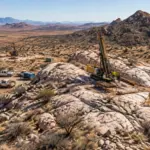
Nigeria is emerging as a potential heavyweight in the lithium supply chain following a major discovery by Steron Mining. The company confirmed approximately 3.3 million tonnes of lithium reserves near Abuja, with total mineral resources at the site estimated at 94.8 million tonnes. The discovery includes high-grade deposits of platinum group metals (PGMs), gold, nickel, copper, and rare earths.
The Nigerian government is simultaneously professionalizing the sector to attract Tier-1 investment. Authorities recently revoked over 3,000 inactive mineral titles to end "land banking" and speculative hoarding. This aligns with Nigeria’s new downstream pivot, which requires mining license applicants to submit detailed plans for local processing and refining rather than simply exporting raw ore: a move designed to capture a greater share of the value chain within the African continent.

4. USA Rare Earth (USAR) Produces Commercial Dysprosium from Recycled Magnet Scrap
USA Rare Earth (NASDAQ: USAR) has reached a critical technical milestone at its Wheat Ridge, Colorado facility. The company successfully produced commercial-grade dysprosium (Dy) and NdPr oxides from recycled magnet scrap (swarf). This achievement is significant because dysprosium separation remains one of the most difficult hurdles in the rare earths supply chain, a segment currently dominated by China.
The successful pilot means that scrap recycling could meet up to 30% of USAR's magnetic rare earth oxide feedstock needs. This circular approach is supported by a CHIPS Act funding package of up to $1.6 billion, including $277 million in direct federal funding. By integrating recycling with its Round Top deposit, USAR is building a vertically integrated model that reduces the reliance on primary ore extraction while securing the heavy rare earths necessary for high-performance EV motors and defense systems.

5. DRC Revives Copper Rail Link with Lobito Corridor PPP
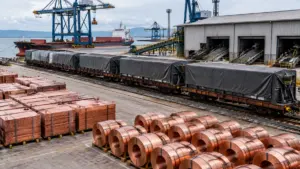
The Democratic Republic of Congo (DRC) has officially approved a Public-Private Partnership (PPP) with Portugal’s Mota-Engil to rehabilitate the Congolese section of the Lobito Corridor. This railway links the mineral-rich Copperbelt to Angola’s Atlantic coast, providing a vital alternative to the congested ports of Durban and Dar es Salaam.
The agreement covers the Dilolo–Kolwezi–Tenke–Lubumbashi–Sakania stretch, which has long been a bottleneck for copper and cobalt exports. With targets set for 50% of the DRC's copper and 30% of its cobalt to eventually transit through this corridor, the rehabilitation is expected to slash logistics costs and transit times by up to 30%. This infrastructure unlock is a cornerstone of the U.S.–EU strategy to secure African mineral flows for Western markets.

6. Liberty Bell Bay Shuts: Australia's Only Manganese Smelter Closes
In a stark contrast to the growth seen elsewhere, Australia’s critical minerals processing sector faced a setback this week. The Liberty Bell Bay manganese smelter in Tasmania was ordered to close immediately after a proposed sale to a private consortium fell through. The closure will result in the loss of over 200 jobs and marks the end of manganese alloy smelting in Australia.
The facility, previously part of the GFG Alliance, had been in care and maintenance due to ore supply disruptions caused by weather events and global price volatility. Its permanent closure highlights the ongoing difficulty of maintaining downstream processing competitiveness outside of China, even in jurisdictions with robust mining legacies. For the global market, it represents a further concentration of processing capacity elsewhere.
Forward-Looking Take
The week's events underscore a single, urgent thesis: critical minerals supply chains are being restructured in real-time. The IEA's $6.5T warning serves as the ultimate catalyst for the US administration’s billion-dollar financing push and the infrastructure revival in the DRC. For investors and operators, the message is clear: the market is beginning to prioritize projects that offer clear permitting pathways, integrated processing capabilities, and reliable logistical connectivity. As the silver price forecast for 2026 and copper outlooks already suggest, the era of "just-in-time" mineral supply is over, replaced by a "just-in-case" strategy centered on geopolitical alignment.
LinkedIn Social Snippet:
? The $6.5T Warning: The IEA just raised the stakes, warning that China's rare earth export controls could disrupt $6.5 trillion in global downstream production. This week's Skillings Mining Intelligence newsletter breaks down the US response, including a $900M financing push, Nigeria’s massive lithium discovery, and the strategic revival of the Lobito Corridor rail link. The map of critical minerals is being redrawn. Is your portfolio ready for the shift?
#CriticalMinerals #MiningNews #RareEarths #SupplyChain #EnergyTransition #SkillingsMining
CTA: Subscribe to Skillings Mining Intelligence at skillings.net for daily coverage of the mining investments and geopolitical shifts that matter to your bottom line.