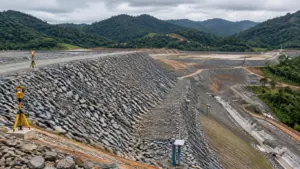
Key takeaways:
- shadow mining empires: Different continents. Different metals
- Rebel-run coltan in Congo and illicit gold in Indonesia follow the same laundering playbook.
- The real laundering happens midstream — at export hubs and refineries, not mine sites
- Paperwork changes, metal doesn’t — enabling conflict minerals to pass ESG checks
- Rising EV and gold demand makes this laundering more profitable — and harder to stop.
From these rivers, gold moves to licensed exporters in Batam and Surabaya. Customs records reviewed by Skillings show a 38% surge in shipments labelled “domestic origin” in the three months following a police crackdown in West Kalimantan — a pattern consistent with blending illicit gold with legal output. Once exported, much of it heads to refining hubs in Singapore and Hong Kong, then into the hands of major bullion traders, bypassing most origin checks.

The sacks came down the slope in single file. Wet from the morning rain, each was heavy with coltan — the ore that keeps smartphones lit and missile guidance systems on track. At the bottom, under a sheet of corrugated tin, two men in mismatched fatigues ticked off names and weights. An AK leaned against the ledger table. This wasn’t a government checkpoint. It was M23’s.
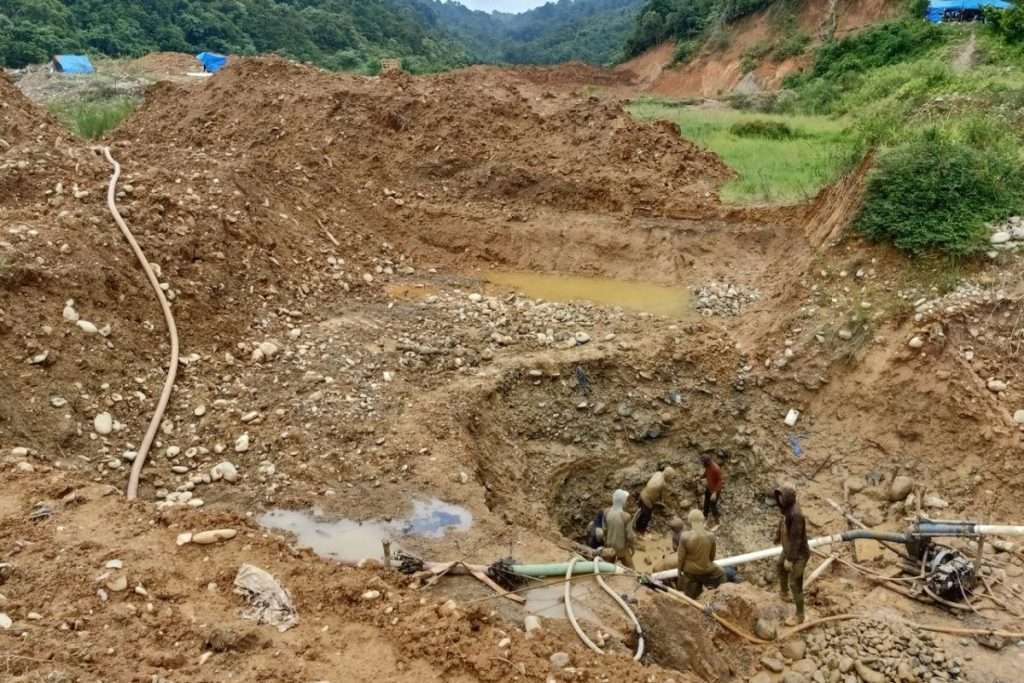
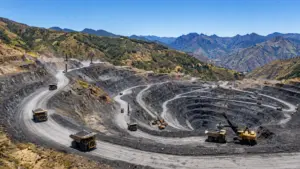
In eastern Congo’s Rubaya hills, the rebel group has turned mining into governance. According to the UN Group of Experts on the DRC (June 2025), M23 controls mine sites in Masisi Territory, levying a fixed “tax” of 15% on traders — payable in cash — and deciding which trucks get through the single passable road to Goma. The UN estimates the group earns roughly $800,000 per month from these operations, revenue that fuels a conflict displacing over 100,000 people since 2023.
By the time the ore crosses into Rwanda, it’s officially recorded as Rwandan origin, appearing conflict-free on paper.Six thousand kilometers east, in Indonesia’s Riau Islands, a river runs the color of weak coffee. Diesel pumps thrum against the banks. Chinese-run dredges pull gold from the silt, their tailings laced with cyanide drifting downstream. There are no inspectors, no public permits. But, as local NGO Auriga Nusantara documented, operators have hosted local officials on-site. A Washington Post investigation (Aug 12, 2025) and satellite imagery from Global Fishing Watch confirm an expansion of dredge activity in restricted waterways.
| Geographic Route (Where it happens) | Process Overlay (How it happens) |
| This is the physical journey of the minerals — the “spatial truth.” Example in this case: Coltan: Eastern DRC → Rwanda → UAE → Malaysia → China. Gold: Indonesia → Singapore → Hong Kong. | This is the criminal / laundering method attached to each stage — the “mechanical truth.” The four steps (Origin Masking, Document Laundering, Blending, Certified Channel Entry) are processes that correspond to specific route segments. Example: Between DRC & Rwanda → Origin Masking (mixing in local ore to hide source). Between Rwanda & UAE → Document Laundering (changing certificates of origin). Between UAE & Malaysia → Blending (mixing smelted metals from different sources). Arrival in China → Certified Channel Entry (passing as “conflict-free”). |
More Read

Different continents. Different metals. The same quiet architecture: non-state actors running extraction like a state; regulators doubling as partners; illicit output washed mid-transit until it’s clean enough for ESG certifications and customs stamps. This is the story of shadow mining empires.

The Midstream Chokepoint
In Kigali’s export district, Rwandan paperwork for coltan from Rubaya looks identical to ore mined in Gatsibo or Nyagatare. Certificates carry official stamps. Export declarations list Rwanda as the origin. According to U.S. Treasury sanctions (Aug 12, 2025), companies including Boss Mining Solution have moved rebel-sourced coltan through these channels. Once in Dubai, it’s bought by processors that appear on supplier lists for electronics manufacturers in East Asia.
In Singapore’s refinery zone, inbound gold from Indonesia arrives declared as “domestic origin” — a label that customs data shows spiked after enforcement operations in West Kalimantan. Traders interviewed by Auriga Nusantara say the label is applied after blending with licensed output in Batam. From Singapore and Hong Kong, it flows to bullion dealers and central banks with no further questions about its past.
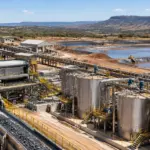
Both cases hinge on a single move: change the paper, not the metal.
The Shared Playbook
Whether it’s coltan from North Kivu or gold from Riau, the sequence is the same:
- Move it next door — into a jurisdiction with friendlier customs desks.
- Rewrite its identity — fresh export documents from a licensed local company.
- Mix it until it can’t be separated — illicit and legal cargo in the same batch.
- Send it through a compliant processor — one enrolled in an ESG or conflict-free program.
This “midstream wash” is the only step the consumer never sees, the one most certification schemes don’t touch, and the one that makes a rebel checkpoint in Rubaya and a dredge in Riau part of the same global network.
Why This Hits Now
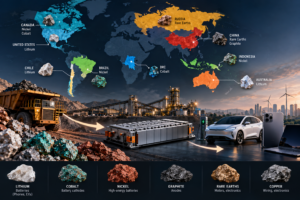
On the demand side, coltan is riding the surge in EV battery and semiconductor production. Gold is in demand as a reserve asset, with central bank purchases — especially in Asia — near record highs. Rising prices raise the rewards for pushing illicit supply into legitimate channels.
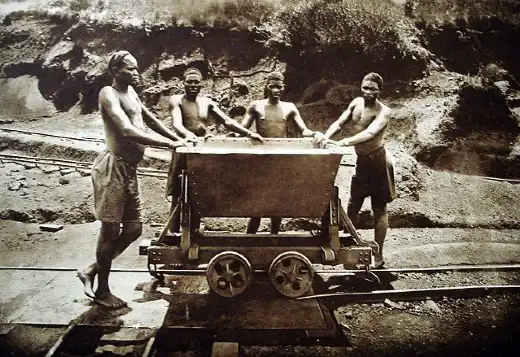
On the enforcement side, most laws and audits focus on mine sites or end buyers. The midstream — export hubs, consolidators, refineries — is where the laundering happens, and it’s where the least scrutiny is applied.
For manufacturers, that means an ESG certificate can be true on paper and false in reality. For traders and refiners, it means cargoes that pass compliance checks can still carry legal risk under anti–money laundering and conflict-mineral laws. For governments, it means sanctions lose their bite.
How to Break the Chain
The OECD Due Diligence Guidance team and Global Witness both point to midstream choke points as the most effective target for disruption:
- Audit transit countries — verify export claims against actual mine output.
- Monitor refineries and consolidators — apply the same scrutiny here as at mine sites.
- Cross-check data — match customs declarations against payment flows and known production to catch anomalies before the cargo moves onward.
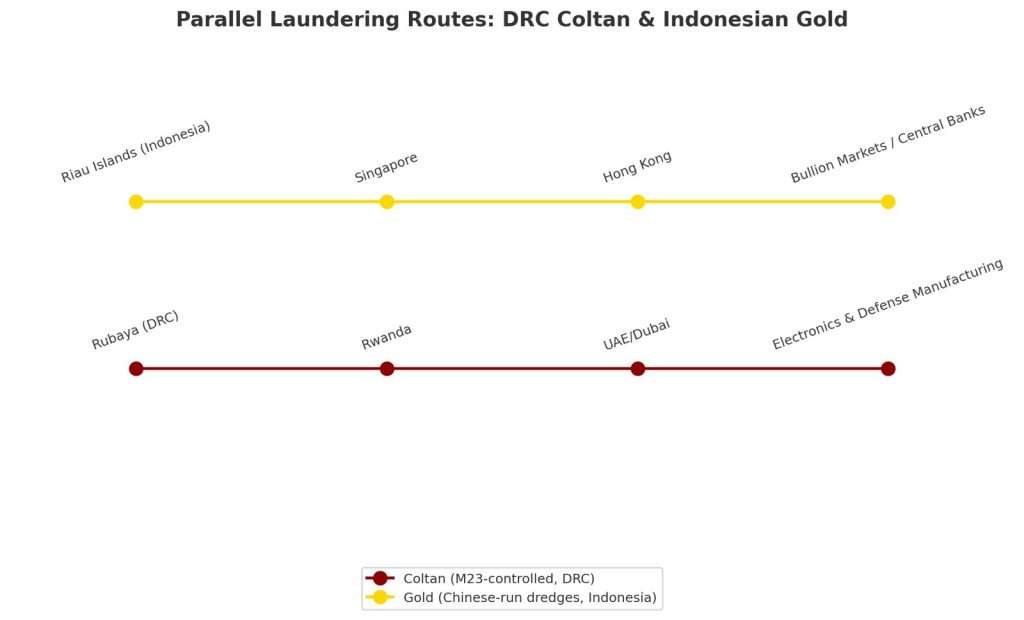
Shutting down one mine won’t slow the system. Shutting down a laundering lane might. This is one way to tackle shadow mining empires.
The Part of the Map Nobody Wants to Talk About
Coltan from M23’s hills and gold from Chinese-run dredges are not parallel scandals — they are parallel branches of the same tradecraft. The rebel checkpoint in Rubaya and the dredge pump in Riau are just the starting points. The real power sits at the midstream desks where origin is rewritten, metal is blended, and legality is conferred.
That’s where the shadow mining empire survives — and that’s where, if anyone chooses to act, it can be made to stop.