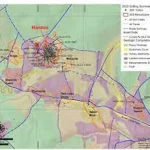
The project includes iron ore mining, railway and port development in southeastern Guinea and is considered one of the most important mining operations in the world.

After receiving its exploration license in 1997, Rio Tinto has faced numerous challenges over the years, including litigation, corruption allegations and operational setbacks.
There was also talk of abandoning the project, but that plan never came to fruition.
The company expects Guinea’s iron ore, rail and port plans to usher in a “new era” for mining, with the scale of the project requiring a collaborative development approach.
The project, considered too expensive for a single miner to develop alone, is currently a partnership between Rio Tinto, the Guinean government and at least seven other companies, five of them from China.
More Read

The second mine, known as the WCS project, is being built by steelmaker Baowu in partnership with a consortium led by Singapore’s Winning International Group.

Related News
- Palladium prices falls as concern EVs will destroy demand returns to the fore
- Copper prices fall on stronger US dollar
- Foremost Lithium Announces Receipt of Third $300,000 Grant from MMDF
- Marula to list on the Johannesburg & Nairobi Securities Exchanges
- CCI flags iron ore pricing and exports in India
In addition, 552 kilometers of railway lines and a deep-water port are also part of the infrastructure plan. Rio Tinto and the Chinalco consortium are also funding the construction of a 70km railway to connect to the main line.
The first ore is expected to be shipped in 2025, with the aim of reaching full production of 60 million tonnes per year by 2028, accounting for about 5% of the global seaborne iron ore market.
More Read

Rio Tinto also made headlines recently after approving a US$77 million (A$110 million) investment to support its Rhodes Ridge iron ore project in Western Australia’s East Pilbara region.