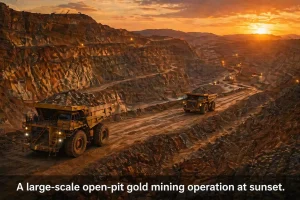
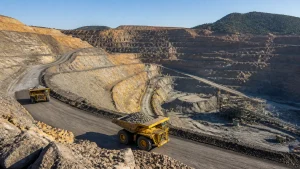
ACCRA, Ghana — In a major development reshaping Ghana mining policy, the government has taken full operational control of the Damang gold mine from South Africa’s Gold Fields Ltd., citing regulatory non-compliance and a broader drive toward strategic resource control.

The Ministry of Lands and Natural Resources announced Wednesday that it had rejected Gold Fields’ application to renew its lease for the mine, located in the Western Region. The lease was set to expire on April 18.
“This marks a critical step in Ghana’s economic reset and commitment to full resource sovereignty,” the Ministry said in its official statement.
Why the Damang Lease Was Rejected
According to the Ministry, Gold Fields failed to meet three critical requirements in its lease renewal:
- No declared mineral reserves: The company submitted no verifiable geological data confirming remaining gold deposits at Damang.
- No technical roadmap: It failed to provide an updated plan outlining past and future operations.
- Zero exploration spend: Gold Fields did not allocate funds to exploration in the last two years, undermining long-term viability.
The mine, which produced 135,000 ounces of gold in 2024, accounted for just 6% of Gold Fields’ global output. However, the symbolic weight of the takeover is significant—it signals an end to the automatic renewal of foreign mining licenses in Ghana.
Ghana’s Mining Sector Embraces Resource Control
This decision is part of a broader effort to assert resource control in Ghana’s mining sector, reversing what officials call “neo-colonial” resource arrangements.

“We are moving toward a model where mineral wealth delivers direct, measurable benefit to Ghanaians,” the Ministry noted.
Government officials say mining operations will continue uninterrupted, with a guarantee that no jobs will be lost during the transition. All valid contracts will be honored, aiming to prevent community disruption or labor unrest.

Gold Fields Shifts Strategy After Setback
Gold Fields confirmed it had already ceased mining at Damang in 2023 and was only processing remaining stockpiles. A company spokesperson declined to comment further, but insiders say executives plan to meet Ghanaian authorities later this week.
The company has been gradually divesting from smaller assets like Damang and the Cerro Corona mine in Peru, focusing instead on high-yield projects such as:

- Salares Norte (Chile) — a key new source of gold output.
- Windfall (Canada) — a strategic expansion project in North America.
Related News:
- U.S. Targets Cobalt Mining and Mineral Resources in Congo for Strategic Supply Chain Security
- Bank of Canada in Tight Spot as Trump’s Tariff Volatility Clouds Rate Decision
- Nigeria Escalates Crackdown on Illegal Mining in Zamfara Amid Lead Poisoning Crisis
- China U.S. Trade War Intensifies as Trump Tariffs 2025 Escalate, Fueling Global Recession Risk
Investor Reactions and Industry Implications
Analysts say the move could signal a more assertive approach in Ghana mining policy, with implications for other leaseholders. Ghana is Africa’s top gold producer, and its decisions are closely watched by global investors.
The Africa Centre for Energy Policy (ACEP) urged both sides to resolve the situation through legal channels.
“The state must avoid undermining investor confidence while rightfully asserting its interest,” ACEP stated.
As Gold Fields weighs its next steps, other mining companies may now review their compliance and engagement strategies with Ghana’s regulatory authorities.
What’s Next for the Damang Mine?
The government has not said whether the mine will be nationalized, transferred to a new operator, or placed under a state-managed joint venture. However, it made clear that the transition will prioritize resource control and ensure that mineral wealth is retained within the Ghanaian economy.
A Turning Point in Ghana’s Resource Control Agenda:
Ghana’s takeover of the Damang mine represents a turning point in how the country manages its natural resources. As the government prioritizes resource control, foreign mining companies may need to adapt to a new era of strategic compliance and shared value.
For Ghana, the path forward may be challenging—but increasingly, it will be carved on its own terms.