WASHINGTON, Oct 2 — The Trump administration is accelerating rare earth mining deals in California, Greenland, and Australia as part of a $250 billion financing push to secure critical minerals ahead of the 2026 midterm elections. The initiative aims to reduce U.S. dependence on China and fortify supply chains for electric vehicles and defense technologies.

Why Rare Earth Mining Matters Now
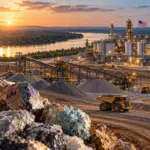
Rare earths, mined at sites such as Mountain Pass in California and projects in Greenland, are essential for electric vehicle batteries, wind turbines, and defense electronics. The U.S. remains heavily reliant on Chinese processing capacity, with Beijing controlling more than 80% of global refining.
By expanding the U.S. International Development Finance Corporation’s (DFC) mandate and launching new equity funds, Washington hopes to replicate deals like the one struck with MP Materials, where the Defense Department took a 15% equity stake, guaranteed floor prices, and secured Apple as a long-term buyer of recycled magnets.
Industry Impact: Price Floors and Investor Risks
The MP Materials deal has become a template: equity stakes, guaranteed contracts, and government-backed price floors to shield producers from volatile markets. Analysts note that such interventions could stabilize domestic mining economics at a time when global rare earth prices are under pressure from Chinese export controls and shifting demand in the EV battery metals sector.
But some U.S. mining executives are cautious. “We walk in and they say: ‘We need 10% of your company,’” one industry source told , highlighting concerns about ceding ownership in exchange for federal support. Others worry about policy reversals if a future administration scales back subsidies or unwinds defense-linked contracts.
More Read

Regional Moves: Greenland, Australia, and Ukraine
Beyond domestic mining, the administration is targeting overseas supply chains. The U.S. Export-Import Bank has weighed a $120 million loan for Greenland’s Tanbreez rare earth project, while a Louisiana facility backed by U.S. funding signed a 10-year deal with Critical Metals to supply up to 10,000 metric tons of heavy rare earth concentrate annually.

Australia, a long-term U.S. ally in mining cooperation, is being courted with offers of direct equity participation in critical mineral firms. Meanwhile, the U.S.–Ukraine Mineral Resources Agreement signed earlier this year provides Washington preferential access to Ukraine’s reserves in exchange for reconstruction funding.
These efforts mirror similar policies in Canada, where Ottawa has offered tax credits for rare earth processing, and in the European Union, which is advancing its Critical Raw Materials Act to diversify away from Chinese suppliers.
Global Implications: Energy Transition and EV Supply Chains
For the electric vehicle industry, securing rare earths is vital. EV magnet and battery producers rely on neodymium, praseodymium, and dysprosium, all areas where China has long dominated. Without stable domestic or allied supply, U.S. automakers risk exposure to price shocks and geopolitical leverage.
The defense sector is equally exposed. Fighter jets, submarines, and missile systems use rare earth components. The Pentagon’s 15% stake in MP Materials underscores how rare earths have shifted from a niche mining concern to a core national security priority.
At the same time, environmental and permitting challenges loom. Even with executive orders to fast-track approvals, projects on U.S. federal lands face lengthy reviews and local opposition. Processing plants, particularly for heavy rare earths, bring water, energy, and waste disposal challenges that complicate rapid scaling.
Skillings Analysis
Rare earths are no longer a fringe issue—they sit at the intersection of geopolitics, clean energy, and defense supply chains. The U.S. is now deploying tools typically reserved for financial crises—equity stakes, price floors, direct offtake deals—to build a mining base that can rival China’s dominance.
If executed effectively, Washington’s model could stabilize U.S. magnet production and boost investor confidence in long-stalled projects. Yet execution risk remains high: delays, environmental hurdles, and political reversals could undermine momentum. For miners, this is both a historic opportunity and a moment of elevated risk.
What’s Next Ahead of the Midterms
The administration has made it clear that new rare earth mining deals will be front-loaded into the political calendar. In the months leading to the 2026 midterm elections, expect announcements around:
- DFC-backed funds targeting rare earth processing in the U.S. and Australia.
- Section 232 trade actions potentially imposing tariffs on imported rare earths.
- Offshore and seabed mining initiatives, particularly in cobalt- and nickel-rich Pacific zones.
For global markets, U.S. rare earth policy is as much about electoral timing as industrial strategy. As voters head into the midterms, the administration is betting that visible progress on mining and supply chain resilience will play as both an economic and political win.