By Charles Pitts

The global push for critical mineral independence reached a fever pitch this week in Perth, where leaders of the Western rare earths industry issued a collective ultimatum to policymakers. At the AFR Mining Summit, executives from the world’s most significant non-Chinese rare earth projects argued that without government-backed floor prices, the dream of a secure, independent supply chain for electric vehicles (EVs) and defense systems remains a financial impossibility.
For decades, the rare earths market has operated not as a free market, but as one defined by what Lynas Rare Earths CEO Amanda Lacaze describes as “structural distortion.” With China controlling roughly 60% of global mining and nearly 90% of refining capacity, the “China price” has effectively dictated the survival: or extinction: of Western competitors. Now, with projects like Arafura’s Nolans project nearing critical development milestones, the industry is demanding a new set of rules to prevent Beijing from using price suppression as a strategic weapon.
The Case for “Strategic Scaffolding”
The core of the argument presented in Perth is that Western miners are not asking for permanent subsidies, but for “strategic scaffolding” to correct thirty years of market manipulation. In a typical commodity market, prices fluctuate based on supply and demand. However, in rare earths: specifically the NdPr (neodymium and praseodymium) used in permanent magnets: prices are often driven by Chinese production quotas and state-directed stockpiling.
Darryl Cuzzubbo, Managing Director of Arafura Rare Earths (ASX: ARU), highlighted that the US government’s intervention in MP Materials: which included the implementation of floor prices: was the catalyst that proved Western supply could be viable. A floor price serves as a guaranteed minimum that a producer receives for their output, regardless of how low the spot price drops.
“It removed China’s incentive to flood the market,” noted one analyst during a summit panel. When a floor price is in place, Chinese attempts to crash the market by over-supplying material no longer drive Western producers into bankruptcy. Instead, the government or a strategic offtaker “tops up” the difference, ensuring the producer stays solvent and the project remains bankable for lenders.

Arafura’s Nolans Project: The Vanguard of Western Supply
The primary focus of this policy debate is the Nolans project, located in Australia’s Northern Territory. With a capital expenditure requirement of approximately A$1.9 billion, Nolans is a massive undertaking designed to become a major supplier of NdPr for the European and American automotive sectors.
Nolans is unique because it is an “ore-to-oxide” project, meaning it will mine, concentrate, and chemically process rare earths at a single site. This integration is critical for domestic security, as it bypasses the need to send concentrated ore back to China for refining: the current bottleneck in almost all Western rare earth operations.
More Read
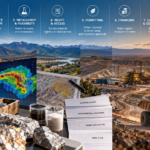

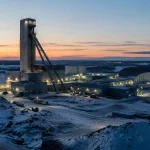
Large-scale extraction operations like those planned for the Nolans project require significant upfront capital and price certainty to remain viable.
Currently, Arafura has secured backing from nine different lenders across five countries, primarily government-backed export credit agencies and financial institutions. This “coalition of the willing” reflects the geopolitical nature of the asset. However, Cuzzubbo warned that while floor prices are “absolutely essential” to get these initial projects off the ground, they must be targeted.
“Can you imagine a world where everyone gets a floor price?” Cuzzubbo asked the summit. “That is not a functioning market. It leads to the development of uneconomic projects and eventually, governments are left picking up the tab for a market that is fundamentally broken.”
The Danger of the “China Price”
The urgency behind these demands stems from the volatility of NdPr prices over the last 24 months. After peaking in 2022, prices retreated sharply as Chinese producers increased output, leading to a “squeeze” on Western developers whose costs are naturally higher due to stricter environmental standards and higher labor costs.
| Metric | Chinese Production (Est.) | Western/Ex-China Projects |
|---|---|---|
| Average Production Cost | Low (State Subsidized/Lower ESG) | High (Market Rate/High ESG) |
| Market Share (Refining) | ~90% | ~10% |
| Pricing Power | Price Setter | Price Taker |
| Government Support | Direct Equity & Quotas | Loans & Grants (Emerging) |
Table 1: Competitive Landscape of the Rare Earths Market in 2026.
Rowena Smith, CEO of Australian Strategic Materials (ASM), echoed the need for intervention but emphasized the long-term goal: transparent, liquid pricing indices. Unlike copper or gold, rare earths do not trade on a major public exchange with high transparency. Most trades are done via private contracts, many of which are linked to price assessments within China.
Establishing an independent pricing index: one that reflects the true cost of “sustainably produced” Western rare earths: is seen as the exit strategy for government support. Once a liquid, transparent market exists, floor prices can be phased out in favor of commercial hedging tools.
Geopolitical Intervention: US, Japan, and Australia
The Perth summit underscored that rare earth mining is no longer just a commercial enterprise; it is an extension of national security. The US Department of Defense and the Japanese government have already begun providing direct grants and low-interest loans to secure offtake.
The strategy for 2026 is clear: the “Quad” nations (US, Japan, Australia, and India) are coordinating to ensure that at least three to four major non-Chinese hubs are operational by the end of the decade. This includes Lynas’ expansion in Western Australia and Texas, MP Materials in California, and Arafura’s Nolans project in the Northern Territory.

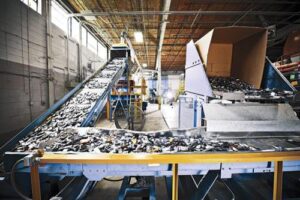
Operational efficiency and real-time data monitoring are essential for Western miners to compete against state-backed incumbents.
As the antimony supply squeeze of early 2026 proved, dependence on a single dominant supplier for critical minerals can lead to immediate industrial paralysis if trade relations sour. By implementing floor prices now, Western governments are effectively buying insurance against a total supply chain collapse in the future.
Looking Ahead: The 2026 Outlook
The demand for rare earth floor prices is a recognition that the “lowest-cost-at-any-cost” era of global procurement is over. For operators and investors, the shift toward government-guaranteed pricing provides a level of certainty that has been missing from the sector for decades.
However, the path forward is not without risks. If floor prices are set too high, they may discourage the very innovation and efficiency needed to eventually compete with China on a level playing field. If set too low, they will fail to attract the billions in private capital still required to build out the “Midstream” processing capacity: the chemical plants and separation facilities that turn rock into the high-purity oxides required by magnet makers.
The next twelve months will be pivotal. As Arafura moves toward its final investment decision (FID) and construction accelerates, the industry will be watching closely to see if the Australian and US governments formalize these price support mechanisms. If they do, it will mark the most significant intervention in the global mining industry in a generation.