By Penny Langford

The global rare earths supply chain 2026 is entering a period defined by what market analysts describe as a "strategic arms race." As of mid-2026, the transition from a China-centric monopoly to a fragmented, yet increasingly resilient, Western supply network is no longer a theoretical goal: it is an operational reality. Driven by aggressive export controls from Beijing and a flurry of domestic industrial policies in the United States, Australia, and the European Union, the map of critical mineral flows has fundamentally shifted.
For decades, the rare earth industry operated under a singular gravity: China’s dominance over roughly 90% of refining and magnet production. However, the 2026 landscape shows the first meaningful cracks in that foundation. The emergence of a "mine-to-magnet" strategy in North America, the expansion of Australian processing capabilities, and the development of high-yield ionic clay projects in Brazil are collectively redrawing the boundaries of resource security.
The China Factor: Export Controls as Geopolitical Leverage
In 2025 and early 2026, Beijing implemented a series of sweeping export control regimes, most notably "Announcement 18." These measures explicitly target medium and heavy rare earths: including terbium, dysprosium, and yttrium: along with the proprietary technologies required to manufacture high-performance permanent magnets.
These controls have moved beyond mere rhetoric. By mid-2026, licensing delays for Chinese-sourced rare earths have already caused episodic disruptions in European automotive supply chains. The message to global OEMs (Original Equipment Manufacturers) is clear: reliance on a single source is a structural liability. This geopolitical friction has served as the primary catalyst for the current "Western supply chain" investment boom, making China's mineral cooperation a subject of intense scrutiny for policymakers.
MP Materials: The American Anchor at Mountain Pass
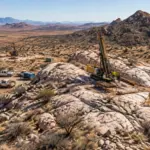
MP Materials has solidified its position as the cornerstone of the U.S. domestic supply chain. Operating the Mountain Pass mine in California, the company has successfully transitioned from a mere concentrate producer to an integrated separation and magnetics powerhouse.

By the second quarter of 2026, MP Materials’ downstream facility in Fort Worth, Texas, has begun delivering initial volumes of neodymium-iron-boron (NdFeB) magnets to General Motors. This marks the first time in decades that a fully domestic U.S. supply chain: from the ore at Mountain Pass to the magnets in an EV motor: has reached commercial scale.

The U.S. Department of Defense has played a pivotal role here, committing over $400 million in cumulative funding to MP Materials to ensure that high-performance magnets for defense applications are insulated from foreign supply shocks. For those looking at critical minerals stocks to buy 2026, MP Materials represents the "utility-scale" play in the North American sector.
Lynas Rare Earths: The Global Stabilizer
While MP Materials focuses on the U.S. market, Australia’s Lynas Rare Earths remains the single most important non-Chinese separator of rare earths globally. Throughout 2026, Lynas has leveraged its dual-hub strategy, utilizing its Mt Weld mine in Western Australia and its advanced processing facilities in Malaysia and the newly commissioned plant in Kalgoorlie.
Lynas continues to be the primary supplier for Japanese and European manufacturers who are wary of Chinese export restrictions. Its strategic value was further cemented by long-term offtake agreements with the U.S. government for a heavy rare earth separation facility in Texas. The company’s ability to maintain stable production of Neodymium-Praseodymium (NdPr) has been the only factor preventing a total price blowout in the magnetics market during China's recent export tightening.
Viridis Mining and the Rise of Ionic Clays
The 2026 supply map also features new entrants that offer a different geological advantage: ionic adsorption clays. Unlike the hard-rock deposits at Mountain Pass or Mt Weld, ionic clays: primarily found in Southern China and Southeast Asia: are easier and cheaper to process, particularly for heavy rare earths.

Viridis Mining and Resources has emerged as a key developer in this space with its Colossus project in Minas Gerais, Brazil. By mid-2026, Viridis has advanced through feasibility stages, positioning itself as a potential future source of non-Chinese heavy rare earths. While not yet at full commercial production, the company represents the high-optionality end of the rare earth investment spectrum. Its progress is being closely watched as a benchmark for whether Brazil can replicate China’s low-cost ionic clay production model under Western ESG (Environmental, Social, and Governance) standards.
The Midstream Gap and the Magnet Nexus
The ultimate goal of the 2026 rare earths supply chain is the production of permanent magnets. Without the ability to turn oxides into metals and then into magnets, a mining project is merely feeding the Chinese processing machine.
The move toward midstream integration is the most significant trend of the year. According to data from the 2026 Rare Earths Market Snapshot, non-Chinese magnet capacity is projected to grow significantly through the end of the decade, though it still pales in comparison to the 100,000+ tonnes of annual capacity within China.
Global Rare Earth Production & Magnet Capacity (2026 Forecast)
| Region | Mine Production (Tonnes REO) | Refining Capacity (Separated Oxides) | Magnet Production (NdFeB) |
|---|---|---|---|
| China | 210,000 | 185,000 | 115,000 |
| USA (MP Materials) | 42,000 | 15,000 | 2,500 |
| Australia (Lynas/Others) | 28,000 | 18,000 | <500 |
| Rest of World | 15,000 | 8,000 | 1,200 |
| Total | 295,000 | 226,000 | 119,200 |
Source: Skillings Mining Intelligence / Industry Composite Forecasts 2026.
The data highlights the persistent "refining gap." While Western mine production is respectable, the ability to separate those minerals into high-purity oxides: and subsequently convert them into magnets: remains the bottleneck. This is why projects like the 2026 Lithium Power Map are often compared to rare earths; both require massive capital expenditure in the midstream to truly break free from external dependencies.
Permanent Magnets and the Energy Transition
The urgency of the rare earths supply chain 2026 is driven by the sheer scale of the energy transition. Permanent magnets are the "secret sauce" in high-efficiency electric vehicle motors and offshore wind turbines. A typical EV motor requires approximately 1kg to 2kg of NdFeB magnets. With global EV adoption continuing to climb at an 8.5% CAGR, the demand for magnet-grade rare earths is projected to remain in a structural deficit through 2030.

Furthermore, the defense sector’s reliance on these minerals for missile guidance systems, radar, and stealth technology has turned rare earth supply into a matter of national security. In 2026, we are seeing the implementation of "price floors" and "contracts for difference" by Western governments: mechanisms designed to protect domestic producers from the predatory pricing tactics historically used to stifle non-Chinese competition.
2026 Outlook: Fragmentation Over Globalism
As we look toward the remainder of the year, the rare earths supply chain 2026 is becoming increasingly bifurcated. There is the "Chinese system," which remains the most cost-effective and vertically integrated, and the "Allied system," which is more expensive but offers the security of supply required by defense and high-end industrial sectors.
For investors and operators, the key takeaway is that the monopoly is breaking, but it is not broken. The progress made by Lynas and MP Materials has provided a blueprint for domestic production, while developers like Viridis Mining offer the next frontier of growth. However, the path to 2027 and beyond will require continued government intervention and a relentless focus on solving the midstream refining challenge.
The "Strategic Arms Race" for rare earths is no longer about who has the most ore in the ground: it is about who can deliver the finished magnet to the factory floor.
Shareable Social Snippet
The 2026 Rare Earths Supply Chain is no longer a Chinese monopoly. From MP Materials' new magnet facility in Texas to Viridis Mining's ionic clay breakthrough in Brazil, the "Strategic Arms Race" for critical minerals has entered a new phase of domestic production and midstream integration. Read the full analysis at Skillings Mining Review. #RareEarths #Mining2026 #CriticalMinerals #EnergyTransition