By Charles Pitts

The global mining industry has entered a definitive phase of consolidation in 2026, driven by a race for high-grade reserves and jurisdictional security. After a record-breaking 2025, which saw total merger and acquisition (M&A) values hit a 13-year high of $93.7 billion, the first half of 2026 has maintained this momentum. While the push for critical minerals remains a significant secondary narrative, the precious metals sector: specifically gold: has emerged as the primary engine for deal-making.
In the first quarter of 2026 alone, mining deals reached approximately $21.6 billion, representing a 34% increase year-on-year. This surge is not merely a product of speculative fervor but a structural response to the “reserve replacement” crisis facing many mid-tier and major producers. As exploration yields fewer tier-one discoveries, consolidation has effectively replaced greenfield development as the industry’s preferred growth tool.
The Push for “Sure-Bet” Assets
The current M&A landscape is defined by a flight to quality. Investors and operators are prioritizing “sure-bet” assets: projects with proven high-grade reserves located in stable, low-risk jurisdictions. This trend is most visible in the gold sector, where record gold prices and geopolitical volatility have pushed valuations to levels that support large-scale, all-stock transactions.
The rationale is clear: as geopolitical tensions in regions like the Middle East and Eastern Europe persist, the premium for assets in Canada, Australia, and parts of Northern Europe has widened. This is reflected in the recent Agnico Eagle transactions in Finland, where the company leveraged its strong equity valuation to consolidate its position in the Fennoscandian Shield.

Key Drivers of 2026 Precious Metals M&A:
- Reserve Replacement: Major producers are struggling to maintain production levels through organic growth alone.
- Jurisdictional Risk: A shift away from “frontier” markets toward Tier-1 jurisdictions (Canada, Australia, USA).
- Capital Discipline: Unlike the boom-and-bust cycles of the early 2010s, 2026 deals are characterized by disciplined premiums (typically 35-45%) and heavy use of share-based structures to preserve cash.
- ESG Compliance: Acquiring already-permitted, ESG-compliant assets is faster and less risky than navigating the increasingly stringent regulatory landscape for new builds.

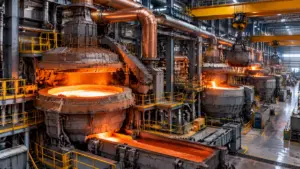
Industrial scale and technological complexity are central to 2026’s high-value gold processing operations.

Major M&A Transactions: A 2026 Snapshot
The 2026 deal pipeline has been dominated by a few “mega-deals” that have reshaped the leaderboard of global gold producers. Perhaps the most significant was Zijin Gold’s $4.05 billion bid for Allied Gold Corp in early January, a move that signaled China’s continued appetite for high-grade international assets despite increasing foreign investment scrutiny in the West.
Domestically, the Canadian market remains the epicenter of consolidation. Following the trend set by the China gold discovery in Liaoning Province, Canadian miners are doubling down on local clusters to maximize operational synergies.

2026 Mining M&A Deal Tracker (Selected Precious Metals)
| Acquiring Company | Target Company / Asset | Deal Value (USD) | Primary Commodity | Region | Status |
|---|---|---|---|---|---|
| Zijin Gold | Allied Gold Corp | $4.05 Billion | Gold | International | Pending |
| Agnico Eagle | Finnish Expansion Assets | $1.20 Billion | Gold | Finland | Completed |
| Royal Gold | Sandstorm Gold | $2.85 Billion | Gold/Silver (Royalty) | Global | Completed |
| Robex Resources | Predictive Discovery | $840 Million | Gold | West Africa | Announced |
| New Pacific Metals | Carangas Project | $2.65 Billion (NPV) | Silver/Gold | Bolivia | Development |
Structural Shifts: Partnerships Over Takeovers
A notable evolution in 2026 is the preference for strategic partnerships and joint ventures (JVs) over outright acquisitions. According to industry surveys, roughly 32% of executives now identify partnerships as the most likely transaction type for the remainder of the year.
This shift is driven by the sheer capital intensity of modern mining. By entering into JVs, companies can share the burden of infrastructure costs, ESG reporting, and political risk. This is particularly prevalent in the copper-gold space, where the synergy between base and precious metals is being used to de-risk massive capital expenditures.
The royalty and streaming sector has also seen significant consolidation, exemplified by Royal Gold’s acquisition of Sandstorm. This move has created a tighter top tier of royalty players, capable of providing the large-scale alternative financing that junior and mid-tier miners need to bridge the “funding gap” in a high-interest-rate environment.

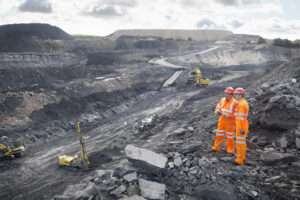
Infrastructure security and proximity to existing operations are key factors in 2026 asset valuations.
Geographical Trends: The “Stable Tier” Dominance
While West Africa continues to offer some of the highest-grade gold opportunities: as seen in the Robex-Predictive Discovery merger: the bulk of the premium capital is flowing into Canada and Australia.
Canada has seen over nine takeovers valued at more than $1 billion since early 2025. The focus here is on “bolt-on” acquisitions, where a major producer acquires a junior neighbor to extend the life of an existing mill. This “hub-and-spoke” model is proving to be the most efficient way to maintain production without the decade-long lead times required for greenfield permitting.
In Australia, the mid-tier sector is undergoing a rapid “roll-up.” Companies are merging to achieve the scale necessary to enter the ASX 100, which unlocks access to institutional passive investment flows that are otherwise unavailable to smaller operators.
Technology and the “Synergy” Premium
In 2026, the definition of “synergy” has expanded to include technology. Large-scale miners are now acquiring smaller companies not just for their ore, but for their integrated tech stacks. Assets that are already equipped with autonomous drilling and AI-ready processing systems command a significant premium.
“We aren’t just buying ounces in the ground anymore,” noted one executive involved in the Zijin-Allied deal. “We are buying the data, the permits, and the automated infrastructure that allows us to hit the ground running.”

Advanced technology integration is a major driver of the ‘synergy premium’ in recent acquisitions.
2026 Outlook: What to Expect in H2
Looking toward the end of 2026, several factors suggest the consolidation trend in precious metals will persist, if not accelerate.
- Monetary Policy Tailwinds: As central banks stabilize interest rates, the cost of debt for M&A financing is becoming more predictable, allowing for more aggressive bidding.
- The “Copper-Gold” Nexus: With copper supply in structural deficit, companies with polymetallic assets will be the most sought-after targets.
- Rationalization of Portfolios: Expect majors to continue divesting non-core, high-cost assets. This “portfolio cleaning” will provide the mid-tier companies with the assets they need to grow, creating a healthy secondary market for deals.
The 2026 mining M&A landscape is one of disciplined aggression. Companies are no longer buying for the sake of size; they are buying for the sake of survival in a market where high-grade, “clean” reserves are the ultimate currency.