In order to reduce its impact on the environment and enhance sustainability standards, the mining industry is going through major changes. Recent developments underscore the industry’s commitment to effectively managing water resources, minimizing emissions, and improving transparency when it comes to reporting environmental impacts.

In Chile, amidst the pressing issue of water scarcity, significant mining operations are enhancing their desalination capabilities. Escondida, the world’s largest copper mine, and Los Pelambres are taking the lead in this initiative, with the goal of reducing their dependence on continental water sources. This shift not only benefits the conservation of freshwater resources, but also alleviates the strain on water supplies for local communities.
Anglo American, a global mining company, has put forward a $1.1 billion plan to enhance water management and tailings handling at its Los Bronces mine in Chile. This investment highlights the industry’s acknowledgment of the importance of adopting more sustainable practices and the significant financial investment needed to put them into action.
Related News
- Geotechnical Engineering Market to Reach $4.5 Billion by 2032: Key Growth Factors
- Detailed Geological Mapping: Harnessing Remote Sensing and Satellite Technology
- Global Collaboration Drives Advances in Sustainable Mining Practices
- Revolutionizing Mining: Advances in Mineral Resource Estimation Technologies
- Mining Industry and Public Perception: Building Trust Through Transparency
A new standard for sustainability impacts in mining has been introduced by the Global Reporting Initiative (GRI), with a strong emphasis on transparency and accountability. This standard aims to offer a comprehensive framework for mining companies to disclose their environmental, social, and governance (ESG) performance, empowering stakeholders to make better-informed decisions.
Comprehensive legal frameworks and collaborative efforts between governments and companies are crucial for effective environmental management in mining. Several nations are taking steps to enhance their regulations and enforcement measures in order to uphold stringent environmental standards for mining operations.
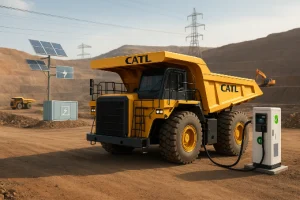
With the increasing demand for minerals crucial to clean energy technologies, the emissions from mining operations are also on the rise. As a result, numerous mining companies are taking proactive steps to reduce emissions and embrace low-carbon technologies. These efforts play a crucial role in ensuring that the mining sector is in line with global climate goals.

The industry is also actively seeking ways to minimize its impact on the environment. As an investigative journalist, it’s fascinating to see how certain companies are exploring the use of bacteria to extract metals from low-grade ores. This innovative approach has the potential to greatly minimize water usage and chemical pollution.
Although progress has been made, there are still obstacles to overcome. Land clearing for mining operations is causing substantial emissions of greenhouse gases due to the destruction of vegetation and soils. In water-stressed regions, the high water footprint of numerous mining operations continues to be a cause for concern.
As the mining industry continues to evolve, finding a delicate balance between meeting the increasing demand for minerals and safeguarding the environment will be of utmost importance. The industry’s continuous endeavors to enhance water management, decrease emissions, and enhance transparency in disclosing environmental impacts signify significant progress towards achieving more sustainable mining practices.