Scrap copper theft is the headline. Rising rebuild bills are the story.
Mining equipment parts cost 2025 is already climbing, and the signs are everywhere: from scrap copper theft in Tucson to higher rebuild bills across the Midwest.”

In the weeks since the US slapped a 50% tariff on copper products, police from Arizona to Ohio have been chasing down thieves yanking copper wire out of streetlights and construction sites. It makes for colorful headlines — “copper bandits strike again.”
But inside the gates of America’s mines, the real bandits aren’t kids with bolt cutters. They’re the invoices driving up mining equipment parts cost in 2025. That same copper wiring being ripped from scrapyards is also threaded through every haul truck alternator, every loader harness, every mill motor. And those rebuild kits miners rely on? They’re suddenly 15–20% more expensive than they were a month ago.
The Aftermarket Squeeze: Why Mining Equipment Parts Cost 2025 Keeps Rising”
Executives love to talk about shiny new fleets. Maintenance managers know the truth: most of the money goes into keeping the old fleets alive. Alternators, wiring looms, hydraulic motors, electric drives — the copper-heavy parts are the first to feel the tariff’s bite.
Caterpillar admitted it openly in its Q2 call: tariffs hit “all three primary segments” and pushed costs to the top end of estimates. Translation: they’re charging more, because their suppliers are charging them more. Komatsu is no different — two-thirds of its mining revenue is aftermarket, not new iron. If copper costs go up, the parts desk feels it first.
More Read

Dealers are quietly shortening quote validity too. Thirty-day price locks? Gone. Procurement managers are being told 90 days, if they’re lucky — or “call back next week.”

What the industry is actually talking about
Scroll LinkedIn or Reddit and you’ll see the same chorus:
- Scrap theft stories get the most clicks. People can picture a darkened street in Tucson because the wire’s been stolen — it’s a vivid proxy for scarcity.
- Lead-time gripes dominate industry threads. One Canadian planner posted: “Every rebuild kit I spec’d in June is now 15% higher, and finance thinks I’m exaggerating.” That post was flooded with nodding emojis.
- Cynicism about policy spreads fastest: “Tariff today, smelting capacity in 2035.” That one-liner has more traction than any analyst report.
Why? Because that’s the truth miners live. It’s not abstract. It’s their order sheets.
The ESG paradox: green fleets, higher copper bills
Electrification was supposed to be the fix — cut diesel, cut emissions, rack up ESG points for annual reports. Mines from Sudbury to the Pilbara have been piloting battery-electric haul trucks and loaders with glossy press releases and ribbon-cuttings.
But here’s the ugly truth buried under the PR: electric machines are copper hogs. Every battery busbar, every high-voltage cable, every oversized motor needs copper in bulk. The International Copper Association puts the math plainly: a standard EV takes 83 kg of copper compared to 23 kg for an ICE car; electric buses chew through as much as 300 kg each. Scale that to a mining BEV, and you’re talking copper by the ton.
Copper by the Numbers
| Machine Type | Average Copper Use | Source |
|---|---|---|
| Internal Combustion Engine (ICE) car | ~23 kg | International Copper Association |
| Battery Electric Vehicle (BEV) car | ~83 kg | International Copper Association |
| Electric Bus | 224–369 kg | International Copper Association |
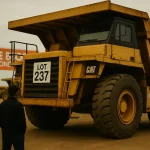
| Haul Truck (diesel, ~220t class) | ~6,000–6,500 lbs (~2,700–3,000 kg)* | OEM filings / industry estimates |
| Battery-Electric Haul Truck (prototype) | 2×–3× diesel copper intensity | Industry trials / ICA extrapolation |
*Estimates based on OEM disclosures: a 793-class haul truck can carry over 3,000 kg of copper in wiring, motors, and electrical systems. – Mining equipment parts cost 2025 rising due to copper tariffs.
So the same tariff that was sold as a blow against foreign supply chains ends up blowing a hole in the budgets of mines trying to decarbonize. Go green, pay more. Try explaining that contradiction to your sustainability officer when their budget collides with your procurement spreadsheet.
Past comfort, present pain, future headaches
The past looked deceptively stable. For years, just-in-time parts pipelines made life easy: order a harness or alternator, expect it on site within weeks, no need to think about tariffs or trade wars. Copper was a background commodity, not a line-item nightmare.
The present is less forgiving. Newsfeeds are filled with copper theft headlines — streetlights dark in Tucson, cargo trucks intercepted in Ohio. OEMs like Caterpillar are warning investors about tariff-driven cost hikes. Dealers are re-pricing parts mid-quote. The once-predictable parts counter now feels like a futures exchange.
The future? It’s already being whispered on shop floors: “sweat the assets.” Mines will push machines deeper into their hours before pulling them in. Rebuild cycles will get stretched, components cannibalized from sidelined units, safety corners tested under the polite banner of “cost control.” Not because anyone wants to gamble with downtime — but because the math leaves them no choice.
And yes, there are winners. Rebuild shops that can stretch the life of aging trucks without ordering copper-intensive OEM kits. Second-hand dealers who can move good iron while new machines sit in backlogs. In a tariff war, survival isn’t always about shiny innovation. Sometimes it’s about keeping the old beasts running one more season.
The undeniable truth
Strip away the politics, the speeches, the futures charts — and you’re left with one stubborn fact: mines run on copper wiring. Without it, nothing moves, nothing digs, nothing processes.
Every extra dollar tacked onto a harness, every week added to a rebuild kit delivery, pushes availability closer to breaking point. Procurement managers feel it when quotes expire. Maintenance planners feel it when a rebuild cycle gets stretched past safe limits. Operators feel it when a truck sits idle because a single copper-heavy component is missing.
This is why mining equipment parts cost 2025 has become more than a budget line — it’s a frontline operational risk.
Mines don’t run on Washington’s rhetoric. They run on copper. And copper just got tariffed.
Why you’ll share this
Because you’re living it. If you’re in procurement, you’ve already walked into a meeting where finance accused you of exaggerating. If you’re in maintenance, you’ve already explained that a delayed rebuild means gambling with downtime. If you’re in operations, you’ve already watched output slip because one machine sat waiting on a part.
This piece gives you receipts: theft spikes, tariff law, OEM warnings, global price data. It validates what you’ve been saying for weeks but couldn’t get anyone outside your department to hear.
No, it won’t make the parts cheaper. But it will make the conversation easier. And that’s why you’ll share it — because the more people inside your company who understand what’s happening, the fewer times you’ll have to explain it alone.