Key Takeaways
- India’s 2025 mining bill allows public funds for overseas mineral exploration.
- The National Mineral Exploration Trust can now finance foreign critical mineral projects.
- It supports the National Critical Mineral Mission’s global sourcing mandate.
- China’s rare earth export restrictions sparked urgency.
- Fast-tracked clearances and fiscal incentives aim to activate India’s mining ecosystem.
India is preparing a major overhaul of its mineral strategy through a proposed mining bill aimed at reshaping how the country secures critical raw materials. The India mining bill, officially titled the Mines and Minerals (Development and Regulation) Amendment Bill, 2025, is expected to be tabled during the upcoming monsoon session of Parliament.

For the first time, this legislation will allow public funds to be directed toward the acquisition and exploration of critical minerals overseas. The move marks a departure from India’s previously domestic-only mining framework and represents a foundational element of India’s push to become a global player in mineral diplomacy.
The bill would amend the operational scope of the National Mineral Exploration Trust (NMET), which currently finances only domestic mineral projects. A senior government official involved in drafting the critical minerals bill said, “This amendment is key to facilitate use of NMET funds for mining, sourcing activities abroad.”
India Mining Bill Anchors National Critical Mineral Mission
The amendment is central to the operationalization of the National Critical Mineral Mission (NCMM)—India’s flagship initiative to secure strategic mineral assets globally. Under this framework, NMET would be empowered to allocate over ₹1,600 crore toward global exploration and mining partnerships, according to documents from the Ministry of Mines.
The India mining bill 2025 supports the NCMM’s comprehensive mandate, which spans the full value chain: from mineral identification and overseas asset acquisition to domestic processing, recycling, and end-use development. A list of 30 minerals—including lithium, cobalt, nickel, graphite, and rare earth elements—has been identified as strategically essential under the new policy.
More Read

The Geological Survey of India (GSI) has been tasked with executing 1,200 mineral exploration projects across the country through 2031, in parallel with India’s international sourcing ambitions.

China’s Rare Earth Restrictions Drive Legislative Momentum
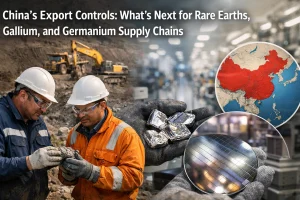
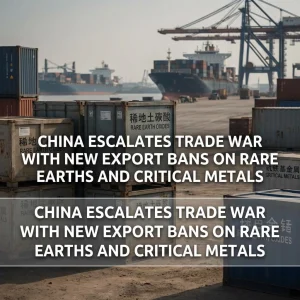
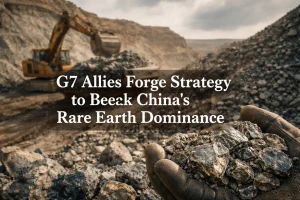
The India mining bill comes amid rising geopolitical urgency. In April, China imposed export restrictions on key rare earth elements—intensifying concerns over concentrated supply chains. With China controlling over 85% of global rare earth processing, India’s dependence has become an acute strategic liability.
In response, the new critical minerals bill aims to equip India with tools to negotiate long-term offtake agreements, acquire stakes in foreign mines, and develop non-Chinese supply routes. These capabilities, officials say, are essential for India’s energy transition, defense readiness, and industrial competitiveness.
Other countries have moved in parallel. The U.S. Inflation Reduction Act incentivizes clean energy supply chains free from Chinese inputs. The European Union recently passed its Critical Raw Materials Act, prioritizing diversification and stockpiling.
Streamlining Domestic Bottlenecks: The Parivesh 2.0 Reform
While the India mining bill focuses on global expansion, domestic reforms are also underway. The Ministry of Environment, Forest and Climate Change (MoEFCC) has begun classifying critical mineral mining under a separate fast-track category in the Parivesh 2.0 digital clearance platform.
“There is a thrust on operationalization of mines, especially the critical and strategic ones,” said a mines ministry official. “The Centre has also created a project monitoring unit to support state-level clearances.”
In tandem, the government has linked the Special Assistance to States for Capital Investment (SASCI) program to the implementation of mining reforms—providing fiscal incentives for timely approvals and mineral block auctions.
Risks and Global Perceptions
Experts warn that India’s global mineral push must be paired with environmental and governance safeguards. “Acquiring assets abroad—especially in politically unstable regions—raises serious ESG, legal, and reputational risks,” said Aditi Banerjee, a resource security researcher at the Observer Research Foundation. “India will need a new class of mining diplomats and commercial negotiators.”
The International Energy Agency has flagged concerns over environmental degradation, water scarcity, and waste contamination linked to rare earth extraction—especially in developing countries with limited regulatory oversight.
Still, Indian officials argue that the India mining bill 2025 is not optional—it is a critical instrument for securing supply chains and ensuring energy security in a world of constrained resources.
“This is not just industrial policy,” said Banerjee. “This is the blueprint for India’s energy and economic sovereignty.”