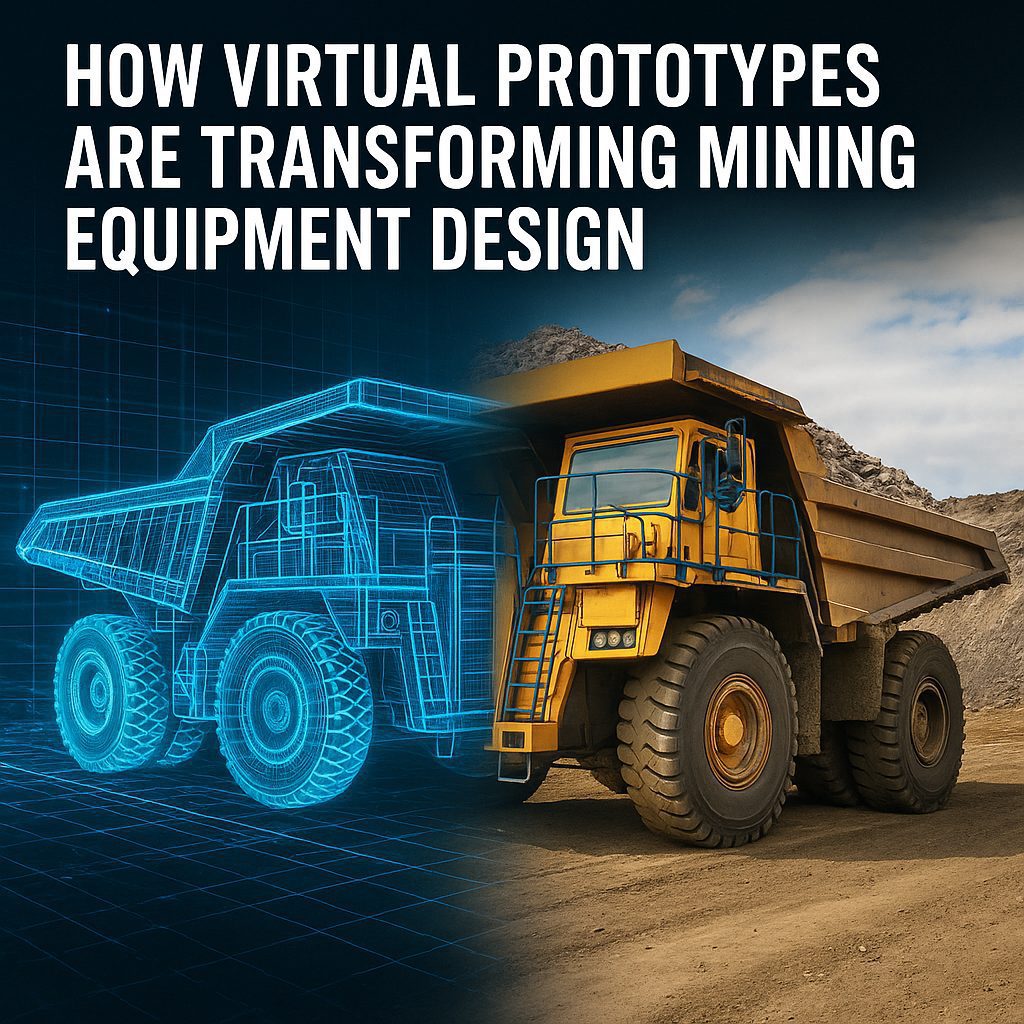
For more than a century, mining equipment design depended on physical prototypes—costly, labor-intensive models that left little room for failure. Now, a digital revolution is reshaping how mining machinery is developed, with virtual prototypes at the center of the transformation.

Thanks to the convergence of simulation technologies, data analytics, and artificial intelligence, mining companies are driving innovation, cutting costs, and accelerating equipment development at an unprecedented pace.
From Physical Models to Virtual Prototypes
Virtual prototypes have moved beyond theory to become essential tools in modern mining equipment design. Technologies such as finite element analysis (FEA), discrete element method (DEM) simulations, and AI-driven digital twins allow engineers to simulate the real-world behavior of crushers, feeders, and blast furnaces—without a single weld or cut.
“Virtual prototyping gives us the power to experiment more and fail less,” said Pär-Ola Jansell, Vice President and Global Technical Lead for Heavy Equipment, Trucks, and Rail at Altair. “You can push boundaries that would be cost-prohibitive with physical models.”
By replacing traditional trial-and-error with predictive modeling, companies are gaining speed, precision, and a decisive competitive advantage.
More Read
Related News
- Critical Study Warns of Deep Sea Mining Risks, Highlights Environmental Impact of DSM
- New Cobalt Alternative Alloy Developed by U.S. Lab to Curb Reliance on China
- Ghana Tightens Resource Control with Takeover of Damang Mine in Mining Policy Shift
- U.S. Targets Cobalt Mining and Mineral Resources in Congo for Strategic Supply Chain Security
Accelerating Mining Equipment Design
The traditional method of developing heavy machinery required multiple physical builds and destructive testing—processes that often spanned years. Today, virtual prototypes slash development timelines and lower costs dramatically.

Once trained, AI-powered deep learning models can simulate material flows through mining systems 1,000 times faster than traditional methods. This acceleration is changing how companies approach mining equipment design, allowing them to run complex “what-if” scenarios on components like jaw crushers and vibrating screens in mere days.
The result is faster innovation, fewer design failures, and stronger, more resilient equipment.
Real-World Applications of Virtual Prototypes
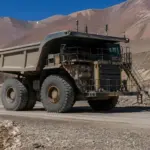
The impact of virtual prototypes is already evident across mining operations. Engineers now use DEM simulations to predict how ores and coal behave across different equipment configurations, identifying potential failure points before they cause costly downtime.
In one case, virtual simulations allowed a mining operator to optimize material discharge from a belt feeder, extending equipment lifespan and reducing maintenance costs. Similarly, modeling the breakage of materials in cone crushers has led to improved designs that better withstand the harsh realities of mining environments.
AI and Digital Twins: Mining’s Next Leap Forward
Looking ahead, the combination of AI, digital twins, and virtual prototypes is set to redefine mining equipment design once again.
AI agents, leveraging knowledge graphs, are already enhancing productivity by optimizing workflows and predicting maintenance needs. Digital twins allow engineers to simulate not just individual components but entire mining ecosystems—integrating electronic, mechanical, and thermal performance into a single virtual environment.
“By moving away from silos and embracing integrated simulations, mining companies can innovate faster and deliver more sustainable solutions,” Jansell said.
Opportunities and Challenges Ahead
Adopting virtual prototypes presents challenges, including high initial investment and the need for specialized expertise. Integrating new platforms with legacy systems can also be a hurdle.
Nevertheless, companies that embrace virtual prototyping early will gain significant commercial advantages, building equipment that is stronger, lighter, more sustainable, and faster to market.
In a high-risk, high-reward industry, virtual prototypes are no longer optional—they are fast becoming the foundation of next-generation mining equipment design.