The global green mining market is entering a new phase of growth, projected to more than double over the next decade as governments and investors push companies toward cleaner extraction methods. Valued at $11.4 billion in 2022, the market is forecast to reach $27.9 billion by 2032, expanding at a compound annual growth rate (CAGR) of 9.5%, according to new industry data.

Green mining—defined by its emphasis on minimizing environmental damage through innovations such as renewable energy use, carbon capture, and efficient waste management—is no longer a niche endeavor. It is rapidly becoming a business imperative.
“Companies that don’t integrate green practices risk losing access to capital markets,” said Anna Fredericks, an ESG strategist at Bancroft Consulting. “The pressure is coming from all sides: regulators, investors, and even end consumers.”
Related News
- Gold Fields Ghana Secures Damang Mine Lease Extension Amid Push for Local Ownership
- Critical Study Warns of Deep Sea Mining Risks, Highlights Environmental Impact of DSM
- New Cobalt Alternative Alloy Developed by U.S. Lab to Curb Reliance on China
- Ghana Tightens Resource Control with Takeover of Damang Mine in Mining Policy Shift
Stricter Laws, Bigger Bets
Governments across Europe, Asia, and the Americas are tightening environmental standards for mining activities. The European Union’s Critical Raw Materials Act, enacted earlier this year, explicitly ties funding and permits to sustainability benchmarks. In Canada, federal incentives for low-carbon mining technologies are reshaping investment decisions.
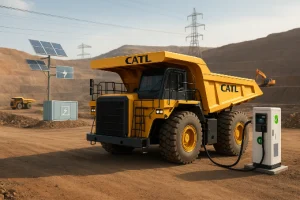
As a result, industry giants such as BHP and Rio Tinto are ramping up efforts to retrofit operations with renewable power, automation, and emissions tracking systems. Rio Tinto’s 2023 partnership with Japan’s Marubeni Corporation to deliver responsibly sourced aluminum marks a clear pivot toward greener supply chains.
“Regulatory compliance used to be a cost,” said James Calder, managing director at Resource Capital Group. “Now it’s an opportunity to differentiate—and dominate.”

Technology’s Double-Edged Sword
Advanced technologies underpin much of green mining’s promise. Autonomous vehicles, AI-based operational analytics, and methane oxidation systems are improving resource efficiency and cutting carbon footprints.
The utilization of ventilation air methane (VAM) technology, for instance, not only reduces greenhouse gas emissions but also creates new revenue streams by converting methane into usable energy. In 2022, VAM technologies dominated the green mining tech segment, driven by their dual benefit of environmental mitigation and operational profitability.
However, the upfront costs remain formidable. Outfitting mines with state-of-the-art water management and waste recycling systems can require millions in initial investment—capital many smaller operators simply cannot access.
“There’s no denying that green mining technologies are expensive,” said Priya Natarajan, a mining economist at the University of Melbourne. “Without better financing mechanisms, progress will be uneven.”
Regional Dynamics: Asia-Pacific at the Helm
Asia-Pacific led the global green mining market in 2022, bolstered by stringent regulations in China and Australia, along with rising demand for sustainably sourced materials. North America and Europe are not far behind, leveraging innovation hubs and supportive public policies to transition legacy mines toward greener operations.
Meanwhile, parts of Latin America, Africa, and the Middle East face structural challenges. Weak regulatory frameworks and a shortage of financing tools slow the adoption of sustainable mining practices, despite these regions hosting some of the world’s richest mineral deposits.
COVID-19: A Catalyst in Disguise
The pandemic initially disrupted mining supply chains and deferred investment in sustainability projects. But it ultimately heightened awareness of systemic vulnerabilities. In the aftermath, mining companies have been quicker to prioritize resilience—sustainability included—as core to long-term profitability.
“COVID taught companies that robustness isn’t optional,” said Fredericks. “Environmental resilience is now seen as part of operational resilience.”
Looking Ahead
Despite obstacles, momentum for green mining is unmistakable. The combination of market forces, regulatory pressure, and technological advancement suggests the sector’s expansion will continue apace, even if the path forward is uneven.
“Green mining isn’t the future—it’s happening now,” Calder said. “The companies that adapt will survive. Those that don’t will be left behind.”