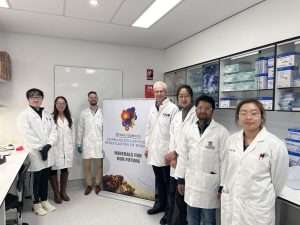
Geologic hydrogen is emerging as a potential clean energy source, and First Atlantic Nickel Corp. (TSXV: FAN) is taking a major step forward in its exploration. The company has announced a strategic research partnership with Colorado School of Mines to assess the geologic hydrogen potential within Newfoundland’s St. Anthony and Pipestone Ophiolite Complexes. This collaboration aims to unlock new hydrogen resources that could support North America’s transition to cleaner energy.

Exploring Geologic Hydrogen in Newfoundland’s Ophiolite Complexes
First Atlantic Nickel is known for its focus on awaruite nickel-iron alloy mineralization, which offers a cleaner alternative to traditional nickel processing. While continuing its core nickel exploration, the company is now leveraging existing drilling data to support research into geologic hydrogen—a naturally occurring form of hydrogen gas generated through the reaction of water with certain rock types.
The study will focus on two key Newfoundland-based properties:
Related News
- South African Phosphate Mine Faces New Environmental Lawsuit
- Metals Markets and the Impact of Tariff Policies on Precious Metals
- U.S. construction industry Faces Rising Costs Amid New Tariffs
- Tshiamiso Trust Reaches Major Milestone with R2 Billion Payout to Ex-Gold Mineworkers
Atlantis Project (St. Anthony Ophiolite Complex)
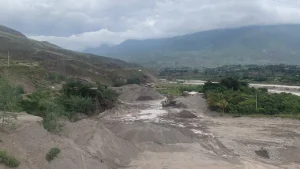
Covering 103 km², this project consists of two ultramafic massifs rich in serpentinized peridotites, a rock type linked to natural hydrogen production. With a shallow, accessible structure, the site is well-suited for evaluating hydrogen emissions and developing models for geologic hydrogen generation.
Atlantic Nickel Project (Pipestone Ophiolite Complex)
Spanning 71 km², this region contains a 30 km long ultramafic belt with steeply dipping rock formations. Recent drilling at the RPM Zone intersected 0.24% nickel and 0.32% chromium over 383.1 meters, confirming a deep hydrogen-producing environment. The project’s depth profile aligns with models where geologic hydrogen can be trapped under high lithostatic pressure, increasing its potential as a long-term energy resource.
Advanced Research Methods to Uncover Hydrogen Potential
Colorado School of Mines will apply cutting-edge geophysical, remote sensing, and geochemical techniques to assess the region’s geologic hydrogen potential. The study will include:

- Geophysical Surveys – Using magnetic, gravity, and seismic methods to identify fault systems that could act as hydrogen conduits.
- Remote Sensing – Hyperspectral imaging and satellite data to detect mineral signatures associated with serpentinization, a key process in hydrogen production.
- Soil and Gas Sampling – Measuring surface hydrogen emissions to confirm active hydrogen generation.
- Rock and Drill Core Analysis – Examining serpentinization levels and awaruite abundance to evaluate hydrogen saturation in mineral structures.
By integrating these methods, the research aims to construct a 3D model of geologic hydrogen distribution, identifying the most promising sites for further exploration and potential commercial development.
Geologic Hydrogen: A Clean Energy Alternative
Unlike hydrogen derived from fossil fuels, geologic hydrogen offers a cleaner and more cost-effective alternative. Natural hydrogen reservoirs could provide a large-scale, low-emission energy source that reduces reliance on carbon-intensive hydrogen production methods.
Dr. Yaoguo Li from Colorado School of Mines highlighted the significance of this research:
“Geologic hydrogen systems are a combination of mineral systems and natural gas systems. In our group, we have the unique combination of expertise from both the mining industry and oil and gas industry to advance geologic hydrogen exploration and stimulated hydrogen monitoring.”
The project aims to achieve three main goals:
- Identify and map hydrogen-rich formations within Newfoundland’s ophiolite complexes.
- Develop exploration techniques specific to natural hydrogen systems.
- Establish efficient methods for generating hydrogen from serpentinized ultramafic rocks.
Strategic Importance for North America’s Energy and Mineral Security
The exploration of geologic hydrogen complements First Atlantic Nickel’s broader mission to reduce North America’s dependence on foreign nickel processing. The U.S. Geological Survey (USGS) has recognized awaruite (Ni₃Fe) as a key mineral for hydrogen-rich geological environments and a cleaner alternative to conventional nickel sources.
With China controlling 68–80% of global nickel refining capacity and 84% of Indonesia’s nickel production, finding new sources of domestically processed nickel and geologic hydrogen is crucial for securing critical mineral supply chains.
A Step Toward a Sustainable Hydrogen Future
The partnership between First Atlantic Nickel and Colorado School of Mines represents a significant move toward unlocking geologic hydrogen as a viable clean energy resource. As global interest in low-carbon hydrogen solutions grows, Newfoundland’s ophiolite complexes could become a key player in the future hydrogen economy.
With advanced research techniques, government interest in hydrogen energy, and ongoing mineral exploration, geologic hydrogen could soon emerge as a game-changing energy source for North America and beyond.