By Charles Pitts
The global mining industry has shifted from a period of strategic planning into a high-stakes era of execution. As we move through 2026, the term “critical minerals” is no longer just a policy buzzword; it is the central pillar of national security, industrial competitiveness, and the energy transition. For operators and investors, understanding the 2026 landscape requires moving beyond surface-level trends and into the specifics of supply-chain diversification, recycling scalability, and geopolitical maneuvering.
Critical minerals are defined by their essential role in modern technology: from EV batteries and renewable energy to defense systems: coupled with a high risk of supply disruption. As of mid-2026, the list of minerals deemed “critical” by the U.S., EU, and allied nations has expanded, reflecting a growing urgency to secure not just raw ore, but refined chemicals and high-purity metals.
The Geopolitical Map of 2026: Diversification in Action
For much of the last decade, the critical minerals conversation was dominated by China’s midstream grip. However, 2026 marks a pivotal year for the “China-Light” strategy. We are seeing the first significant results of massive government intervention and bilateral frameworks designed to bypass traditional chokepoints.
One of the most significant developments is the maturity of the U.S.–Australia Critical Minerals Framework. This partnership has funneled approximately $1 billion into joint projects, focusing on onshoring processing capabilities. Similarly, the U.S. has finalized agreements with Saudi Arabia for a rare-earths refinery and secured “right of first refusal” deals with Cambodia and Thailand.
More Read
For decision-makers, this means the geopolitics of mining are now driving the business cycle. Investment is flowing toward “friend-shored” jurisdictions where regulatory certainty and government backing mitigate the risks of resource nationalism seen in other regions.

Lithium: Supply Growth vs. Permitting Frictions
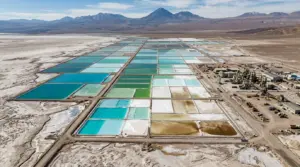
Lithium remains the most scrutinized metal in the 2026 battery complex. According to J.P. Morgan, global lithium demand is projected to grow by 16% year-over-year in 2026. This surge is driven by two main factors: the continued electrification of the automotive sector (58% of demand) and a massive uptick in stationary energy storage (30% of demand).

More Read

While lithium mining is expected to grow faster than global GDP, the 2026 outlook is tempered by “permitting fatigue” and state-heavy models. In the “Lithium Triangle” of Chile, Bolivia, and Argentina, the classification of lithium as a strategic asset has slowed some private concessions. Conversely, Argentina has become a magnet for private capital, though it remains exposed to macroeconomic volatility.
Operators are increasingly turning to brownfield expansions and tech-driven extraction to meet the gap. For instance, the uranium waste recovery model has inspired similar initiatives in the lithium space, where tailings and old mine waste are being re-processed for residual value.
Copper: The Structural Deficit Becomes Reality
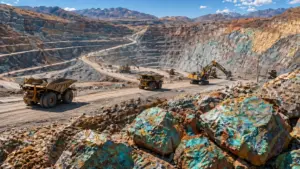
If lithium is the fuel for batteries, copper is the nervous system of the 2026 global economy. It is essential for grid infrastructure, data centers for AI processing, and renewable energy generation. J.P. Morgan estimates global demand growth at 2.6% for 2026, but supply remains structurally tight.
The 2026 outlook for copper is characterized by low inventories and high operational disruptions. Political risk in traditional hubs like Peru and water scarcity in Chile have constrained output. Furthermore, logistics bottlenecks: such as the rail and port failures seen in South Africa: have added weeks to export timelines.
Investors are now looking closely at copper stock data to identify companies with high execution capability in lower-risk jurisdictions. The market is pricing in a structural deficit that many analysts believe will support a long-term upward trend in pricing, regardless of short-term economic fluctuations.
Rare Earths and the 2026 Transition Year
Rare earths, particularly magnet materials like neodymium and praseodymium, remain the most concentrated segment of the supply chain. China still controls approximately 91% of refined rare earths and 92% of magnet production.

However, 2026 is a transition year for rare earth sovereignty. A temporary easing of Chinese export controls: set to expire in November 2026: has given Western firms a narrow window to accelerate their own refining capacity. We are seeing projects like the USA Rare Earth Round Top consolidation move into the final stages of development. For manufacturers, the goal is “de-risking” by securing offtake agreements with these emerging non-Chinese producers.
Cobalt: Navigating the DRC and the Rise of Indonesia
Cobalt continues to be the most ESG-sensitive mineral in the portfolio. The Democratic Republic of Congo (DRC) still produces roughly 70% of the world’s cobalt, but governance issues and contract reviews by the DRC government have created significant risk premia.
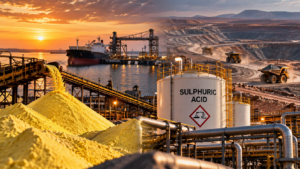
The 2026 shift in cobalt supply is coming from Indonesia. By leveraging High-Pressure Acid Leaching (HPAL) technology in nickel projects, Indonesia has rapidly increased its cobalt output as a by-product. While this diversifies supply away from the DRC, it brings its own set of ESG challenges, particularly regarding carbon-heavy refining and tailings management.
Technology and Circularity: The 2026 Success Strategy
Success in the 2026 supply chain is increasingly tied to technology and circularity. The U.S. Department of Energy (DOE) has committed over $1 billion to mining and processing technology, including $275 million specifically for tailings extraction.

Recycling has moved from pilot programs to commercial scale. In 2026, new recycling facilities across North America and Europe are beginning to provide a “strategic hedge” against primary supply volatility. This circular model not only improves ESG scores but also helps companies comply with increasingly stringent regulations like the EU’s “green protectionism” policies.
Market Snapshot: 2026 Critical Minerals Outlook
| Mineral | Primary Demand Driver | 2026 Supply Status | Key Risk |
|---|---|---|---|
| Lithium | EVs, Grid Storage | Tight / Expanding | Permitting Delays |
| Copper | Grid, AI, Renewables | Structural Deficit | Political Risk (SA) |
| Rare Earths | Defense, Magnets | Extremely Concentrated | Export Controls |
| Cobalt | Aerospace, High-Nickel | Diversifying | ESG / Governance |
| Nickel | EV Batteries, Steel | Surplus to Balanced | Price Volatility |
Critical Minerals: Key Strategic Takeaways for 2026
For mining professionals and investors, navigating the remainder of 2026 requires a focus on three areas:
- Risk Mapping: Quantify exposure beyond Tier-1 suppliers. Understand where your refined chemicals and magnets are coming from, not just the raw ore.
- Long-Term Offtakes: Secure supply through equity stakes and long-term contracts. The era of “just-in-time” procurement is over; the era of “just-in-case” inventory and secure supply is here.
- ESG as a Value Driver: Traceability is now a requirement for market access, especially in the EU. Companies that can prove “clean” supply chains will command a premium.
As we look toward 2027 and beyond, the critical minerals sector will remain the most dynamic and volatile segment of the mining industry. The winners will be those who can execute on project timelines while successfully navigating the complex web of global policy and resource sovereignty. For more on the companies leading these efforts, see our report on mining stocks to watch in 2026.