By Penny Langford

The global copper market is entering a period of structural transformation that has largely decoupled it from traditional cyclical patterns. By 2026, the intersection of artificial intelligence (AI) infrastructure deployment and a chronic lack of primary mine investment is expected to create a market environment defined by volatility and tight supply-demand balances. While historical copper demand was tethered to Chinese construction and global manufacturing, the "second wave" of electrification: led by hyperscale data centers: is introducing a high-intensity demand driver that the current project pipeline is ill-equipped to meet.
As we look toward 2026, analysts are increasingly focused on whether the industry can bridge the gap between "green" demand and "brownfield" realities. The current consensus points to a market that will likely oscillate between modest surpluses and significant structural deficits, with price floors significantly higher than the historical averages of the last decade.
Copper Market Snapshot: 2026 Forecast Range
To understand the trajectory of the market, it is essential to look at the divergence in major bank and research firm projections for 2026.
| Source | 2026 Forecast Sentiment | Estimated Price (USD/ton) | Market Balance View |
|---|---|---|---|
| Goldman Sachs | Neutral/Cautious | $12,650 | ~490k ton surplus |
| TradingKey | Bullish | $12,075 | ~330k ton deficit |
| LongForecast | Very Bullish | $14,100 | Severe shortage |
| Bank of America | Bullish | $11,500 – $13,000 | Structural deficit |
The AI Data Center Surge: A High-Intensity Demand Driver
The most significant shift in the 2026 outlook is the accelerating demand from AI-driven data centers. Traditional data centers were already copper-intensive, requiring large volumes for power distribution and cooling systems. However, hyperscale AI facilities are fundamentally different in their metal requirements.
Recent analysis suggests that a single hyperscale AI data center can require up to 50,000 tons of copper: nearly triple the requirement of a conventional facility of similar physical footprint. This intensity stems from the massive power requirements of AI chips, which necessitate higher-capacity transformers, extensive busbar systems, and advanced liquid cooling architectures. For a deeper look at these requirements, see our analysis on copper demand and AI data center drivers.

By 2026, the cumulative impact of these facilities is expected to add hundreds of thousands of tons to the global demand profile. Unlike the electric vehicle (EV) market, where substitution or "thrifting" is a constant threat, the electrical infrastructure of a data center offers limited alternatives to copper due to its thermal and conductive properties.


Supply Constraints: The "Quiet Crisis" in Mine Production
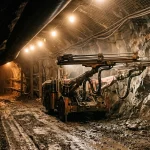
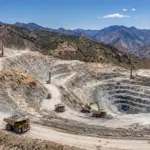
While demand forecasts are being revised upward, the supply side faces significant headwinds. The mining industry is currently grappling with declining ore grades, rising operational costs, and a permitting environment that has extended the "discovery-to-production" timeline to over 15 years in most jurisdictions.
By 2026, several major legacy mines in Chile and Peru are expected to see significant production declines as they transition from high-grade pits to lower-grade underground operations. While projects like Ivanhoe’s Kamoa-Kakula have provided essential supply growth, they are the exception rather than the rule.
Furthermore, the capital required to bring new projects online is skyrocketing. Financing remains a hurdle for many junior and mid-tier explorers. However, some projects are finding success through alternative credit facilities, such as Generation Mining's recent $310 million credit for its Marathon project, which highlights the strategic importance of secure North American supply.

2026 Copper Price Forecast: Base, Bull, and Bear Cases
The 2026 outlook can be categorized into three distinct scenarios based on the speed of AI deployment and the stability of global mine supply.
The Base Case: Elevated Consolidation ($12,000 – $12,800/ton)
In this scenario, AI demand continues its steady ascent, and EV penetration remains on track. A small market surplus or deficit (within 100,000 tons) is maintained as new supply from Central Africa and brownfield expansions in the Americas offset legacy declines. Prices remain historically high, supported by the floor set by rising production costs and the strategic need for inventory builds.
The Bull Case: The "AI Squeeze" (Above $14,000/ton)
The bull case assumes a convergence of factors: a faster-than-expected roll-out of power-hungry AI clusters and a series of unplanned disruptions at major mines. If the market shifts into a structural deficit exceeding 400,000 tons by 2026, prices could spike beyond previous all-time highs. This would be exacerbated by a lack of available scrap, as high prices have already "pulled forward" much of the easily accessible secondary supply. For more on this potential reset, read about the 2026 price forecast reset.
The Bear Case: Macro Stagnation (Below $10,500/ton)
A potential bear case for 2026 relies on a significant slowdown in Chinese manufacturing and residential construction. If China’s property sector does not stabilize, the resulting surplus of copper traditionally used in cables and appliances could offset the gains from the AI and energy transition sectors. Additionally, if high interest rates persist globally, delaying grid modernization projects, the "green" demand pulse may arrive later than the 2026-2027 window.

Geopolitical and Macro Factors: The Risk of Substitution
As copper prices remain elevated, the risk of substitution: primarily with aluminum: remains a key variable for 2026. Aluminum is already the preferred material for long-distance high-voltage transmission lines. However, for the complex wiring required in AI servers and localized grid infrastructure, copper’s superior conductivity and durability remain difficult to replace.
Policy risks also loom large. Governments in resource-rich nations are increasingly looking to increase royalties or "windfall" taxes on copper producers to fund social programs. In the U.S. and Europe, the push for "Critical Mineral" status is a double-edged sword: while it may lead to faster permitting, it also brings increased scrutiny regarding environmental, social, and governance (ESG) standards.
Strategic Takeaways for Operators and Investors
For those navigating the copper market in 2026, the focus must remain on project execution and resource security.
- Grade Management: Operators must prioritize technologies that improve recovery rates from low-grade ores.
- Strategic Stockpiling: Large consumers of copper, particularly in the tech and automotive sectors, are likely to move toward long-term offtake agreements directly with miners to bypass the volatility of the LME.
- Regional Diversification: The shift toward "near-shoring" supply chains will favor projects in jurisdictions like Canada, the U.S., and Australia, even if they have higher initial capital requirements.

By 2026, copper will be less of a "commodity" and more of a "strategic infrastructure asset." Whether the market faces a surplus or a deficit, the underlying reality is that the digital and energy revolutions are being built on a foundation of copper: a foundation that is becoming increasingly expensive to maintain.
Social Media Snippet (LinkedIn/X)
Headline: Is the AI surge about to trigger a copper supply shock in 2026? ⚡️?
As hyperscale data centers require up to 50k tons of copper per facility, the "quiet crisis" in mine production is hitting a critical juncture. While Goldman Sachs projects a modest surplus, others foresee a 330k ton structural deficit.
Key takeaways for 2026:
? AI demand is decoupling copper from traditional cyclical trends.
? Mining ore grades are declining as permitting timelines stretch beyond 15 years.
? Price forecasts cluster between $12k-$14k/ton.
Read the full deep-dive on Skillings Mining Intelligence: [Link] #Copper #Mining #AI #EnergyTransition #CriticalMinerals