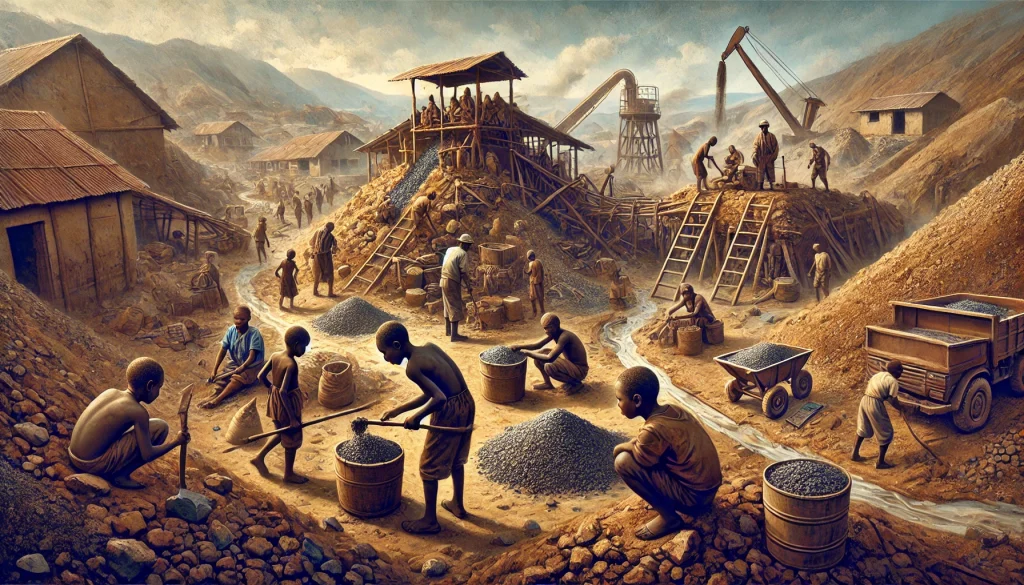
The cobalt mining industry in the Democratic Republic of the Congo (DRC) continues to be plagued by severe human rights violations, environmental degradation, and exploitative practices. Despite the global push towards a green energy transition, the methods used to extract cobalt—a critical component in electric vehicle batteries, smartphones, and other modern technologies—raise significant ethical concerns. The DRC, which holds about 70% of the world’s cobalt reserves, has become a focal point of these issues, as multinational corporations and local governments prioritize profit over people and the environment(

The Human Cost: Forced Evictions and Child Labor
Cobalt mining in the DRC often involves serious human rights abuses, including forced evictions and child labor. In Kolwezi, a city central to cobalt and copper mining, thousands of residents have been displaced as companies expand their operations. These evictions are frequently carried out with little warning and inadequate compensation, leaving many families without access to clean water, electricity, or basic services(
Moreover, child labor remains a persistent issue in artisanal mines. Children as young as seven work in hazardous conditions, often without protective equipment, facing daily threats to their health and safety. Weak enforcement of labor laws and corruption within local governments perpetuate this exploitation. International pressure to eliminate child labor from the cobalt supply chain has led to some improvements, but progress remains slow and inconsistent(
Related News
- BHP’s Proposed Expansion at Olympic Dam: South Australia Begins Assessment Process
- Copper Gains on Hopes of U.S. Rate Cut Boosting Demand in September
- American Lithium Faces Uncertainty as CEO Simon Clarke Resigns
- U.S.-Philippines Nuclear Tech Pact Makes Strategic Progress
- Australian Mining Industry Faces Critical Talent Shortage Amid Global Energy Transition
Environmental Degradation: Pollution and Health Impacts
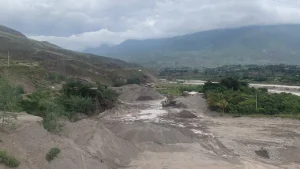
Cobalt mining in the DRC also causes severe environmental damage. A recent report highlighted how water contamination from mining operations has led to widespread health issues among local communities. Toxic substances released during mining, including heavy metals and acid from tailings dams, have polluted water sources, severely impacting drinking water, agriculture, and fisheries. This environmental destruction has turned the DRC’s cobalt-rich areas into “sacrifice zones,” where residents suffer from increased rates of reproductive health issues, skin diseases, and other illnesses linked to pollution(
The failure of mining companies to meet even the basic standards for clean water provision exacerbates these problems. Despite promises to address environmental concerns, the companies continue to operate with minimal accountability, often attributing pollution to historical mining activities rather than taking responsibility for current operations(
China’s Dominance and Global Market Control
China’s significant influence in the global cobalt market further complicates the situation. Chinese companies control a substantial share of cobalt mining operations in the DRC, often benefiting from favorable terms secured through government-backed agreements. This dominance allows China to dictate market prices and supply chains, reinforcing the exploitative practices prevalent in the industry. For local communities in the DRC, this means that the wealth generated from cobalt extraction rarely benefits the broader population, instead enriching foreign companies and local elites(

The Path Forward: Ethical Sourcing and Global Accountability
Addressing the deep-seated issues in the DRC’s cobalt mining sector requires a multifaceted approach involving stronger regulatory enforcement, international oversight, and corporate accountability. Initiatives like the Responsible Cobalt Initiative aim to improve transparency and working conditions in the cobalt supply chain, but the impact of these efforts has been limited by the entrenched interests of powerful stakeholders(
Furthermore, major electric vehicle and technology companies relying on DRC cobalt must increase pressure on their suppliers to adhere to stricter environmental and human rights standards. Consumers and advocacy groups also play a critical role in demanding ethically sourced materials, pushing for reforms that protect the environment and the communities affected by mining activities.
The story of cobalt mining in the DRC is a stark reminder of the hidden costs of modern technology. While the global shift toward renewable energy and digitalization depends heavily on this critical mineral, it is essential to address the ethical and environmental issues that tarnish the industry. Only through collective action—spanning governments, corporations, and civil society—can we ensure that the benefits of cobalt mining do not come at the expense of human dignity and environmental health.