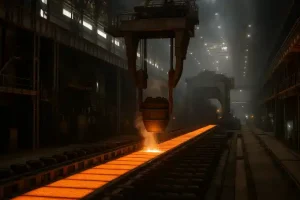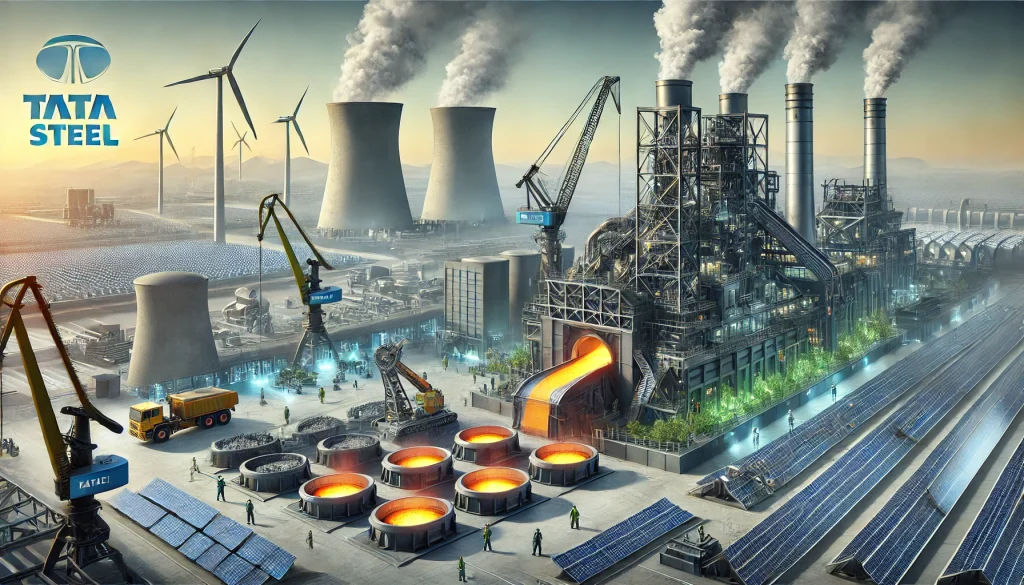
Tata Steel is pressing ahead with a transformative £1.25 billion ($1.55 billion) overhaul of its Port Talbot steelworks, replacing blast furnaces with two electric arc furnaces (EAFs). Backed by £500 million ($620 million) in UK government funding, the move is designed to cut carbon emissions and future-proof the UK steel industry. But the transition also brings job losses, supply chain concerns, and questions about whether this shift will truly strengthen UK steel in the long run.

A Green Future for the UK Steel Industry?
The installation of two EAFs at Port Talbot marks a significant step in Tata Steel’s decarbonization strategy. Unlike traditional blast furnaces that rely on iron ore and coking coal, EAFs primarily use scrap steel, reducing emissions by up to 90%. The planned furnaces are expected to cut carbon dioxide output by approximately 5 million metric tons annually, a major milestone for one of the UK’s most polluting industries.
However, analysts remain cautious. “This is a necessary transition, but it also presents major supply chain challenges. The UK doesn’t generate enough high-quality scrap steel domestically to meet production needs,” said Henry Morton, a metals industry analyst at CRU Group.
Tata Steel has yet to reveal how it plans to bridge that gap. Imports from the EU and beyond may become necessary, potentially increasing costs and limiting the UK steel industry’s ability to control its own supply.Re
Related News
- China Steel Industry 2025: Facing Uncertainty Amid Declining Output and Rising Trade Barriers
- Hot Rolled Coil (HRC): Key to Europe’s Industrial Transformation
- Stainless steel Market Slump Deepens as Nickel Prices Plunge
- U.S. Steel Industry Braces for Election Impact Amid Economic Policy Divide
Job Cuts and Economic Fallout
While the environmental benefits are clear, the shift to EAFs will come at a human cost. Tata Steel confirmed that approximately 2,500 jobs will be lost, including 1,900 roles at Port Talbot itself. The job cuts stem from the fact that EAF operations require significantly less labor than traditional blast furnaces.

“The impact on workers and the local economy will be profound,” said Gareth Davies, a trade union representative. “Tata has committed to retraining programs, but the reality is that many of these skilled jobs won’t be replaced.”
The UK government has pledged support for affected workers, but critics argue that the funding package falls short of what’s needed to help employees transition into new roles. The Labour Party has proposed a £2.5 billion national steel industry fund to assist with the transition, but whether this proposal will materialize remains uncertain.

Production Capacity: Will the UK Steel Industry Still Be Competitive?
One of the biggest concerns surrounding Tata Steel’s move is its impact on UK steel production capacity. Port Talbot’s two blast furnaces previously had the ability to produce 4.8 million metric tons of pig iron annually, with basic oxygen furnaces yielding 5 million metric tons of crude steel per year.
In contrast, the new EAFs will have a combined capacity of just 3 million metric tons per year—a nearly 40% reduction. While EAFs are generally more efficient, the drop in total output raises concerns about the UK steel industry’s ability to supply domestic industries, particularly automotive and construction.
“Steel customers in the UK will need to rely more on imports, which could drive up costs and create uncertainty in supply chains,” said Paul Jones, a procurement director at a major construction firm.
Tata Steel insists that the shift aligns with market realities, as demand for low-carbon steel grows. To bolster confidence, the company has already secured its first green steel contract with JCB, a major UK manufacturer of construction equipment.
What’s Next for Tata Steel and the UK Steel Industry?
Construction of the new EAFs is scheduled to begin in Q3 2025, pending planning approval, with operations expected to commence in 2027. The industry will be watching closely to see whether Tata Steel’s gamble pays off—both in terms of environmental gains and economic sustainability.
The move signals a major shift for the UK steel industry, but challenges remain:
- Can the UK secure enough high-quality scrap steel?
- Will domestic steel buyers tolerate higher costs or turn to imports?
- Will Tata Steel’s reduced production capacity undermine the UK’s industrial base?
For now, Tata Steel is betting that green steel is the future. But whether that future includes a thriving UK steel industry—or one increasingly dependent on imports—remains an open question.