By Charles Pitts
SASKATOON, Saskatchewan : Cameco Corporation (TSX: CCO; NYSE: CCJ) has suspended operations at its Key Lake milling facility and significantly reduced activity at the McArthur River mine following a critical infrastructure failure in northern Saskatchewan. The disruption, caused by the collapse of the Smoothstone River Bridge on Highway 165, has severed the primary supply artery for two of the world’s most significant uranium assets.
While the mining and milling sites themselves remain unaffected by floodwaters, the bridge failure has halted the delivery of essential operating materials and chemical reagents required for uranium processing. Analysts warn that an extended stoppage could remove up to 1.5 million pounds of uranium from the global market within a single month, further tightening a sector already struggling with a structural supply deficit.
Infrastructure Failure on Highway 165
The disruption began in the early hours of May 11, 2026, when record-level seasonal runoff and flash flooding caused the Smoothstone River to breach its banks. The surge led to the structural collapse of the Smoothstone River Bridge, a vital transit point for heavy transport vehicles traveling to the Athabasca Basin.
More Read

Highway 165 serves as the main logistical corridor for Cameco’s northern operations. While an alternative route exists, regional authorities have placed strict weight and road restrictions on these secondary paths, rendering them unsuitable for the high-volume industrial transport required to sustain full production at Key Lake.


“The safety of our employees and the integrity of our supply chain are our primary concerns,” a company representative stated. “We are working closely with the Saskatchewan Ministry of Highways to assess repair timelines, but for the moment, we cannot safely transport the materials needed to maintain milling operations.”
More Read

Operational Impact: Key Lake and McArthur River
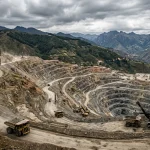
The halt at the Key Lake mill has forced an immediate downstream adjustment at the McArthur River mine. McArthur River, the world’s largest high-grade uranium mine, produces ore that is transported as a slurry to Key Lake for processing into uranium concentrate (yellowcake).
As of today, mining activity at McArthur River has been “reduced to essential services,” according to internal reports. The mine relies on a constant cycle of transport containers and slurry tanks to move ore to the mill. With the mill offline and the supply route severed, the mine is quickly reaching its logistical ceiling.
Industry analysts at Uranium Equities note that the storage capacity at McArthur River is highly limited. The site’s slurry tanks and mobile truck containers can hold approximately 7 to 10 days of full production. Once these tanks are at capacity, the mine will have no choice but to enter a total production halt.
If the Key Lake mill remains idle for a full month, the cumulative loss of production is estimated at roughly 1.5 million pounds of U3O8. This potential shortfall comes at a time when global utilities are already navigating a precarious market characterized by rising demand and geopolitical instability.

Market Reaction and Supply Tightening
The timing of the Saskatchewan disruption is particularly sensitive for the global uranium market. Throughout early 2026, uranium spot prices have remained elevated as the industry faces a transition toward more carbon-neutral energy sources, such as lithium-ion battery storage and AI-driven data centers.
Market observers suggest that any prolonged absence of McArthur River/Key Lake production will inevitably support higher spot prices. The Athabasca Basin is the cornerstone of Western uranium supply; when its primary producer stumbles, the ripples are felt by utilities from South Korea to the United States.
“This is a classic supply-side shock,” said a senior market analyst. “We are already in a market where the ‘easy’ pounds have been bought. If Cameco is forced to go into the spot market to buy or borrow uranium to meet its existing delivery commitments to utilities, it will only accelerate the upward pressure on prices.”
The financial implications for Cameco are also a point of concern for investors. While the company maintains a diverse portfolio, including the Cigar Lake mine which remains in operation, a month-long halt at Key Lake could significantly weigh on the company’s free cash flow for the second quarter.
Historical Context and Strategic Buffer
This is not the first time Cameco has faced logistical or environmental hurdles in the Athabasca Basin. The region is known for its challenging geography and harsh weather conditions. However, the 2026 bridge collapse represents a rare instance of off-site infrastructure failing so catastrophically that it dictates on-site production levels.
In previous years, Cameco has navigated production quotas and market volatility by utilizing its inventory buffers. However, with the current global push for energy security and the re-evaluation of critical mineral supply chains, those buffers are thinner than they once were.

The company’s consolidated annual production plan for 2026 currently remains unchanged, as Cameco hopes for a swift resolution to the Highway 165 repairs. However, if the Ministry of Highways provides an extended repair timeline, the company may be forced to revise its 2026 production guidance downward.
The Broader Impact on Mining Logistics
The incident underscores a growing vulnerability in the global mining sector: the reliance on aging or singular infrastructure points in remote regions. From manganese mining operations in Africa to copper projects in the Andes, the “last mile” of logistics is becoming a significant risk factor for mining executives and investors alike.
For Saskatchewan, the Smoothstone River Bridge failure is a wake-up call regarding the maintenance of northern industrial corridors. As the province seeks to solidify its position as a global leader in critical minerals, the reliability of its transport network will be under increasing scrutiny.
Next Steps and Outlook
The Saskatchewan Ministry of Highways has dispatched engineering teams to the Smoothstone River to evaluate the feasibility of a temporary bailey bridge or an expedited reconstruction of the permanent structure. Heavy rainfall in the forecast for the remainder of the week, however, may delay these efforts.
Cameco has stated it will provide regular updates as more information becomes available. For now, the global uranium market remains on high alert, watching for signals that the “7-10 day” storage window at McArthur River might be exceeded.
For industry professionals and investors, this event serves as a reminder of the fragility of the mineral supply chain. As the world moves toward 2030 climate goals, the reliability of foundational assets like the Athabasca Basin will remain paramount.
For more in-depth analysis on the mining sector and daily industry updates, subscribe to the Skillings Mining Review digital magazine.