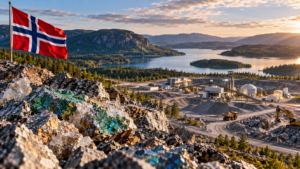
Las Vegas, NV – The U.S. Bureau of Land Management (BLM) has granted Ioneer Ltd. (ASX) the final permit to advance its Rhyolite Ridge Lithium-Boron Project in Nevada. Set to become a key element in the U.S. electric vehicle (EV) supply chain, the mine is projected to produce enough lithium annually to power approximately 370,000 EVs. Ford Motor Co. (NYSE) and Toyota’s battery ventures stand to benefit from this domestic lithium source, marking a shift toward strengthening U.S.-based production of essential battery minerals.

A Win for EVs and Employment
Located around 225 miles north of Las Vegas, construction at Rhyolite Ridge is set to commence in 2024, with lithium output expected by 2028. The project promises substantial local employment, creating 500 jobs during the construction phase and supporting 350 positions when operational. According to Ioneer Managing Director Bernard Rowe, securing federal approval was the product of extensive collaboration with state, tribal, and community stakeholders. “We value our relationships with these stakeholders… Without that open and honest dialogue, such an outcome could never have been possible,” Rowe stated.
Strategic Partnerships Secure Supply for Ford and Toyota
The mine’s production will benefit several high-profile partnerships. Ford’s BlueOvalSK, a joint venture with South Korea’s SK Innovation, has secured an agreement with Ioneer to purchase 7,000 tonnes of lithium carbonate annually for its battery plant in Kentucky. Toyota’s Prime Planet Energy & Solutions (PPES), a partnership with Panasonic, committed to a five-year contract for 4,000 tonnes annually to support U.S. battery manufacturing.
The mine’s projected capacity underscores the goals of these partnerships, emphasizing a broader effort to localize critical mineral sourcing and production. The PPES agreement, specifically, mandates that Ioneer’s lithium carbonate be used to manufacture EV batteries within the United States—a move aimed at meeting domestic demand and reducing China’s influence in the lithium sector.
Federal Backing Strengthens Ioneer’s Position
The BLM’s approval unlocks significant financial backing for Ioneer, including a $700 million loan from the U.S. Department of Energy and a $490 million equity investment from South Africa-based mining company Sibanye Stillwater Ltd. (JSE). This funding reflects strong support from the Biden administration, which has prioritized critical mineral projects as part of a broader green transition.
More Read

“Today’s approval of Ioneer’s federal permit is the culmination of countless hours of work and a testament to our remarkable team’s dedication,” said Ioneer Chairman James Calaway. “We are pleased with our achievements, working with the Biden administration and receiving bipartisan support at federal, state, and local levels.”

Changing Tax Credit Policies Signal New Incentives for Mining
Reflecting the Biden administration’s shift towards supporting domestic mining, the U.S. Treasury Department announced Thursday that certain mining projects will now qualify for the Inflation Reduction Act’s 45X tax credit. Initially, the credit applied only to U.S.-manufactured solar panels, battery components, and other renewable energy products, excluding raw material mining. However, the latest revision offers a 10% production credit to projects like Rhyolite Ridge, which combine extraction with on-site processing.
This policy shift responds to industry concerns that earlier restrictions hindered domestic resource development. The updated provision enables lithium mining and processing to benefit from the credit, encouraging investment in U.S. resource extraction.
Reducing Dependence on China
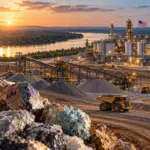
The decision to grant Ioneer a federal permit aligns with the Biden administration’s broader strategy to reduce U.S. reliance on foreign lithium sources, particularly China. Currently, over 70% of the world’s lithium processing capacity is located in China, putting the U.S. at a strategic disadvantage in securing this critical EV resource.
The Treasury Department’s recent expansion of the 45X tax credit strengthens the mining sector’s prospects, supporting both extraction and processing projects. “For companies like Ioneer, that’s welcome news,” Calaway noted. “Few deposits globally hold the potential impact of Rhyolite Ridge.”
As construction begins next year, the project represents a new chapter for U.S. mining and a significant step toward securing control over the EV supply chain. The site will produce both lithium, essential for battery production, and boron, used in high-demand industrial applications such as ceramics and glass.