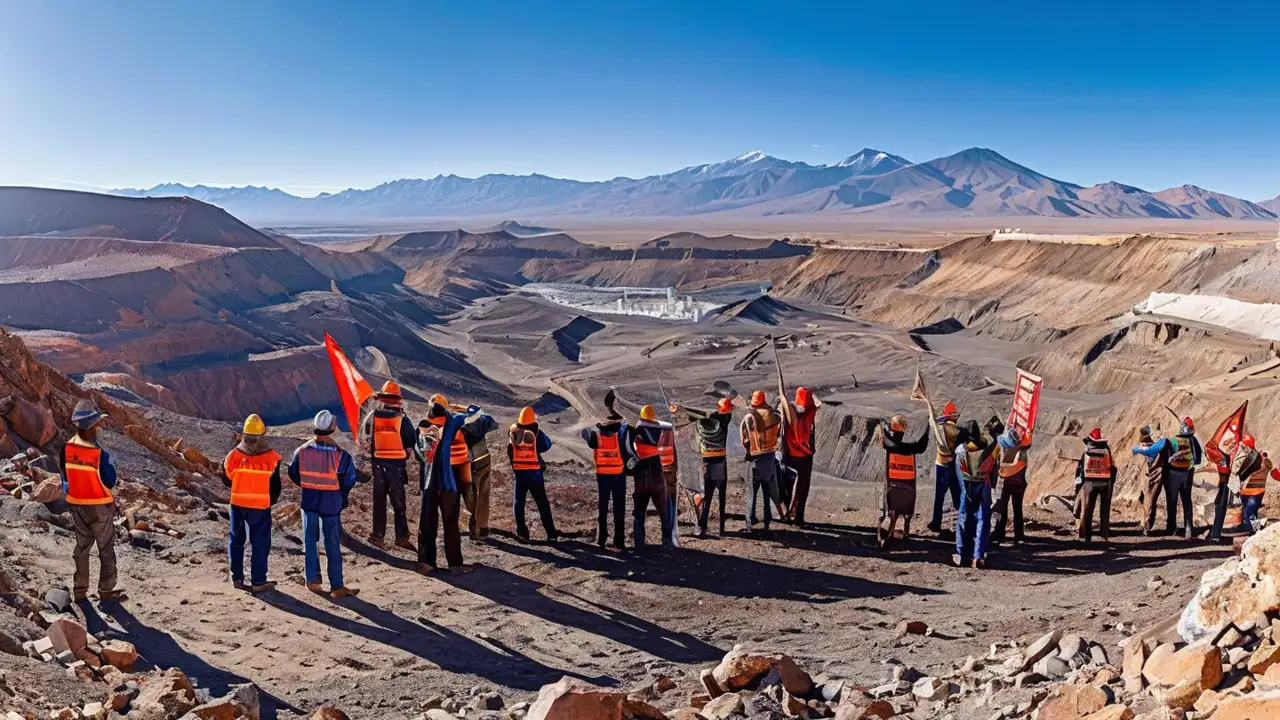

Workers at BHP’s Escondida mine in Chile, the world’s largest copper mine, have initiated a strike following unsuccessful negotiations with the company. The strike comes after workers and management failed to reach an agreement on labor conditions and wage increases. This labor action is significant due to Escondida’s pivotal role in global copper production, which could potentially impact copper prices and supply chains worldwide.
Historically, labor disputes at Escondida have led to substantial disruptions in copper output. The mine, located in the Atacama Desert, is a major contributor to Chile’s economy, which relies heavily on copper exports. The current strike reflects ongoing tensions between mining companies and workers in the region, as employees demand better working conditions and fair compensation in light of the mine’s profitability.
You Might be Interested In
- BHP, Miners Reach Tentative New Agreement at Escondida Mine
- BHP Leads the Way with Fully Autonomous Operations at Spence Copper Mine
- Mining Industry Revolutionizes Water Management
- BHP Achieves Record Iron Ore Production for Second Consecutive Year
The strike at Escondida is part of a broader trend of labor unrest in the mining sector, driven by rising inflation and increased cost of living, which have heightened workers’ demands for improved wages and benefits. The outcome of this strike could set a precedent for future labor negotiations in the mining industry, both in Chile and globally.