By Penny Langford

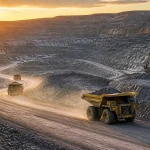
The global mining industry has reached a decisive inflection point in 2026. What was once a series of isolated pilot programs for autonomous haulage systems (AHS) has matured into a foundational production standard for Tier-1 and Tier-2 operators alike. As of April 2026, Komatsu became the first original equipment manufacturer (OEM) to commission 1,000 ultra-class autonomous haul trucks in commercial operation worldwide. This milestone is not merely a symbolic number; it represents over 11.5 billion metric tons of material moved autonomously in some of the most challenging environments on the planet.
For mine managers, investors, and technical leads, the question is no longer whether to automate, but how to benchmark their operations against the high-performance standards set by early adopters like Rio Tinto, BHP, and Barrick Gold.
Core Productivity Benchmarks: 2026 Standards
The primary driver for AHS adoption remains the pursuit of consistent, predictable productivity. Unlike human-operated fleets, autonomous trucks do not experience fatigue, shift-change gaps, or lunch breaks. In 2026, the performance delta between conventional and autonomous fleets has widened as software-driven optimization becomes more sophisticated.
| Metric (Truck Fleet) | 2026 Autonomous Benchmark | 2026 Conventional Benchmark | Improvement Delta |
|---|---|---|---|
| Truck Utilization (Hrs/Day) | 20.5 – 22.0 hours | 16.5 – 18.5 hours | +15% to +30% |
| Tonnes Moved (Per Truck/Year) | 4.2M – 4.8M tonnes | 3.5M – 4.0M tonnes | +20% Average |
| Cycle Time Variability | < 2% Deviation | 8% – 12% Deviation | Significant Reduction |
| Asset Effective Availability | 88% – 92% | 82% – 85% | +6% to +9% |
Data based on industry case studies from the Pilbara and Nevada gold corridors, 2024-2026.
More Read

24/7 Operational Consistency
The most immediate gain in 2026 is the elimination of "hot seats" and shift-change latency. Autonomous trucks maintain a steady state of operation throughout the 24-hour cycle. At Barrick’s Nevada Gold Mines, the integration of autonomous Komatsu 930E-5AT trucks has allowed the operation to transition operators away from repetitive haulage tasks into more skilled technical roles, ensuring that the fleet continues moving material during periods that previously saw significant idle time.


Autonomous Haul Trucks: Cost Savings and ROI
The economic case for AHS in 2026 is built on three pillars: labor optimization, asset longevity, and energy efficiency. While the initial capital expenditure for autonomous-ready ultra-class trucks remains higher than conventional models, the operational expenditure (OPEX) reductions provide a clear path to ROI within 36 to 48 months for large-scale operations.
More Read
Maintenance and Component Life
Autonomous systems enforce "perfect" driving. By adhering strictly to speed limits, avoiding harsh braking, and optimizing steering angles, AHS reduces mechanical stress on the frame and powertrain.
- Tire Life: 2026 benchmarks show a 10% to 15% increase in tire life due to the elimination of aggressive cornering and optimized haul road placement.
- Fuel Efficiency: Predictive algorithms manage throttle and braking to maintain momentum, typically resulting in a 5% to 8% reduction in fuel consumption compared to the most efficient human operators.
Total Cost of Ownership (TCO)
Leading operators report that autonomous haul trucks cost savings are most pronounced when viewed through the lens of $/tonne. By increasing the annual tonnage per truck, mines can achieve the same production targets with a smaller overall fleet. This reduction in fleet size compounds the savings in maintenance and capital replacement costs over the life of the mine.
Mine Safety Technology 2026: The Risk Mitigation Standard
Safety remains the strongest non-financial driver for autonomous adoption. The 2026 standard for mine safety technology involves a multi-layered approach that effectively "de-risks" the pit by removing humans from high-traffic production zones.

Reducing Manual Interactions
One of the most significant safety advancements in 2026 is the expansion of autonomy beyond the haul truck. The introduction of autonomous water trucks, operating under the same unified fleet management framework as the haulers, further reduces the need for manual equipment in the pit. These support vehicles help maintain haul roads and control dust without requiring additional manned vehicles to navigate the path of 400-ton autonomous haulers.
Predictive Safety Systems
Modern AHS platforms integrate high-precision GNSS, LiDAR, and radar to create a 360-degree digital shield around every asset. In 2026, these systems have evolved to predict potential collisions before they occur, automatically adjusting the path or speed of the entire fleet to maintain safe buffers. This has led to a near-zero recordable injury frequency rate (RIFR) in autonomous-only zones across major global sites.
Integrating the 2026 Tech Stack: Unified Control
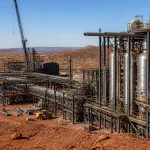
The success of autonomous haulage in 2026 depends on more than just the trucks. It requires a unified digital ecosystem that links extraction, haulage, and processing.
- Unified Fleet Management: Platforms like Komatsu’s FrontRunner now coordinate a mixed fleet of autonomous haulers, remote-operated drills, and autonomous support equipment.
- Electrification and Trolley Systems: A major trend in 2026 is the integration of AHS with trolley-assist and battery-electric power systems. Autonomous trucks are uniquely suited for trolley lines, as they can maintain the precise positioning required to connect with overhead power lines with millimeter accuracy.
- Real-Time Analytics: Control rooms now serve as the "brain" of the operation, where engineers analyze real-time data to adjust mine plans on the fly. This level of agility is critical as mines look to optimize mining stocks and breakout drivers in a volatile commodity market.

Conclusion: The Outlook for Mine Operators
As we move through 2026, autonomous haulage is no longer a luxury for the ultra-majors. It is a prerequisite for competitiveness. Operators who fail to meet the productivity benchmarks of 20.5+ hours of utilization per truck per day will find themselves at a structural disadvantage in a market increasingly focused on low-cost, high-efficiency production.
The shift toward autonomy also aligns with broader industry trends, such as the push for critical minerals. Projects highlighted in the 2026 Lithium Power Map are increasingly designing their operations with autonomy in mind from day one, rather than retrofitting existing fleets.
For the modern mining professional, the challenge is now one of integration: ensuring that the hardware, software, and human workforce are aligned to capture the full spectrum of available efficiency gains.
Shareable Snippet for LinkedIn/X
Industry Milestone: Autonomous haulage reaches a new peak in 2026, with over 1,000 ultra-class trucks now in commercial operation. Leading mines are seeing 15-30% gains in truck utilization and double-digit cost savings. Is your site meeting the new productivity benchmarks?
#MiningTech #AutonomousHaulage #MiningSafety2026 #SkillingsMining #AHS #SmartMining