By Charles Pitts

The mining sector enters 2026 at a critical inflection point. As global decarbonization targets approach mid-decade milestones and the demand for artificial intelligence (AI) infrastructure surges, the disparity between high-growth operators and laggards is widening. Identifying mining stocks poised for a breakout requires a move beyond traditional P/E ratios and toward a framework grounded in asset quality, jurisdictional stability, and strategic commodity exposure.
Current market data suggests that the “easy money” phase of the commodity super-cycle has transitioned into an “operational execution” phase. Investors and decision-makers are no longer rewarding mere exploration potential; they are prioritizing companies that can navigate permitting hurdles and manage the rising All-In Sustaining Costs (AISC) that have defined the 2024–2025 period.
The 2026 Macro Framework: Copper and Lithium Lead the Charge
The 2026 outlook for mining is dominated by a supply-demand mismatch in critical minerals. According to recent market analysis, global lithium demand is projected to grow by approximately 16% year-over-year in 2026, with 58% of that incremental demand driven by electric vehicles (EVs). Simultaneously, the copper market remains structurally tight, bolstered by its 2025 designation as a critical mineral in the United States and its essential role in the AI-driven data center expansion.
For those evaluating mining stocks to watch, the focus must remain on companies with projects entering the “sweet spot” of development: moving from final feasibility to construction.
More Read

| Commodity | 2026 Projected Demand Growth | Key Driver | Market Balance Status |
|---|---|---|---|
| Copper | +2.6% YoY | AI Data Centers / Grid Upgrades | Structural Deficit |
| Lithium | +16% YoY | EV Batteries / ESS | Potential Deficit |
| Uranium | High Utility Interest | Nuclear Resurgence / SMRs | Supply-Constrained |
| Rare Earths | Strategic Stockpiling | Defense / Robotics | High Concentration Risk |
Indicator 1: Asset Quality and the AISC Floor
The most reliable indicator of a high-growth mining stock is its position on the global cost curve. In an era of persistent inflation for fuel, labor, and reagents, low-cost producers are the only entities capable of maintaining margins during price volatility.

As explored in our analysis of AISC trends for 2026, the “utility floor” for many commodities has shifted higher. Investors should prioritize companies with high-grade deposits that allow for lower processing costs per tonne. In the gold and copper sectors, a declining average ore grade (which has fallen nearly 40% since 1991) means that existing high-grade mines are becoming increasingly valuable.

More Read
Indicator 2: Jurisdictional Stability and Permitting Certainty
The “resource nationalism” of the early 2020s has reshaped the investment map. High-growth stocks in 2026 are increasingly found in Tier-1 jurisdictions: such as Australia, Canada, and parts of the United States: where the rule of law is stable and permitting reform is accelerating.
In the U.S., bipartisan support for critical mineral onshoring is shortening the multi-year study periods that previously hampered project timelines. However, the risk remains in “frontier” markets. While Africa and Latin America hold significant percentages of the world’s lithium and copper reserves, the ability to move from discovery to production hinges on local ESG (Environmental, Social, and Governance) performance and government stability.
Indicator 3: The AI and Energy Nexus
One of the most overlooked drivers for mining growth in 2026 is the intersection of mining and the technology sector. Data centers are not only massive consumers of copper for power distribution but are also driving a resurgence in nuclear power.
The uranium market outlook for 2026 reflects this, with utility companies increasingly seeking long-term supply agreements to fuel Small Modular Reactors (SMRs) and traditional plants. Companies that have secured offtake agreements with major tech firms or sovereign entities are often better positioned for a valuation breakout than those relying solely on spot market sales.

Indicator 4: Financing and Capital Discipline
A high-growth stock is not merely a company with a good deposit; it is a company with a funded path to production. In 2026, the cost of capital remains a hurdle for junior miners. Look for companies with:
- Strategic Partners: Investment from downstream users (e.g., automakers or battery manufacturers).
- Low Debt-to-Equity Ratios: Resilience against fluctuating interest rates.
- Phased Development Plans: The ability to start small and scale up using internal cash flow, rather than returning to the equity markets for constant dilution.
Our tracking of the lithium market reset shows that the companies most likely to survive the 2026 supply gap are those that avoided over-leveraging during the 2022–2023 peak.
Indicator 5: Technology as a Competitive Advantage
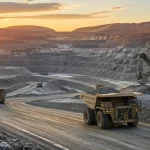
Operational efficiency is the new frontier for growth. In 2026, the first fully autonomous haul fleets have become the standard for large-scale operations. Companies that integrate AI-driven analytics to reduce downtime and optimize ore sorting are seeing direct impacts on their bottom line.
Digital twins and remote operations centers are no longer luxury items; they are essential tools for managing labor shortages and improving safety. Investors should look for operators who are transparent about their digital transformation and how it correlates to a reduction in unit costs.

Conclusion: The 2026 Breakout Candidates
The mining stocks poised for a breakout in 2026 are those that have successfully navigated the “Valley of Death” between exploration and production. By focusing on asset quality, jurisdictional safety, and a clear link to the energy transition, professional investors can filter out the noise of market volatility.
As we move toward the 2030 decarbonization targets, the window for securing long-term supply in copper, lithium, and uranium is closing. The 2026 breakout will likely be led by the mid-tier producers who have consolidated high-quality assets while the majors were focused on divestment.
For ongoing analysis and daily market updates, subscribe to the Skillings Mining Intelligence newsletter.