As of July 4, 2026, the global antimony market is navigating a complex transition from the supply-driven "panic spike" of 2024-2025 into a structurally tight, policy-anchored environment. While prices have retreated from the record highs of mid-2025, the intervention of the U.S. Defense Logistics Agency (DLA) and the broader National Defense Stockpile (NDS) has fundamentally re-rated how investors and operators value critical minerals stocks.

Antimony, a semimetal essential for everything from military-grade munitions and flame retardants to solar-grade photovoltaic (PV) glass, has emerged as a frontline asset in the geopolitical energy transition. For the small-cap mining sector, the shift from speculative exploration to strategic defense necessity is providing a valuation floor that was nonexistent just 24 months ago.
The DLA Signal: Creating a Structural Demand Floor
The Defense Logistics Agency’s role has shifted from a passive manager of legacy materials to an active market participant. In 2026, the DLA’s procurement strategy acts as a "central bank" for critical minerals, signaling to private capital that certain materials are too important to be left to the whims of spot market volatility.
Historically, the U.S. has been nearly 100% reliant on imported antimony, primarily from China, Russia, and Tajikistan. The 2024-2025 price surge: catalyzed by China’s export restrictions: forced the DLA to accelerate its stockpiling initiatives. This has had three primary effects on the mining equities market:
- Supply Chain Compliance Premium: Government agencies now place a premium on supply security, favoring "compliant" supply over cheaper, opportunistic spot sourcing. This has redirected interest toward Western-domiciled projects.
- Price Volatility Dampening: By acting as a buyer-of-last-resort during price dips, the DLA provides a psychological floor for project financiers, reducing the perceived risk of a total price collapse.
- Capital Access: Formal recognition of a mineral's strategic importance by the DLA often serves as a prerequisite for more substantial federal backing, such as the massive EXIM Bank loans seen recently in the sector.

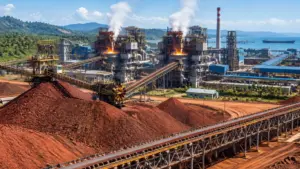
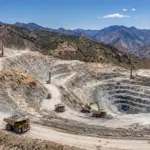
Caption: Large-scale open-pit operations are essential for securing the volume of raw material needed for national stockpiles.
The November 2026 Cliff: Navigating the China Factor
A critical date looming over the antimony market is November 27, 2026. This marks the end of China’s current suspension of its antimony export ban to the United States. While the suspension has allowed prices to correct from their 2025 peaks, the market remains on high alert.

Current retail-level pricing for antimony sits at approximately $51.80/kg, a 170% increase compared to early 2024 levels, despite being down 22% year-over-year. This "elevated floor" reflects the market's anticipation that supply chains could tighten again the moment the temporary reprieve ends.
Operators and investors are using the current window of relative stability to build out non-Chinese capacity. Projects in Idaho, Montana, and Australia are being fast-tracked to ensure that if the "policy cliff" of late 2026 results in renewed export controls, Western infrastructure is ready to respond.

Re-Rating the Western Pipeline: The Stibnite Case Study
Nowhere is the re-rating more visible than in the development of the Stibnite Gold Project in Idaho. As of July 2026, the project has transitioned from a multi-year permitting slog into active, critical-path construction.
The catalyst for this shift was not just the mineral resource itself, but the massive federal support it received. In early 2026, Perpetua Resources secured a $2.9 billion EXIM Bank loan: one of the largest "Make in America" initiatives in history. This financing, which covers the project’s entire direct capital cost, is a direct result of the project's ability to provide an estimated 35% of U.S. antimony demand during its first six years of operation.

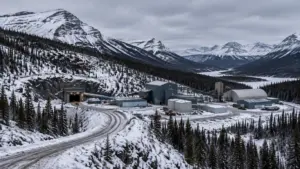
Caption: Strategic projects in remote regions are now benefiting from unprecedented levels of federal financing.
For mining investors, the lesson is clear: in 2026, the "Strategic Premium" is real. Companies that can demonstrate a clear path to production for DLA-mandated minerals are being valued on cash-flow potential and national security importance, rather than just drill results. This shift is a key component of the Mining Investment Intelligence trends we are tracking throughout the year.
2026 Market Snapshot: Antimony Price and Supply Dynamics
The following table outlines the current market landscape for antimony compared to the previous two years.
| Metric | July 2024 (Actual) | July 2025 (Peak) | July 2026 (Current) |
|---|---|---|---|
| Antimony Spot Price (Avg/kg) | ~$19.00 | ~$60.00 | ~$51.80 |
| U.S. Import Reliance | 82% | 85% | 78% (declining) |
| DLA Target Inventory Status | Under-supplied | Critical Shortfall | Stabilizing (Buying) |
| Primary Use Focus | Flame Retardants | Defense/PV Glass | Defense/PV Glass/L-E Storage |
| Key Risk Factor | Chinese Export Ban | Global Supply Deficit | Nov 2026 Policy Cliff |
Technical and Operational Hurdles in the Antimony Recovery
Securing the supply is only the first step. Antimony processing is technically demanding and often carries high environmental risks due to the presence of arsenic in the ore. In 2026, the industry is increasingly looking toward autonomous mining technology and advanced flotation techniques to improve recoveries while maintaining stringent ESG standards.
Western producers are also focusing on "green antimony" as a differentiator. By integrating carbon-capture technologies and utilizing renewable energy for smelting, these new projects aim to meet the EU’s Critical Raw Materials Act requirements, allowing them to capture a larger share of the European PV glass and battery market.

Caption: Underground precision drilling is vital for accessing high-grade antimony veins in complex geological formations.
Investor Outlook: Differentiating Hype from Strategic Value
While the re-rating is broad, not all critical minerals stocks will benefit equally. As we noted in our Weekly Power List of top mining tickers, the focus has moved from "junior explorers" to "project developers with secured funding."
Investors should monitor three key indicators:
- DLA/DoD Engagement: Has the company received Small Business Innovation Research (SBIR) grants, Defense Production Act (DPA) funding, or letters of intent from government agencies?
- Permitting Maturity: In the 2026 environment, "near-term production" is the only metric that matters to strategic buyers.
- Integration with Energy Transition: Is the antimony project tied to solar supply chains? The recovery of lithium prices has renewed interest in the broader "battery mineral" complex, of which antimony is an increasingly important part.
Summary for Decision-Makers
The DLA’s strategic stockpiling of antimony is more than a defense initiative; it is a market-shaping force that has permanently altered the valuation models for small-cap miners. While the November 2026 "China Cliff" introduces significant volatility risk, the structural shift toward domestic supply and government-backed financing suggests that the re-rating of antimony stocks is far from a temporary trend. For operators and investors, the priority remains project delivery and technical excellence in an increasingly policy-sensitive market.
Shareable Snippet for LinkedIn/X
The "Strategic Premium" is re-shaping the mining sector. With antimony prices remaining 170% above 2024 levels, the U.S. Defense Logistics Agency’s stockpiling strategy has created a new valuation floor for critical minerals stocks. As we approach the November 2026 China export-policy cliff, the race to build non-Chinese capacity is accelerating. Read our deep-dive analysis on the $2.9B EXIM loan and the future of Western antimony supply. #MiningNews #CriticalMinerals #Antimony #DLA #SupplyChain #MiningInvestment