By Penny Langford

The global gold mining sector is entering 2026 in a state of historic divergence. While bullion prices continue to test all-time highs, the industry's focus has shifted inward toward a metric that defines the gap between survival and windfall: All-In Sustaining Costs (AISC).
For operators and investors, understanding AISC trends gold mining 2026 is no longer just about tracking inflation: it is about identifying which companies can successfully decouple their production costs from the rising tide of global resource nationalism and geological maturity. After years of relentless cost creep, the industry is seeing the first signs of a cost plateau, driven by aggressive automation and a tactical shift in how low-grade stockpiles are managed.
What is AISC and Why it Defines 2026 Strategy
All-In Sustaining Costs (AISC) was introduced by the World Gold Council in 2013 to provide a more comprehensive view of the true cost of producing an ounce of gold compared to traditional "cash costs." It includes not just the direct mining and processing expenses, but also general and administrative (G&A) costs, sustaining capital expenditures, exploration to replace reserves, and mine closure provisions.
In 2026, AISC has become the primary battleground for mining executives. As gold prices continue to demonstrate strength, the ability to keep AISC below the $1,500/oz mark separates the tier-one producers from marginal operators.
More Read

The 2026 Cost Landscape: A 5% Global Decline?
Recent data from S&P Global Market Intelligence suggests a turning point. After hitting an industry average of $1,388/oz in mid-2024, global AISC is projected to decline by approximately 5% through 2026. This projection is rooted in three primary drivers:

- Operational Efficiency: The full-scale integration of autonomous haulage and AI-driven processing.
- Portfolio Optimization: The divestment of high-cost, non-core assets by majors like Newmont and Barrick.
- Currency Tailwinds: Weakening local currencies in key mining jurisdictions like Australia and Canada relative to the US Dollar.
However, this decline is not uniform. While companies like Agnico Eagle Mines have maintained industry-leading AISC near $1,475/oz, other operations in high-tax jurisdictions or areas with aging infrastructure are seeing costs push toward $1,800/oz.
Key Drivers Shaping AISC in 2026
1. The Automation Dividend
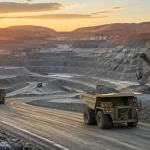
The adoption of "Digital Mine Management Systems" is no longer a luxury. In 2026, the use of autonomous drill rigs and haul trucks has transitioned from pilot programs to operational standards. By reducing the human footprint in hazardous environments and optimizing fuel consumption through precision logistics, automation is estimated to be shaving between $50 and $100 per ounce off the AISC of large-scale open-pit operations.
More Read

2. The Grade Decline Paradox
A significant headwind to cost control is the fundamental geological reality of declining ore grades. As high-grade "easy gold" is depleted, miners are forced to move more rock to produce the same ounce of metal. In 2026, many majors are countering this by processing lower-grade stockpiles that were previously deemed uneconomic. While this increases the "cash cost" per ounce due to lower recovery rates, it reduces the "sustaining capex" associated with new pit development, creating a complex balancing act for AISC reporting.
3. Labor and Energy Inflation
While general inflation has cooled since the peaks of 2023, labor remains a persistent cost driver. Newmont recently reported increased labor costs at its Cero Negro operations in Argentina and Ahafo in Ghana. Skilled labor shortages in Western Australia and Northern Ontario continue to drive up G&A and direct mining costs, forcing companies to increase their investment in employee retention and remote-work technologies.
Data Snapshot: AISC Comparison 2024 vs. 2026 (Projected)
| AISC Component | 2024 Industry Avg ($/oz) | 2026 Projected Avg ($/oz) | Variance (%) |
|---|---|---|---|
| Cash Operating Costs | $938 | $895 | -4.5% |
| Sustaining Capex | $301 | $285 | -5.3% |
| G&A and Exploration | $64 | $60 | -6.2% |
| Royalties & Taxes | $85 | $78 | -8.2% |
| Total AISC | $1,388 | $1,318 | -5.0% |
Source: Compiled from World Gold Council historical data and S&P Global 2026 projections.
Managing the Remote Operations Control Center (ROCC)
The shift toward centralized control rooms is a hallmark of modern gold mining news. These centers allow companies to manage multiple global sites from a single hub, drastically reducing the overhead associated with on-site management.

"The ROCC is the brain of the 2026 mine," says one industry analyst. "By integrating real-time telemetry from a drill rig in Nevada with the processing plant's throughput data, we can adjust the entire value chain in minutes rather than days. This is the only way to combat the margin squeeze from rising royalties."
Regional Risks: The Rise of Resource Nationalism
One of the most volatile components of AISC in 2026 is the "Royalties and Production Taxes" line item. Governments in traditional mining hubs are increasingly looking to gold miners to fill fiscal gaps.
- West Africa: Continued political shifts in jurisdictions like Mali and Burkina Faso have led to revised mining codes, often resulting in higher state equity or direct production taxes.
- South America: Argentina’s fluctuating fiscal landscape remains a challenge for majors, where inflationary pressure and export taxes must be carefully navigated to maintain AISC predictability.
- Australia: Increased royalty rates in states like Queensland have set a precedent that other jurisdictions are closely watching.
2026 Outlook: The Base, Bull, and Bear Case for Costs
For stakeholders looking to the future of AISC trends gold mining 2026, the trajectory depends on several external levers:
- Base Case: AISC stabilizes around $1,320/oz as automation gains offset labor inflation. Gold prices remain high enough to maintain record margins, allowing for significant dividend payouts.
- Bull Case (for Margins): A breakthrough in modular processing or a significant drop in fuel prices (via the energy transition) pushes AISC below $1,250/oz. This scenario sees gold equities significantly outperforming the underlying metal.
- Bear Case (for Margins): A resurgence in global energy prices combined with aggressive new carbon taxes in Canada and Australia pushes AISC back toward $1,500/oz, squeezing the margins of mid-tier producers.
Conclusion
The gold mining industry in 2026 is no longer just about finding the metal; it is about the industrial efficiency of extracting it. As mining stocks identify new growth drivers, the companies that will lead the pack are those that treat AISC as a dynamic variable rather than a fixed burden.
By leveraging the "Digital Mine" and optimizing portfolios toward high-grade, low-jurisdiction-risk assets, the industry's leaders are positioning themselves for a period of unprecedented cash flow generation. However, the shadow of grade decline and geopolitical volatility remains, ensuring that the quest for the "low-cost ounce" will remain the industry’s most critical pursuit.
Share this Insight
The gold margin expansion of 2026 is the most lucrative spread in global markets you’ve never heard of. While bullion captures the headlines, the real story is in the AISC decline. #GoldMining #AISC #MiningNews #SkillingsIntelligence
Frequently Asked Questions
What is the average AISC for gold mining in 2026?
The global average AISC is projected to be approximately $1,318 per ounce, a 5% decline from 2024 levels, driven by operational efficiencies and automation.
How does automation affect gold mining costs?
Automation reduces labor and energy costs, improves fuel efficiency, and increases equipment uptime. It is estimated to reduce AISC by $50-$100 per ounce in large-scale operations.
Why are gold mining margins at record highs in 2026?
Margins are expanding because gold prices have surged while industry costs (AISC) have plateaued or slightly declined due to technological integration and portfolio optimization.
Which companies have the lowest AISC in 2026?
Agnico Eagle Mines remains an industry leader with an AISC near $1,475/oz, benefiting from high-grade assets and strong operational execution in stable jurisdictions.