The mining industry is entering a critical phase of transformation. Faced with growing global demand for critical materials, heightened safety expectations, and increased environmental scrutiny, mining companies are under pressure to operate more efficiently and responsibly. At the core of this evolution is AI in mining, a shift that is redefining how minerals are discovered, extracted, and processed.

Leading this paradigm shift is Mostafa Benzaazoua, Full Professor and Director of the Geology and Sustainable Mining Institute at the University Mohammed VI Polytechnic (UM6P – Benguerir). His research highlights how digital technologies—especially artificial intelligence (AI), digital twins, and biomining—are laying the foundation for a smarter, safer, and more sustainable industry.
AI in Mining Exploration: Data-Driven Discovery
AI in mining has fundamentally changed the mineral exploration process. Using advanced algorithms and machine learning models, mining companies can now analyze massive datasets to predict mineral-rich zones with greater accuracy. These capabilities have reduced exploration time and costs by 20% to 30%, according to case studies cited by Benzaazoua.
One notable example is Fleet Space Technologies, which uses AI-powered geophysical data from satellites to detect sub-surface mineral deposits. The company recently raised $150 million to expand this approach globally, enhancing both precision and environmental performance.
“AI in mining exploration allows us to find resources faster and with less impact,” Benzaazoua said. “It’s a game-changer for emerging economies and global supply chains.”
Related News
- AI in Mining: How Advanced Technology is Reshaping the Future of the Industry
- Platinum Shares Slide After Trump Tariffs—But Bulls See Buying Opportunity
- Australia’s Largest Nickel Sulphide Deposit Emerges in Western Australia
- Golden Valley Mine Commits $600,000 to Solar Energy and Processing Plant Upgrades Amid Gold Price Surge
- Mining Regulatory Clarity Act 2025 Aims to Secure U.S. Mineral Supply Chains and National Security
Autonomous Mining: AI Improves Safety and Efficiency
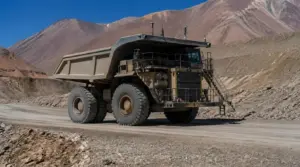
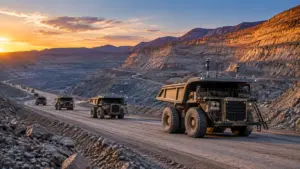
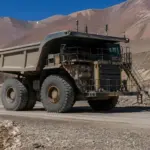
Beyond exploration, AI in mining is powering operational improvements through automation. At BHP’s Spence copper mine in Chile—the company’s first fully autonomous operation—AI-enabled trucks moved over 80 million tonnes of material with zero safety incidents. Human exposure to hazardous conditions fell by 90%, and production targets were surpassed.
More Read
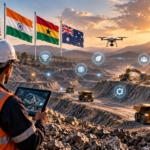
“Autonomous systems not only protect workers, they also unlock consistent productivity gains,” said Isabelle Chartier, a mining systems engineer at Rio Tinto.

In addition, AI systems are being integrated into real-time ore sorting, allowing for more efficient resource use and significant reductions in waste. These gains are translating directly into higher net present values (NPVs) for operations.
Digital Twins in Mining: Real-Time Optimization
A complementary innovation to AI in mining is the use of digital twins—virtual models that replicate real mining environments in real time. These simulations allow operators to test various strategies and predict equipment failures before they occur.
“Digital twins allow us to simulate emissions, water usage, and energy inputs before we even touch the rock,” said Benzaazoua. “It’s proactive, not reactive.”
Digital twins also support predictive maintenance, reducing downtime and saving millions in lost production hours. When combined with IoT (Internet of Things) devices, workers’ health and environmental conditions—such as exposure to gas or dust—can be monitored in real time to prevent incidents.
Biomining: Sustainable Metal Extraction with AI Support
AI in mining is also being deployed alongside biotechnology innovations like biomining, which uses microorganisms to extract valuable metals from low-grade ore and waste materials. This not only reduces the need for toxic chemicals but also enables recovery from contaminated sites.
Recent advancements show bacteria can be used to recover metals from electronic waste, reducing the industry’s reliance on virgin materials and lowering its environmental footprint.
“Biomining supported by AI systems is helping us close the loop,” said Benzaazoua. “It’s a shift from extraction to regeneration.”
Future Outlook: Integrating AI in Mining for Sustainability
What distinguishes successful operators today is not their use of any one technology, but their ability to integrate them. AI in mining can fuel digital twins, inform biomining strategies, and automate everything from health monitoring to equipment control.
Mining is increasingly a high-tech business—and companies must invest not only in machines but also in talent. Institutions like UM6P are developing interdisciplinary training programs in AI, geoscience, and sustainability to equip future engineers with the necessary skills.
“The next generation of miners will be data scientists and environmental engineers,” Benzaazoua said.
AI in Mining Is Defining the Next Era of Natural Resource Development
The transformation underway in the mining sector is not cosmetic—it is existential. As environmental regulations tighten and geopolitical competition for materials intensifies, companies must extract more value with fewer resources and less harm. AI in mining offers that pathway, enabling smarter decisions, safer environments, and more sustainable outcomes.
Those who embrace these innovations will lead. Those who don’t risk becoming obsolete in an industry where the margin for inefficiency is vanishing.
“Mining used to be about digging deeper,” Benzaazoua concluded. “Now, it’s about thinking smarter.”