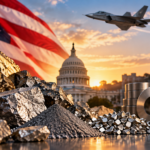
The global energy landscape is shifting, and it’s not just about moving away from fossil fuels. It’s about who controls the materials that make the “green revolution” and modern defense systems possible. For decades, the world has looked toward China for its supply of rare earth elements (REEs). But a sleeping giant in the North is waking up, and it’s set to redefine the concept of resource sovereignty.

Greenland, a territory often associated with vast ice sheets and remote wilderness, is sitting on what could be the world’s most significant untapped reserves of critical minerals. If you’re following the copper price forecast or tracking the stability of the Western defense industrial base, you need to understand why Greenland mining is no longer a peripheral topic: it is a matter of national security.
The Monopoly Problem: Why Rare Earths Matter
To understand the urgency, we first have to understand what we are dealing with. Rare earth elements are a group of 17 metals that are essential for high-tech applications. Despite their name, they aren’t necessarily “rare” in the earth’s crust, but they are rarely found in concentrations high enough to mine economically.
More importantly, they are incredibly difficult and “dirty” to process. China currently controls roughly 60% of global REE production and a staggering 90% of the refining capacity.
From the magnets in EV motors and wind turbines to the guidance systems in Tomahawk missiles and the night-vision goggles used by our troops, REEs are the “vitamins” of modern technology. Without them, the high-tech economy grinds to a halt. When one nation holds a near-monopoly on these critical minerals, it creates a strategic vulnerability that the United States and its allies can no longer afford to ignore.
More Read



Greenland: The World’s New Mineral Frontier
Recent geological surveys suggest that Greenland could hold approximately 36 million tonnes of rare earth reserves. To put that in perspective, that could potentially make Greenland the second-largest holder of REEs in the world, trailing only China.
While only about 1.5 million tonnes are currently classified as proven, economically viable reserves, the sheer scale of the potential is staggering. There are two primary deposits that have captured the attention of geologists and geopolitical analysts alike:
More Read
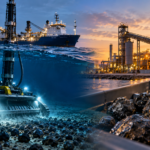
1. Kvanefjeld (Kuannersuit)
Located near the southern tip of Greenland, Kvanefjeld is often cited as one of the most significant deposits of both rare earths and uranium on the planet. Its unique geology allows for the extraction of several critical minerals simultaneously, making it a high-value target for Western mineral independence.
2. Tanbreez
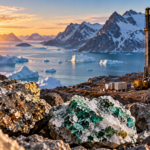
The Tanbreez mine is another massive asset, rich in eudialyte ore. What makes Tanbreez particularly attractive is its high concentration of “heavy” rare earth elements. While “light” REEs are common, “heavy” REEs are much rarer and are vital for high-performance magnets that can operate at high temperatures: exactly what is needed for aerospace and defense hardware.

National Security and the Race for Resource Sovereignty
National security is often framed in terms of troop movements or cyber defense, but at its core, it is about energy and material independence. If the United States cannot build its own fighter jets or wind turbines without relying on a geopolitical rival for the raw materials, it does not truly have sovereignty.
This is where Greenland mining becomes a strategic imperative. By developing a Western-aligned supply chain in the Arctic, the U.S. and its allies can mitigate the risk of supply disruptions. We’ve already seen what happens when China uses its market dominance as a diplomatic tool, restricting exports to Japan in the past to send a political message.
Developing Greenland’s resources isn’t just about profit; it’s about ensuring that the future of Western technology isn’t held hostage by a single point of failure.
The Convergence of Critical Minerals and Copper
While rare earths get the headlines, we cannot ignore the broader category of energy metals. If you look at any current copper price forecast, you’ll see a trend: demand is skyrocketing while supply is struggling to keep pace.
Copper is the “metal of electrification.” You cannot have an EV charging network, a modernized power grid, or a massive expansion of renewable energy without massive amounts of copper. Greenland isn’t just a REE powerhouse; it also holds significant potential for copper, nickel, and zinc.
The synergy between Greenland’s rare earth deposits and its potential for copper mining creates a unique opportunity for integrated resource security. When we talk about “critical minerals,” we are talking about a basket of resources that collectively power our future. If we secure Greenland, we secure a vital piece of the global energy puzzle.

The Challenges: Infrastructure and the Arctic Clock
If the reserves are so massive, why isn’t Greenland already the world’s leading producer? The answer lies in the extreme environment and the lack of infrastructure.
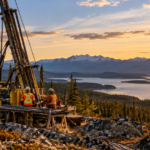
Greenland is a harsh place to operate. Mining projects require massive upfront investment in roads, ports, and power generation. Furthermore, the “Arctic Clock” is a real factor: the window for construction and shipping is limited by weather and ice conditions.
There are also political and environmental hurdles. The Greenlandic government and its people are rightfully protective of their pristine environment. Any mining project must meet the highest ESG (Environmental, Social, and Governance) standards to gain a “social license” to operate. This is where Western mining companies have an advantage over their state-owned Chinese counterparts: a commitment to transparency and environmental stewardship.

Why the Delay is a Risk
As of 2026, many of Greenland’s most promising projects are still in the development or permitting phases. This gap between the discovery of a resource and its actual production is a major strategic risk. It can take 10 to 15 years to bring a major mine from discovery to full production.
We do not have 15 years to wait. The energy transition is happening now, and the geopolitical tensions surrounding the South China Sea and Eastern Europe are only intensifying the need for secure resource corridors.
The multi-year development delays in Greenland are not just a business problem; they are a national security bottleneck. We need aggressive investment and streamlined cooperation between the U.S., Denmark, and the Greenlandic government to fast-track these critical mineral projects.

Conclusion: Redefining Sovereignty
The story of Greenland’s rare earth elements is the story of the 21st century. It is a story of how a remote island could become the linchpin of global technology and security. As we look at the rising demand for energy metals and the volatility of the global market, one thing is clear: resource sovereignty is the only true security.
We must stop thinking of Greenland as just a scenic frozen landscape and start seeing it as a vital strategic partner. The minerals under its ice are the keys to our energy future, our military readiness, and our technological edge.
The time to secure these supply chains is now. The cost of inaction is far higher than the cost of development.
Join the Mission
The fight for resource sovereignty and the truth about our mining future is happening right now. Don’t let the mainstream media dictate the narrative on critical minerals and national security.
Join the mission on Rumble: https://rumble.com/user/SkillingsMining

Help us keep a close watch on the industries that power our world. Click the button above to support MineWatch and stay informed on the front lines of the resource war.