By Mo Shine | Skillings Mining Review | January 24, 2026

WASHINGTON : The Trump administration has fired the starting gun on what officials are calling the most aggressive federal push to secure domestic mineral supplies since World War II. A sweeping executive order signed mid-January tasks Commerce Secretary Howard Lutnick and U.S. Trade Representative Jamieson Greer with building new supply agreements for critical minerals: and the clock is already ticking.
The proclamation, signed January 14-15, 2026, gives both agencies 180 days to hammer out deals with trading partners on processed critical minerals and their derivative products. If negotiations stall or fail, the White House has made clear: tariffs are on the table.
This isn’t a drill. After a six-month investigation into America’s mineral vulnerabilities, the administration concluded that the current supply situation poses unacceptable risks to both military readiness and high-tech manufacturing. The response is the “Critical Minerals Blitz”: an all-hands effort to break China’s stranglehold on the global minerals trade.
The Numbers Don’t Lie
The strategic calculus here isn’t subtle. The United States is fully import-dependent for 12 critical minerals. Not mostly dependent. Fully. One hundred percent.
More Read

For another 29 minerals, the country relies on imports for more than half of domestic consumption. That list includes materials essential to everything from fighter jets to smartphones to electric vehicle batteries.

And then there’s China.
More Read

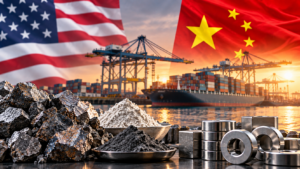
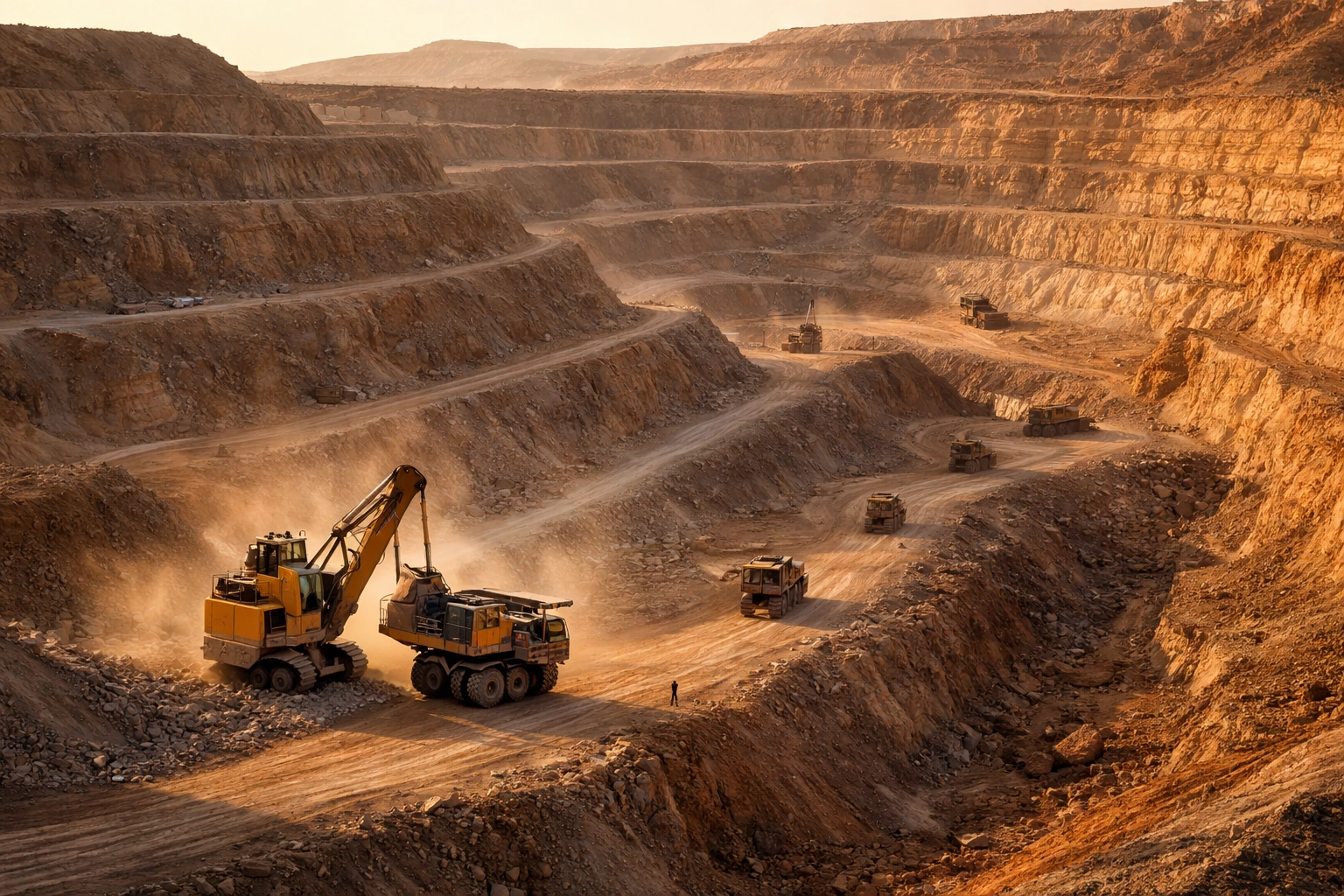
Beijing controls approximately 90 percent of global rare earth element processing. Eighty percent of tungsten production. Eighty-five percent of magnesium worldwide. These aren’t just commodities: they’re the building blocks of modern weapons systems, advanced electronics, and the entire clean energy transition.
“We’ve sleepwalked into a dependency that no serious country should accept,” one senior administration official told reporters on background. “This executive order is the wake-up call.”
Lutnick Takes the Helm
Commerce Secretary Howard Lutnick emerges as the central figure in this initiative. The former Cantor Fitzgerald CEO brings a dealmaker’s mentality to a department now tasked with securing supply chains that have calcified over decades.
His mandate is straightforward but enormous: negotiate bilateral and multilateral agreements that guarantee American access to processed minerals without routing through Chinese intermediaries.
Lutnick’s counterpart at USTR, Jamieson Greer, shares responsibility for the diplomatic heavy lifting. Greer served as chief of staff to Robert Lighthizer during Trump’s first term, giving him deep experience in the kind of bare-knuckle trade negotiations the administration clearly anticipates.
The 180-day deadline: landing roughly in mid-July 2026: creates genuine urgency. Both officials know that if they return empty-handed, the president has already signaled his preferred backup plan: trade remedies, meaning tariffs designed to punish nations that don’t cooperate and incentivize domestic production.
The Diplomatic Push
The administration isn’t going it alone. Secretary of State Marco Rubio will host the inaugural Critical Minerals Ministerial at the State Department on February 4, 2026, welcoming international partners for what officials describe as the first of many high-level gatherings.

The guest list tells a story about where Washington sees opportunity.
Australia sits at the top: a Five Eyes ally with substantial rare earth deposits and processing ambitions of its own. Saudi Arabia brings capital and a desire to diversify beyond oil. Malaysia and Thailand offer existing processing infrastructure and geographic proximity to Southeast Asian mining operations. Japan, already burned by Chinese rare earth restrictions in 2010, shares America’s urgency.
“These are countries that understand the problem,” a State Department spokesperson said. “They’ve felt the pressure. They’re ready to work with us on solutions.”
The strategy appears to involve creating redundant supply chains: multiple pathways to the same critical materials, so no single point of failure can cripple American industry or defense.
Military Realities
Defense Department officials have been sounding alarms about mineral vulnerabilities for years. The “Critical Minerals Blitz” finally puts executive muscle behind their concerns.
Modern weapons systems consume staggering quantities of rare earths and specialty metals. A single F-35 fighter jet requires approximately 920 pounds of rare earth materials. Virginia-class submarines need even more. Precision-guided munitions, satellite systems, advanced radar: all depend on materials the U.S. currently cannot produce at scale.
The six-month investigation preceding the executive order reportedly found that in a conflict scenario involving China, existing mineral stockpiles would be depleted within months. Domestic production couldn’t begin to close the gap.
“You can have the best engineers in the world designing weapons systems,” one defense industry executive told Skillings Mining Review. “But if you can’t source the materials, you’re just making PowerPoint slides.”

High-Tech Manufacturing at Stake
The defense implications grab headlines, but the economic stakes extend far beyond the Pentagon.
Every semiconductor fab breaking ground under the CHIPS Act needs rare earths. Every EV battery gigafactory requires lithium, cobalt, and graphite: often processed through Chinese facilities. Every wind turbine, every solar panel, every piece of advanced medical equipment depends on materials controlled by strategic competitors.
The administration’s framing explicitly links mineral security to the broader push for American manufacturing renaissance. You can’t reshore production if you don’t control inputs. You can’t achieve energy independence if Beijing can throttle your battery supply chain with a phone call.
Industry groups have responded positively, though with caveats about execution.
“The intent is exactly right,” said one mining industry lobbyist who requested anonymity to speak candidly. “The question is whether 180 days is enough time to undo 30 years of neglect.”
What Happens Next
The February 4 ministerial will provide the first real test of international appetite for cooperation. Expect announcements about working groups, joint ventures, and framework agreements. The substantive deals: the ones that actually move mineral flows: will take longer.
Domestically, the executive order triggers a cascade of regulatory reviews. Mining permits that have languished for years may see expedited processing. Environmental reviews could face pressure to accelerate. Industry watchers expect a wave of project announcements as companies position themselves to benefit from the new federal priority.
The tariff threat looms over everything. If negotiations disappoint, the administration has made clear it won’t hesitate to use trade remedies. That prospect alone may concentrate minds in foreign capitals.
For the mining industry, the “Critical Minerals Blitz” represents the most significant policy shift in a generation. Washington has finally accepted what miners have argued for decades: these materials matter, supply chains are fragile, and strategic indifference is no longer an option.
Whether the Lutnick-Greer team can deliver results in 180 days remains an open question. But for the first time in years, the full weight of the executive branch is pushing in the same direction.
The blitz is on.
For continued coverage of U.S. mineral policy and global supply chain developments, visit Skillings Mining Review.