By Charles Pitts

The prevailing narrative among West African observers over the last 24 months was simple: get out. Between the coup d’états in the Sahel, the aggressive overhaul of mining codes, and the literal seizure of gold stockpiles, the region was being branded as uninvestable. Frontier risk had moved from a line item on a spreadsheet to a full-blown existential crisis.
Then Barrick Gold did the unthinkable. They didn’t exit. They doubled down.
The recent 10-year permit extension for the Loulo-Gounkoto complex in Mali isn’t just a corporate press release. It is a geopolitical pivot. By resolving a bruising two-year standoff with the Malian military government, Barrick has provided a blueprint for how major miners can survive: and perhaps thrive: in environments where the rule of law is being rewritten in real-time.
But don’t mistake this for a return to the status quo. The price of admission has changed. The math is harder. And the leverage has shifted.
More Read

The $253 Million Handshake
The settlement terms are brutal. To secure another decade of operations at Mali’s largest gold producer, Barrick agreed to pay the state $253 million. That’s not a rounding error. That is a direct transfer of liquidity to a government currently navigating heavy international sanctions and internal security pressures.

For Barrick, the logic is purely mathematical. Loulo-Gounkoto generated nearly $900 million in revenue in 2024 alone. Losing the asset wasn’t an option. The 2025 production collapse: where output plummeted to a meager 29,000 ounces following the January 2025 shutdown: represented a massive hole in the company’s global portfolio.

More Read
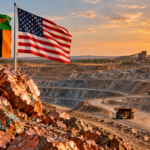
The recovery forecast is aggressive: 260,000 to 290,000 ounces in 2026. To get there, Barrick had to swallow the bitter pill of the 2023 Mining Code. While the specific framework of the Barrick deal keeps some legacy protections intact, the “restored stability” Malian leaders are touting comes at the cost of significantly higher state participation.
The strategic calculus here isn’t subtle: pay now to avoid a total loss of the “mine of the future.” It’s a trend we’re seeing globally as Anglo American moves to streamline its portfolio and focus on core, high-yield assets in volatile regions.
Negotiated Reform vs. Nationalization
The biggest fear for risk analysts in 2024 was outright nationalization. Mali’s military leadership had the optics, the populist momentum, and the Russian backing to simply take the keys to Loulo-Gounkoto.
They didn’t.
Instead, they used the threat of disruption to extract a massive cash settlement and a favorable long-term equity split. This signals a sophisticated shift in West African resource nationalism. Governments in the region have realized they don’t need to run the mines: they just need to own the math.
By withdrawing World Bank arbitration proceedings, Barrick signaled that the “Western” way of resolving disputes: through high-priced lawyers in Washington or Paris: is losing its teeth in the Sahel. If you want to operate in Bamako, you settle in Bamako.
This mirrors the situation in other frontier markets where governments are demanding more than just royalties. We’ve seen similar pressures in South America, where companies like BYD are securing mineral rights by promising downstream investment rather than just extraction.
The Sahel Ripple Effect
What happens in Mali never stays in Mali. The Loulo-Gounkoto extension sets a precedent for the entire Alliance of Sahel States (AES): Niger, Burkina Faso, and Mali.
For years, these countries followed a standard colonial-era mining playbook. That playbook has been burned. The new reality is a hybrid model:
- State Equity Upgrades: Moving from 10-20% free-carried interest to 35% or more.
- Infrastructure Demands: Forcing miners to build local processing and power capacity.
- Sovereign Cash Infusions: Upfront payments for “historical grievances” or tax adjustments.
Analysts at SMR OPS 100K ($Daily Content) have been tracking this shift for months. The message to the C-suite is clear: your old stability agreements are only as strong as the current government’s need for cash.

Ironically, this deal might actually increase stability for the next five years. Why? Because the Malian government has just “cashed out” their immediate grievances. They have a vested interest in Barrick hitting that 290,000-ounce target in 2026. A 35% stake in a closed mine is worth zero. A 35% stake in a high-performing Tier-1 asset is a regime-sustaining revenue stream.
Frontier Risk: The New Definition
We need to stop talking about “risk” as a binary of safe or unsafe. In 2026, all Tier-1 gold deposits are in “risky” places. The easy ounces are gone.
The Barrick-Mali deal teaches us that frontier risk is now a management discipline. It’s about maintaining a constant state of negotiation. The 10-year extension isn’t a guarantee of peace; it’s a 10-year window to keep talking.
This isn’t just happening in Africa. We see the same regulatory friction in established jurisdictions. Look at the U.S. Steel crossroads or the tensions surrounding Canadian critical mineral stockpiles. The difference is that in West Africa, the guardrails are thinner, and the consequences of a breakdown are more immediate.
For investors, the takeaway is nuanced. If a major like Barrick can find a path forward after a complete operational shutdown and a stockpile seizure, then the region isn’t “uninvestable.” It’s just expensive.
What Happens Next
Mali’s industrial gold output declined by nearly 23% in 2025. That was a self-inflicted wound. The junta learned that while they can stop the trucks, they can’t easily replace the technical expertise required to run one of the world’s most complex gold circuits.
Expect other majors in the region: B2Gold, Resolute, Allied Gold: to face similar “conversations.” They will be asked to pay more. They will be asked to give up more equity. And, following Barrick’s lead, most will likely pay.

The alternative is leaving billions of dollars of sunk capital in the ground. In a world where gold prices remain a hedge against global instability, no CEO wants to be the one who walked away from a million-ounce-per-year province.
The strategic calculus here isn’t subtle:
- The State gets the cash and the credit for “reclaiming” national wealth.
- The Miner gets the production and the long-term reserves.
- The Risk Analyst gets a headache.
The Bottom Line
Mali is back in business, but the business has changed. The Barrick extension proves that the “Sahel Standoff” is entering a new phase of pragmatic extraction. The government needs the money; the miners need the gold.
It’s a marriage of convenience, negotiated at the end of a very long table.
For the global mining industry, the lesson is clear: don’t wait for the dust to settle in West Africa. The dust is the new permanent feature. You either learn to operate in the storm, or you leave the field to those who can.
Barrick chose to stay.
Industry Outlook 2026: Mali Gold Sector
| Metric | 2024 Actual | 2025 (Shutdown Year) | 2026 Forecast |
|---|---|---|---|
| Loulo-Gounkoto Output | ~500k oz | 29k oz | 260k-290k oz |
| State Ownership Cap | 20% | Negotiating | Up to 35% |
| National Gold Revenue | $900M (approx) | <$150M | ~$750M (projected) |
| Operational Status | Stable | Suspended/Seized | Restored/Negotiated |
Charles Pitts is the CEO of 1. SMR OPS 100K ($Daily Content) and a veteran observer of global mining cycles. His analysis focuses on the intersection of capital, geology, and sovereign risk.