By Chales Pitts

The global transition toward artificial intelligence has moved beyond the semiconductor and software sectors, landing squarely in the pits and processing plants of the world’s largest mining operations. By mid-2026, the “AI-Energy Nexus” has become the primary driver for industrial commodity valuations, as hyperscale data centers demand unprecedented volumes of clean, reliable baseload power and the high-performance metals required to transmit it.
Generative AI and the rapid expansion of global data infrastructure have ended nearly two decades of flat electricity demand in developed markets. This surge, occurring alongside the electrification of transport, has created a structural supply-demand imbalance that favors mining companies with exposure to copper, uranium, and lithium.
In this week’s Power List, we analyze five mining majors that have strategically positioned their portfolios to meet the requirements of the 2026 energy landscape.
1. Cameco (NYSE: CCJ, TSX: CCO) | The Uranium Standard-Bearer
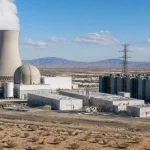
As data center operators move to secure 24/7 carbon-free power, nuclear energy has returned to the forefront of global energy policy. Cameco, one of the world’s largest pure-play uranium producers, is the primary beneficiary of this multi-billion dollar race for uranium.
More Read

The company’s joint venture with Brookfield Renewable Partners to acquire Westinghouse has proven to be a pivotal move. By integrating fuel supply with reactor technology, Cameco now sits at the center of the Small Modular Reactor (SMR) rollout. In 2026, hyperscalers are increasingly looking to SMRs to provide dedicated power to AI clusters, bypassing traditional grid bottlenecks.

Cameco’s operations at McArthur River and Key Lake in Saskatchewan continue to provide the high-grade feedstock necessary for the global reactor fleet. With uranium term prices remaining elevated due to thin inventories and increased utility contracting, Cameco’s long-term contract book provides a stabilized revenue stream that few in the sector can match. The company is no longer viewed simply as a mining play, but as a critical infrastructure partner for the AI revolution.

More Read
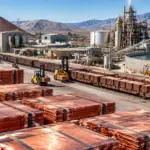
2. BHP (NYSE: BHP, ASX: BHP) | The Copper Powerhouse
If uranium is the fuel for the AI-Energy Nexus, copper is the conduit. BHP, the world’s largest miner, has aggressively pivoted its portfolio toward “future-facing” metals, with copper leading the charge. As copper demand from AI data centers accelerates in 2026, the company’s massive South American assets are under the spotlight.
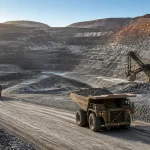
BHP’s Escondida and Pampa Norte operations are essential for meeting a global copper deficit that analysts now project will persist through 2030. Modern data centers require significantly more copper than traditional facilities, primarily for power distribution units, cooling systems, and high-density cabling.
In early 2026, BHP has focused on brownfield expansions and the integration of autonomous hauling and AI-driven maintenance to lower its All-In Sustaining Costs (AISC). By optimizing its existing footprint in Chile and Australia, BHP is capturing the spread between rising spot prices: which recently touched $12,500 per tonne: and its streamlined operational costs.
3. SQM (NYSE: SQM) | The Grid Storage Essential
While lithium is often associated with electric vehicles, its role in the AI-Energy Nexus is increasingly tied to stationary energy storage. To integrate renewable energy sources into grids stressed by data center loads, massive battery arrays are required to buffer intermittency.
SQM remains a dominant force in the lithium market, leveraging its low-cost brine operations in the Salar de Atacama. Despite the entry of new supply from hard-rock assets in Australia and Africa, SQM’s scale and pivot toward Direct Lithium Extraction (DLE) technologies have allowed it to maintain a competitive edge.
By mid-2026, SQM has solidified its position as a key supplier for the Lithium Iron Phosphate (LFP) batteries that dominate the stationary storage market. As data centers move toward “behind-the-meter” storage to manage peak demand and ensure uptime, SQM’s lithium carbonate and hydroxide remain indispensable. The company is also navigating the complex regulatory environment in Chile through its partnership with Codelco, securing its operational runway through the next decade.

4. Rio Tinto (NYSE: RIO, ASX: RIO) | Scaling Critical Minerals
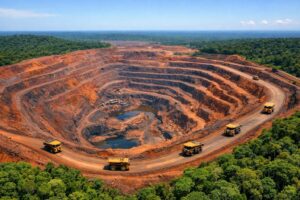
Rio Tinto has spent the last three years transforming from an iron ore-dependent major into a diversified critical minerals giant. The ramp-up of the Oyu Tolgoi underground mine in Mongolia has positioned Rio as one of the few companies capable of bringing significant new copper supply to the market in the 2026-2028 window.
Beyond copper, Rio Tinto’s investment in the Jadar lithium project and its exploration for high-purity scandium and aluminum alloys are aimed directly at the next generation of energy hardware. The AI-Energy Nexus requires more than just raw power; it requires the lightweight, heat-resistant materials used in high-density server racks and power electronics.
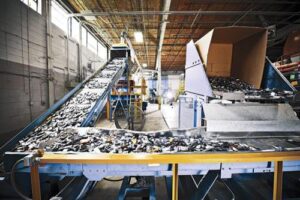
Rio’s strategy in 2026 emphasizes “urban mining” and recycling alongside traditional extraction, a move designed to satisfy the strict ESG requirements of its Big Tech customers. By providing a traceable, low-carbon supply of metals, Rio Tinto is securing premium contracts with companies that are under intense pressure to decarbonize their supply chains while scaling their AI capabilities.

5. NexGen Energy (NYSE: NXE, TSX: NXE) | The Next Frontier of Supply
As the only developer on this week’s list, NexGen Energy represents the “alpha” play in the uranium sector. Its Rook I project in the Athabasca Basin is slated to be one of the largest and lowest-cost uranium mines in the world. As the market moves into a structural deficit in 2026, the importance of NexGen’s future production cannot be overstated.
Investors have increasingly treated NexGen as an “AI power derivative.” The expectation is that the next generation of reactors: designed to feed the power-hungry data centers of the 2030s: will require the massive, high-grade volumes that only Rook I can provide at scale.
The company has successfully cleared major permitting hurdles and is currently in the thick of construction. In a market where supply security is becoming as important as price, NexGen’s Canadian jurisdiction makes it an attractive partner for U.S. and European utilities seeking to decouple their fuel cycles from Russian or Central Asian sources.
Market Snapshot: 2026 Price Forecasts
The following table outlines the base-case price projections for the core metals driving the AI-Energy Nexus through the end of 2026.
| Commodity | 2026 Base Case Price | Key Driver | Supply Outlook |
|---|---|---|---|
| Copper | $12,800 / tonne | Data center grid build-out | Deficit of 250,000 tonnes |
| Uranium | $115 / lb (Spot) | Nuclear baseload for AI | Thin inventories; high term demand |
| Lithium | $22,500 / tonne (LCE) | Grid-scale battery storage | Balanced; demand growth steady |