By Charles Pitts

The global race for magnet rare earths has found a new high-water mark in the Poços de Caldas alkaline complex of Brazil. Viridis Mining & Minerals has delivered a substantial Mineral Resource Estimate (MRE) upgrade for its Colossus project, positioning the asset as a premier contender in the burgeoning ionic adsorption clay (IAC) sector. The updated figures confirm a significant expansion in both scale and confidence, underpinning a project that aims to challenge the dominance of Chinese clay-hosted deposits.
With a 305 Mt Measured & Indicated (M&I) resource now on the books, Viridis is shifting focus toward a Final Investment Decision (FID) slated for the second half of 2026. This upgrade is not merely a matter of volume; it is a testament to the grade-driven economics that distinguish the Poços de Caldas region from other global rare earth provinces.
The July 2026 MRE Upgrade: Scale Meets Precision
The latest MRE for Colossus represents a pivotal shift for the company. The total resource now stands at 473 Mt at 2,505 ppm Total Rare Earth Oxides (TREO), but the real story lies in the high-confidence M&I subset. By delineating 305 Mt at 2,723 ppm TREO, Viridis has secured one of the highest-grade IAC resources in the world.
A critical metric for investors and operators alike is the concentration of Magnet Rare Earth Oxides (MREO): specifically Neodymium, Praseodymium, Dysprosium, and Terbium. These minerals are the bedrock of the critical minerals stocks narrative, essential for high-performance permanent magnets in electric vehicles and wind turbines. At Colossus, MREOs comprise 24% of the TREO, a ratio that places it in the upper echelon of developed projects.
More Read
Table 1: Colossus Project MRE Summary (July 2026)
| Category | Tonnage (Mt) | TREO Grade (ppm) | MREO Grade (ppm) | MREO/TREO Ratio |
|---|---|---|---|---|
| Measured | 31 | 2,858 | 758 | 26.5% |
| Indicated | 274 | 2,708 | 648 | 23.9% |
| M+I Total | 305 | 2,723 | 659 | 24.2% |
| Inferred | 168 | 2,110 | 470 | 22.3% |
| Total MRE | 473 | 2,505 | 592 | 23.6% |
Source: Viridis Mining & Minerals, July 2026. Data highlights the industry-leading grades within the Poços de Caldas complex.


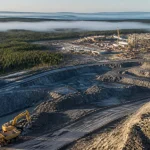
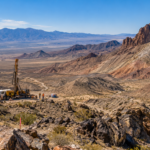
The reddish-brown benches of the Poços de Caldas region signify the high-grade ionic clay mineralization that defines the Colossus project.
Metallurgy: The Near-Neutral Advantage
While hard-rock rare earth projects often face arduous and costly “cracking” processes involving high temperatures and harsh acids, Colossus benefits from the unique characteristics of ionic clays. In these deposits, rare earths are loosely bound to the surface of clay minerals, allowing for simpler, cheaper extraction.
More Read
Viridis has optimized this process using a near-neutral pH leach. Metallurgical test work conducted with ANSTO (Australian Nuclear Science and Technology Organisation) has demonstrated record recoveries for an IAC project. Key results include:
- MREO Recoveries: Averaging 76%, with specific recoveries of 77% for Praseodymium and 76% for Neodymium.
- Product Quality: The company has produced a Mixed Rare Earth Carbonate (MREC) containing 60% TREO, with a market-leading 39% MREO-to-TREO ratio.
This metallurgical profile significantly lowers both capital expenditure (CAPEX) and operational costs (OPEX). By operating at near-neutral pH and atmospheric conditions, the project bypasses the need for the complex environmental safeguards required by high-acid leaching operations. Furthermore, the low radioactive content of the Colossus ore has already earned it a radiological exemption from Brazilian authorities, streamlining the permitting and regulatory pathway.

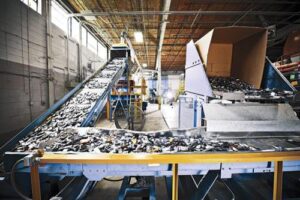
Advanced leaching circuits are central to the low-cost, near-neutral pH extraction process validated by ANSTO.
Competitive Landscape: Colossus vs. Caldeira
The Poços de Caldas region is often described as a two-horse race between Viridis’ Colossus and Meteoric Resources’ Caldeira project. While both are world-class IAC assets, the latest MRE upgrade highlights a distinct divergence in strategy and resource quality.
Meteoric’s Caldeira project is massive, with total tonnages comparable to or slightly exceeding Colossus. However, the “Grade is King” mantra favors Viridis in current market conditions. Caldeira’s average TREO grades generally hover between 1,300 and 1,400 ppm: roughly half the grade of the Colossus M&I resource.
For an operator, higher grades mean less material needs to be moved and processed to produce the same volume of final product. This inherent efficiency suggests that while both projects will likely find their way into production to satisfy global demand, Colossus may enjoy a superior margin profile. This competitive edge is increasingly important as the industry looks toward milestones like the Arafura Nolans FID as a benchmark for REE project viability in 2026.
Infrastructure and Path to Production
Brazil has emerged as a preferred jurisdiction for critical mineral development due to its established mining code and robust infrastructure. The Colossus project is situated in an area with ready access to power, water, and skilled labor: a stark contrast to remote greenfield projects in the Australian Outback or Northern Canada.
The timeline for Colossus is aggressive:
- May 2026: Submission of the Installation Licence (LI) application.
- H2 2026: Expected Final Investment Decision (FID) and integration of the DFS with the updated MRE.
- 2027: Commencement of major construction and long-lead item procurement.
- 2028: Target for first production.
The project’s pre-tax Net Present Value (NPV) is estimated at approximately US$1.41 billion with an Internal Rate of Return (IRR) of 43%, based on a 20-year mine life and a 5 Mtpa processing capacity. These figures assume a conservative long-term price for NdPr, leaving room for upside should supply constraints persist in the latter half of the decade.

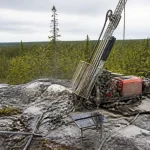
Continuous drilling and soil sampling have been instrumental in upgrading the Colossus resource to the 305 Mt M&I level.
The 2026 Outlook for Ionic Clays
As we move through 2026, the rare earth market remains bifurcated. While prices for light rare earths have stabilized, the strategic value of “heavy” rare earths like Dysprosium and Terbium, well-represented in the Colossus MRE: continues to command a premium.
For the mining industry, the Colossus MRE upgrade is a signal that the “Western” supply chain is maturing. The transition from exploration to defined, high-grade resources is the necessary precursor to the large-scale financing required to break the current processing monopolies. Viridis Mining & Minerals has now provided the data necessary to argue that Brazil, not just Australia or North America, will be a cornerstone of the next generation of rare earth supply.