By Charles Pitts

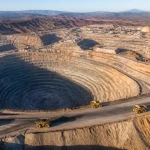
LA SAL, UTAH : The red rock canyons of southeastern Utah, long a silent witness to the ebb and flow of the American uranium and copper rushes, have become the staging ground for a global industrial first. Mariana Minerals has officially reopened the Copper One mine: formerly the Lisbon Valley Mine: as the world’s first fully autonomous copper operation.
The reopening, marked by a ceremonial blast in late April 2026, signals more than just the return of a dormant asset. It represents a fundamental shift in the economics of extraction. By replacing traditional manned operations with a proprietary “autonomy-first” architecture, Mariana Minerals claims it has achieved a 50% reduction in operating costs, a figure that has sent ripples through the mining news cycles and global commodity markets.
The Rise of the Machine: From Lisbon Valley to Copper One
The Lisbon Valley site had been dormant since 2024, a victim of fluctuating prices and the logistical nightmare of maintaining a consistent workforce in one of the most remote corners of the United States. When Mariana Minerals acquired the asset in late 2025, the strategy was clear: the mine could not survive on 20th-century labor models.
“The industry has reached an inflection point where the cost of human-centric mining in high-jurisdiction environments is no longer competitive with low-grade, high-volume assets,” said a Mariana Minerals spokesperson during the site tour. “Copper One is our answer to that reality.”
More Read

The heart of the operation is MineOS, a centralized orchestration platform that manages every moving part of the facility without a single operator inside the pit. Unlike previous attempts at automation that merely added remote-control features to existing trucks, Copper One was rebuilt from the ground up to be “born autonomous.”

AI-Driven Drills and the New Face of Exploration

The most significant technological leap at Copper One is the deployment of AI-driven drills. Traditional drilling often suffers from human error and inconsistent pressure, leading to suboptimal blast holes and wasted energy. The new fleet at Copper One utilizes real-time geological feedback loops.
More Read

As the drills penetrate the rock, onboard AI analyzes the torque, vibration, and drill-speed data to create a high-resolution map of the ore body’s hardness and density. This data is fed back into the blast design software instantly, allowing for precision explosives placement that maximizes fragmentation and reduces the energy required for downstream crushing.
This level of integration is a cornerstone of the Mining Tech Stack for Remote Operations, where connectivity and predictive maintenance become the primary drivers of site value. At Copper One, the AI drills don’t just make holes; they act as the “eyes” of the refinery, telling the processing plant exactly what kind of ore is coming hours before it leaves the pit.
Autonomous Haul Trucks: Solving the Labor Deficit
The sight of massive autonomous haul trucks navigating the tiered benches of the Utah desert without a driver in the cab is no longer a pilot project; it is the daily reality of Copper One. These trucks operate 24/7, stopping only for automated refueling and preventative maintenance checks triggered by MineOS.
The transition to autonomous hauling addresses the chronic labor shortage that has plagued the North American mining sector. By removing the need for 300+ on-site operators for hauling alone, Mariana has bypassed the escalating costs of housing, transporting, and insuring personnel in remote locations.
“We aren’t just saving on wages,” noted one site engineer. “We are saving on the variability of human performance. An autonomous truck doesn’t have a bad day. It doesn’t take a turn too wide or brake too hard. The fuel savings and tire-life extensions alone account for nearly 15% of our cost reductions.”
This shift mirrors trends seen in other Tier-1 jurisdictions, as discussed in our analysis of how Southern Copper and Vale are achieving record-low cash costs. By driving the “human cost” out of the pit, Copper One is moving toward a cost curve that rivals the world’s largest low-cost producers.
The Command Center: The New Frontline

While the pit is empty of people, the command center is the new frontline. Located in a climate-controlled facility, a diverse team of engineers and data scientists monitor the “digital twin” of the mine. Every truck, drill, and conveyor is represented in a real-time 3D environment.
The role of the miner has evolved from a heavy-machinery operator to a system supervisor. “We are looking for people who understand data flow as much as they understand rock mechanics,” said a supervisor at the La Sal facility. This transition has allowed Mariana to recruit from a broader talent pool, including those with backgrounds in robotics and software engineering who might otherwise have avoided a career in traditional mining.
The PlantOS system extends this logic to the refinery. By automating the leaching and electrowinning circuits, Mariana aims to scale production to 50,000 metric tonnes of high-purity copper cathode annually by 2030. The refinery is designed to process both traditional geologic ore and scrap feedstocks, making it a hybrid facility geared for the circular economy.
Copper’s Strategic Role in the 2026 Energy Nexus
The reopening of Copper One arrives at a critical juncture for the global economy. As we detailed in our report on the 2026 Copper Deficit, the demand for high-purity copper is being driven to record highs by the twin pillars of the energy transition and the massive expansion of AI data centers.
“Copper is the new oil,” has become a common refrain in boardroom discussions, but the challenge remains supply. With existing mines seeing declining grades and new projects facing decade-long permitting delays, the ability to “restart” dormant assets like Lisbon Valley through technology is a vital relief valve for the market.
Copper One’s 50% cost reduction benchmark is particularly important for the “mid-tier” segment of the industry. If Mariana Minerals can prove that automation can turn a marginal, dormant asset into a high-margin cash cow, it could unlock dozens of similar projects across the Western United States and Australia that were previously deemed “un-minable” under old economic models.
Production and Refinement: The Final Output

The final product at Copper One: 99.99% pure copper cathodes: is being positioned as “Green Copper.” Because the mine utilizes a zero-emissions autonomous fleet (powered by on-site solar and grid-scale storage) and an “autonomy-first” refining process, the carbon footprint per pound of copper is significantly lower than traditional open-pit operations in South America.
This “Green” premium is expected to attract interest from major EV manufacturers and tech giants who are under increasing pressure to clean up their supply chains. Mariana Minerals has already indicated that they are in preliminary talks with several Tier-1 automotive and energy storage companies for long-term off-take agreements.
Challenges and the Road Ahead
Despite the optimism, the path to full autonomy is not without its hurdles. Industry analysts point to the massive upfront capital expenditure required to outfit a site with the necessary sensors, mesh networks, and specialized machinery. Copper One represents an investment of over $1 billion over the next decade, a sum that requires a stable copper price and investor patience.
Furthermore, the “fully autonomous” claim will be tested by the harsh reality of the Utah environment. Extreme heat, dust, and occasional flash floods can wreak havoc on sensitive lidar and radar systems. Mariana’s MineOS will need to prove its resilience through its first full year of 24/7 operation before the “Copper One model” can be definitively declared a success.
For now, the industry is watching closely. If Mariana Minerals succeeds, the days of the driver-led mine may be numbered. The reopening of Copper One isn’t just about bringing jobs back to Utah; it’s about proving that the future of mining is digital, automated, and incredibly efficient.
Market Snapshot: May 5, 2026
- Copper Spot: $5.12/lb (+0.4%)
- Sector Sentiment: Bullish on tech-integrated producers.
- Key Risk: Regulatory shifts on autonomous vehicle deployment in mixed-use industrial zones.
Stay updated on the latest in mining technology and commodity trends by subscribing to the Skillings Mining Intelligence newsletter.