By Penny Laneford | January 16, 2026

WASHINGTON , A bipartisan coalition of US lawmakers introduced legislation Thursday to establish a $2.5 billion Strategic Resilience Reserve aimed at stabilizing critical mineral prices and breaking China’s stranglehold on supply chains essential to electric vehicles, consumer electronics, and American defense systems.
The move marks Washington’s most aggressive attempt yet to wrestle control of the global minerals market away from Beijing, which currently dominates roughly 60% of global rare earth production and maintains significant leverage over lithium and cobalt supplies feeding the world’s battery factories.
The SECURE Minerals Act Takes Shape
The legislation, formally dubbed the SECURE Minerals Act, arrives at a moment when tensions over mineral access have reached a boiling point. Sponsors include Senator Jeanne Shaheen (D-NH), Senator Todd Young (R-IN), and Representative Rob Wittman (R-VA) , a rare alignment of Democratic and Republican interests that signals just how seriously both parties view the supply chain vulnerability.
The bill’s architects argue China has repeatedly demonstrated its willingness to “weaponize its influence over prices and volumes in the contest for access to critical minerals.” Beijing, for its part, has pushed back against those characterizations, stating it remains committed to maintaining “the security and stability of global production and supply chains.”
More Read

But lawmakers aren’t buying it. And neither, apparently, are American manufacturers watching their raw material costs swing wildly based on decisions made thousands of miles away.


A Federal Reserve for Rocks
Here’s where the proposal gets interesting. The reserve wouldn’t operate like a typical government stockpile gathering dust in some warehouse. Instead, it would function under a seven-member board modeled directly after the Federal Reserve , appointed by the president, confirmed by the Senate, and empowered to make independent decisions about when to buy, when to sell, and at what price.
More Read

That last part matters enormously. The board would have flexibility to pay above market rates , potentially twice the going rate for rare earths , if doing so supports domestic mining operations struggling to compete with cheaper Chinese production. It’s a deliberate market intervention designed to make American mineral extraction economically viable again.
Board members would be tasked with purchasing minerals already designated as strategic by US agencies and stockpiling them across a network of warehouses nationwide. When the defense department or a commercial manufacturer needs access, the board could sell from the reserve, reinvesting proceeds to keep the operation self-sustaining.
The $2.5 billion represents initial seed money. Proponents expect Congress to authorize additional funding as the reserve proves its value , assuming, of course, the bill survives the legislative gauntlet.
Why Now? The China Problem in Plain Numbers
The urgency driving this legislation comes down to simple math that keeps Pentagon planners up at night.
China processes approximately 60% of the world’s rare earth elements : the 17 metals essential for everything from smartphone screens to F-35 fighter jets. But raw processing numbers only tell part of the story. Beijing also controls significant chunks of lithium and cobalt production, the twin pillars supporting the global electric vehicle revolution.
Consider what that means for American automakers racing to meet EV mandates. Every battery pack rolling off a US assembly line depends on materials flowing through supply chains that Beijing can disrupt with a single policy decision. It happened in 2010 when China temporarily restricted rare earth exports to Japan during a diplomatic spat. Prices spiked. Industries scrambled. The message was received.

American defense contractors face even starker realities. Precision-guided munitions, night vision equipment, satellite systems : all require rare earth components. A prolonged supply disruption during a geopolitical crisis could leave the US military short on the materials needed to sustain operations.
The SECURE Minerals Act represents an attempt to build a buffer against that scenario.
Recycling First, Mining Second
One notable feature of the proposed reserve: it prioritizes recycled materials over freshly mined ore.
That’s not idealism talking. It’s economics. The US already generates substantial quantities of electronic waste containing recoverable rare earths, lithium, and cobalt. Capturing those materials from discarded smartphones, laptops, and EV batteries could reduce dependence on foreign extraction while supporting a domestic recycling industry that barely exists today.
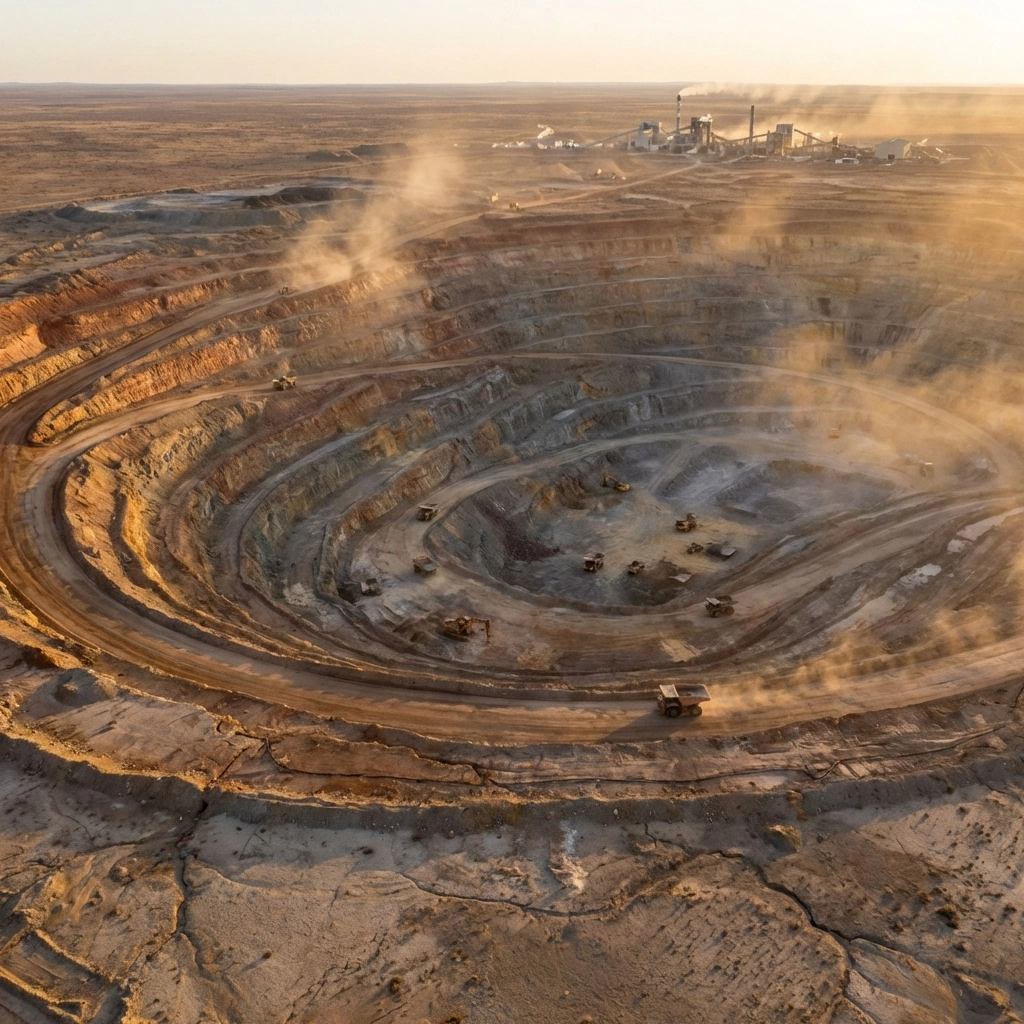
But the bill doesn’t exclude traditional mining. Domestic producers would have a buyer of last resort : the reserve itself : willing to pay premium prices when market conditions make extraction unprofitable. For struggling American mining operations, that guarantee could mean the difference between staying open and shutting down.
The approach mirrors strategies already deployed by allies. Allied nations would be invited to participate in the reserve by contributing at least $100 million, creating a multinational stockpile that diversifies risk and strengthens collective bargaining power against dominant producers.
Defense and EV Industries Watch Closely
The legislation arrives as both the defense and electric vehicle sectors grapple with supply chain anxieties that have intensified dramatically over the past two years.
For EV manufacturers, the math is unforgiving. Battery costs account for roughly 30-40% of an electric vehicle’s total price tag. Those costs swing based on lithium and cobalt prices that remain heavily influenced by Chinese market dynamics. A strategic reserve capable of smoothing price volatility could provide manufacturers with more predictable input costs : and consumers with more stable sticker prices.
Defense applications carry even higher stakes. The Pentagon’s appetite for rare earth-dependent systems continues growing. Hypersonic weapons, advanced radar, secure communications : all demand materials currently flowing through supply chains that American commanders cannot fully control.
Companies like KoBold Metals, backed by significant venture funding, have been working to discover new domestic mineral deposits. But exploration takes years. Processing facilities take longer. The reserve offers a near-term bridge while those longer-term investments mature.
The Path Forward
To become law, the SECURE Minerals Act must clear both the House and Senate before landing on President Donald Trump’s desk. Given the bipartisan sponsorship, prospects look reasonably favorable : at least compared to more partisan proposals that routinely die in committee.
But obstacles remain. Some lawmakers will balk at the $2.5 billion price tag. Others will question whether government intervention in commodity markets constitutes appropriate policy. And the Federal Reserve-style governance structure will face scrutiny from those suspicious of creating another quasi-independent federal entity.
Industry groups have generally signaled support, viewing the reserve as a necessary counterweight to Chinese market power. Environmental organizations remain more cautious, particularly regarding provisions that could incentivize expanded domestic mining without sufficient environmental safeguards.
What Happens Next
The coming weeks will determine whether the SECURE Minerals Act gains momentum or stalls in the face of competing legislative priorities. Hearings are expected, amendments will be proposed, and the final version : if one emerges : may look substantially different from Thursday’s introduction.
What seems clear is that the conversation around critical mineral security has shifted permanently. The days of assuming global markets would reliably supply American industry have ended. Whether through strategic reserves, domestic mining expansion, or aggressive recycling programs, the US is actively seeking alternatives to its current dependence on Chinese-controlled supply chains.
For the mining industry, that shift represents both opportunity and uncertainty. New demand signals from Washington could justify investments that seemed marginal just a few years ago. But government programs come and go. Markets fluctuate. And the global race for critical minerals shows no signs of slowing.
The $2.5 billion question: Is America finally ready to compete?
Skillings Mining Review will continue tracking the SECURE Minerals Act as it moves through Congress. For ongoing coverage of critical minerals policy and market developments, visit Skillings.net.