By Charles Pitts

Rare earth processing is the most misunderstood bottleneck in the global energy transition. Here’s the thing nobody wants to admit: Digging these elements out of the ground is the easy part. Any junior explorer with a drill rig and a decent permit can find a deposit of monazite or bastnäsite. The real nightmare: and where the money is actually made or lost: is in the chemical separation.
If you think mining copper or gold is complicated, rare earths will make your head spin. We aren’t just moving dirt; we are performing high-stakes atomic surgery on a massive industrial scale. In the rare earth world, “grade” is a vanity metric. “Processability” is the only thing that pays the bills.
By 2026, the gap between those who can mine and those who can refine will define the winners of the critical minerals race. The strategic calculus here isn’t subtle: if you can’t separate the oxides, you’re just selling expensive gravel.
Stage 1: Beneficiation: The Battle Against Mineralogy
Before you even get to the chemistry, you have to deal with the physics. Rare earth elements (REEs) don’t like to be alone. They are usually locked inside complex mineral structures alongside Thorium, Uranium, and a host of other “nasty” tag-alongs.
More Read

Beneficiation is the process of taking raw ore (often 0.5% to 3% REO) and turning it into a mineral concentrate. This involves crushing, grinding, and flotation. But here is where it gets expensive: rare earth minerals are notoriously brittle. If you grind them too fine, they turn into “slimes” that won’t float. If you don’t grind them enough, the REEs stay locked in the host rock.

The goal is to reach a concentrate of 60% or greater rare earth oxide (REO). Most Western projects fail right here. They can’t get the recovery rates high enough to justify the energy costs.

More Read
Stage 2: Hydrometallurgy and “Cracking” the Ore
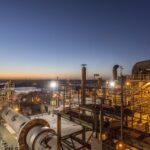
Once you have your concentrate, you have to “crack” the mineral. This isn’t a metaphor. You are literally using heat and aggressive acids: usually sulfuric or hydrochloric: to break the chemical bonds holding the rare earths.
This produces a “pregnant leach solution” (PLS). It’s a toxic soup of REEs, iron, aluminum, and, most importantly, radionuclides. Dealing with the waste is a brutal reality of the business. For every ton of rare earths produced, you’re looking at roughly one ton of radioactive residue. That’s not a rounding error. That’s a massive ESG liability that requires specialized handling.
We’ve seen how this plays out globally. For example, China discovers strategic minerals at world’s largest rare earth mine and they succeed because they have the infrastructure to handle these byproducts at a scale the West is only just beginning to contemplate.
Stage 3: Solvent Extraction: The Chemical Labyrinth
This is the “black box” of the industry. Solvent extraction (SX) is the process of separating the 17 rare earth elements from one another.
Because rare earths are chemically almost identical: the “Lanthanide contraction” means their ionic radii are very similar: you cannot just flip a switch to separate Neodymium from Praseodymium. You have to use hundreds, sometimes thousands, of “stages” of liquid-liquid extraction.
In an SX circuit, the PLS is mixed with an organic solvent. A specific element will have a slightly higher affinity for the organic phase than the aqueous phase. You move the liquid through a series of mixer-settlers. In the first stage, you might get 0.1% separation. So you do it again. And again. And again.
A modern separation plant for NdPr (the bread and butter of the global battery revolution) might require 500 individual stages.
The capital expenditure for this is staggering. We are talking hundreds of millions of dollars for the plumbing alone. This is why China currently maintains a stranglehold on the market. They have spent forty years perfecting the “recipes” for these organic solvents. Western companies are essentially trying to learn a language that China has been speaking fluently since the 1980s.

Purity Standards: The “Five Nines” Threshold
For investors, “purity” is a term that gets thrown around loosely. In the rare earth world, 99% purity is basically garbage.
To be used in high-performance permanent magnets for EVs or wind turbines, you need “four nines” (99.99%) or even “five nines” (99.999%) purity. Even a few parts per million of a “heavy” rare earth like Dysprosium in a “light” rare earth mix can ruin the magnetic properties of the final product.
The technical guide for investors is simple: Ask the company what their “tailings” look like and what their final oxide purity is. If they can’t guarantee 99.9%+, they don’t have a product; they have a chemical intermediate.
The Environmental Toll: Dust, Gas, and Water
Rare earth processing is a thirsty, dirty business. The numbers are grim:
- 13 kilograms of dust per ton of REO produced.
- 75 cubic meters of wastewater per ton.
- 9,600 to 12,000 cubic meters of waste gas containing hydrofluoric acid and sulfur dioxide.
If a project doesn’t have a robust water treatment plan, it won’t survive the first round of ESG auditing. We’ve discussed the 7 mistakes you’re making with mining ESG reporting, and in the REE sector, water management is mistake number one.

The Reduction to Metal: The Final Frontier
Even after you have a 99.99% pure oxide, you aren’t done. You can’t put an oxide into a magnet. You need metal.
Converting REOs into metals requires molten salt electrolysis or metallothermic reduction. This is an energy-intensive process that happens at incredibly high temperatures. This is the stage where the U.S. and Europe are most vulnerable. Even if we mine the ore in California or find it in Sweden’s Per Geijer deposit, we often end up shipping the oxides back to Asia for metal conversion.
That’s changing, but slowly. The first new US aluminum smelter in 50 years breaking ground is a signal of aluminum independence, but we need a similar “Manhattan Project” for rare earth metallization.
2026 Strategic Outlook: The Rise of Processing Hubs
What happens next? The industry is moving toward a “Hub and Spoke” model.
Individual mines are too expensive to outfit with full separation plants. Instead, we are seeing the emergence of centralized processing facilities. MP Materials in Mountain Pass and Lynas in Australia/Texas are the blueprints.
By 2026, we expect to see more “toll milling” arrangements where junior miners ship concentrate to a central hub that has already cleared the massive regulatory hurdles for radionuclide handling.

The Investor’s Reality Check
Don’t be fooled by high-grade intercepts in a press release. Geology is only 20% of the battle. The other 80% is the chemical engineering required to separate 17 nearly identical elements in a way that doesn’t poison the local watershed.
The strategic calculus isn’t just about who has the most rock. It’s about who has the “SX” expertise to turn that rock into a 99.999% pure product. Right now, that expertise is concentrated in very few hands.
As the West tries to de-risk its supply chain, the companies that succeed won’t just be miners. They will be chemical companies that happen to own a hole in the ground.