By Salini Krishnan

LITTLE ROCK, Ark. : The race for domestic battery metal supremacy just shifted from speculative PowerPoint decks to hard-contract reality.
Trafigura, one of the world’s largest independent commodities traders, has signed a binding 10-year offtake agreement to purchase 8,000 metric tonnes of battery-grade lithium carbonate annually from the Smackover project in southern Arkansas. This isn’t just another memorandum of understanding or a “letter of intent” that evaporates when interest rates tick up. It is a binding commitment for 80,000 tonnes over the next decade.
The supply will be sourced from the South West Arkansas (SWA) project, a joint venture between Vancouver-based Standard Lithium and Norwegian energy giant Equinor. For an industry that has spent the last three years talking about “localized supply chains” while still buying almost everything from China, this deal represents a massive pivot toward the American South.
Here is the thing nobody wants to admit: the U.S. lithium dream lives or dies in the brine of the Smackover Formation. While hard-rock mines in North Carolina and clay deposits in Nevada face endless litigation, the Arkansas brine industry is moving with the quiet efficiency of the oil and gas sector it was built upon.
More Read

The Strategic Calculus of 8,000 Tonnes
The numbers here are brutal and specific. The 8,000 tonnes Trafigura has secured represents more than 40% of the SWA project’s initial targeted output.

SWA is aiming for a first-phase production of 22,500 tonnes per year. By locking up nearly half of that capacity four years before the first commercial gram is even produced, Trafigura is front-running the market. They are betting that by 2028, the “lithium winter” of 2024-2025 will be a distant memory, replaced by a desperate scramble for Tier-1, Western-sourced carbonate.
According to the terms of the agreement, deliveries are scheduled to commence in 2028. That coincides with the projected inflection point where many analysts expect the global lithium forecast 2026 to tilt back into a structural deficit.
More Read
“This isn’t just about buying metal,” says one industry analyst. “It’s about securing a foothold in the most stable mining jurisdiction on the planet.”

Standard Lithium and Equinor: The Power Couple
The partnership behind the Smackover project is the primary reason Trafigura is willing to sign a 10-year check. Standard Lithium provided the Direct Lithium Extraction (DLE) technology and the local footprint, but Equinor: the $80 billion Norwegian state-backed behemoth: provided the balance sheet and the operational “adult supervision” that lithium juniors often lack.
Equinor’s entry into the Arkansas brine play earlier this year changed the math for everyone. It signaled that big oil (or “big energy”) viewed lithium not as a hobby, but as a core infrastructure play. The joint venture is currently barreling toward a Final Investment Decision (FID) in 2026.
For investors, the 2026 FID is the real deadline. If the project clears that hurdle, the SWA project becomes the centerpiece of the 2026 critical minerals scoreboard, positioning the U.S. as a legitimate producer rather than just a consumer of imported refined chemicals.
The DLE Factor: No Ponds, No Problems?
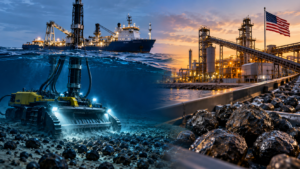
The Smackover project relies on Direct Lithium Extraction. Unlike the massive evaporation ponds used in the Atacama desert or the high-impact open-pit mines in Australia, DLE treats the brine like a closed-loop system. You pump the brine up, strip the lithium ions out, and reinject the spent fluid back into the same formation.
It’s fast. It’s cleaner. And it’s the only way to meet modern ESG requirements without getting buried in environmental impact studies.
However, DLE has been the “technology of the future” for a long time. The Smackover formation is the testing ground to see if it can finally work at a commercial scale in North America. Trafigura’s willingness to sign a binding offtake suggests they’ve seen the pilot plant data and liked what they saw. They aren’t just betting on the geology; they are betting on the chemical engineering.
Why Arkansas? Why Now?
The geographic shift is not accidental. As resource nationalism in 2026 continues to destabilize projects in Africa and South America, the “safe havens” of the mining world are shrinking.
Arkansas offers something that Chile or Zimbabwe cannot: a pre-existing industrial infrastructure for brine. The Smackover region has been a hub for bromine production for decades. The local workforce knows how to handle pipes, pumps, and reinjection wells. The regulatory framework isn’t being built from scratch; it’s being adapted from a century of oil and gas law.
Compare this to the volatility in other regions. While Chilean copper output hits five-month lows due to labor unrest and shifting policy, the Arkansas lithium play is being treated as a domestic security priority.

The Global Lithium Chessboard
Trafigura’s move is a direct challenge to the dominance of Chinese refiners. By securing 80,000 tonnes of U.S. supply, they can offer “IRA-compliant” material to automakers who are desperate to unlock consumer tax credits.
Under the current rules, EVs must use a specific percentage of minerals sourced from the U.S. or its free-trade partners to qualify for full subsidies. Arkansas lithium is the ultimate “clean” source for these manufacturers.
The strategic calculus here isn’t subtle:
- Security of Supply: 10 years of guaranteed flow.
- Regulatory Compliance: Fully IRA-compliant for the U.S. market.
- Logistics: Located in the heart of the U.S., reducing shipping costs and carbon footprints compared to trans-Pacific routes.
Financial Implications and Project De-risking
Offtake agreements are the lifeblood of project financing. By securing Trafigura as a cornerstone customer for 40% of the project, the Standard Lithium-Equinor JV has essentially guaranteed a significant portion of its future revenue. This makes the remaining project financing: likely a mix of debt and government grants: significantly easier to clear.
The JV is reportedly targeting offtake agreements for roughly 80% of its annual nameplate capacity before the 2026 FID. With Trafigura taking the first big bite, expect other major players: possibly cathode manufacturers or European OEMs: to move quickly to secure the remaining 40% of the initial phase.
The SWA project is currently aiming for a 2028 start date. That sounds like a long way off, but in mining years, it’s tomorrow. The clock is already ticking on the engineering and procurement phases.
The Bottom Line for 2026
As we move into mid-2026, the SWA project will be the one to watch. If the FID is positive and the remaining 40% of offtake is snapped up by a major automaker, the “Arkansas Lithium Belt” will officially be the most important mining district in the United States.
Trafigura isn’t known for making sentimental investments. They are a “brutal numbers” organization. Their 80,000-tonne commitment is a clear signal that they believe the Smackover project is the real deal.
For the broader market, this deal is a wake-up call. The era of cheap, easy lithium is over. The era of secure, domestic, and contracted lithium has begun. Those who don’t have a 10-year deal signed by 2027 might find themselves staring at an empty supply chain.

For more updates on the critical minerals landscape and domestic mining policy, visit our latest news section or explore our 2026 lithium price forecast.