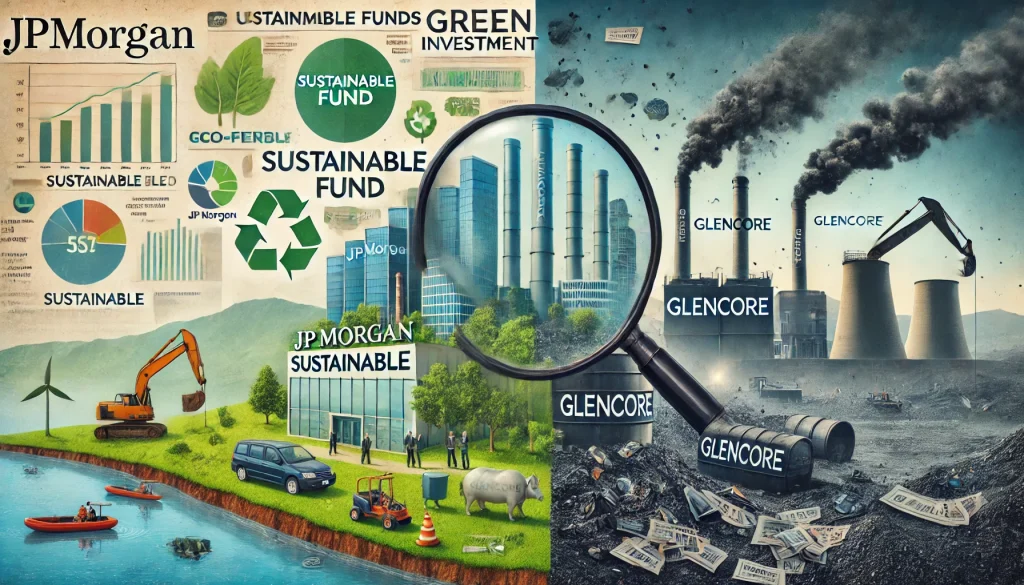
JP Morgan’s flagship sustainable fund offerings, heavily marketed to environmentally-conscious investors, are under scrutiny after revelations that more than £200 million from these funds has been invested in mining giant Glencore—a company with a troubling environmental record in South Africa.

The exposure, uncovered by the Bureau of Investigative Journalism, Voxeurop, and Daily Maverick, raises critical questions about how sustainable fund labels are defined—and whether the world’s largest banks are misleading retail investors seeking climate-friendly portfolios.
Related News
- MacLean Engineering Launches New Surface Mining Vehicle Division
- L&T Minerals & Metals Secures Major EPC Contracts in India’s Steel and Alumina Sectors
- Hydro and Rio Tinto Join Forces for Aluminium Decarbonization
- De Beers and Botswana Forge Enhanced 10-Year Diamond Sales Agreement
What Makes a Sustainable Fund?
A sustainable fund, by definition, should prioritize investments in companies that actively contribute to environmental protection, uphold ESG (Environmental, Social, and Governance) standards, and avoid businesses with poor environmental track records.
JP Morgan Asset Management manages over 500 funds marketed as sustainable, spanning sectors from clean energy to healthcare innovation. But under current guidelines, only 51% of assets in many of these funds need to meet sustainability criteria—leaving nearly half of the portfolio exposed to companies with questionable environmental practices.
“It’s clear the overwhelming majority of retail investors would feel misled if they understood this definition of a sustainable fund,” said Jakob Thomä, Chief Executive of climate think tank Theia Finance Labs.
More Read

Glencore Investment Angers Environmental Campaigners
At the center of the controversy is Glencore, a global mining powerhouse and one of the world’s largest coal producers. JP Morgan’s sustainable fund investments in Glencore appear to sidestep stricter coal exclusion policies by focusing on revenue thresholds—excluding only companies earning more than 20% of revenues from thermal coal.

While Glencore technically falls under that threshold, coal mining contributes nearly half of its profits—raising uncomfortable questions for sustainable fund investors.
“Labeling these funds as sustainable while investing in a company responsible for ongoing environmental violations feels like a bait-and-switch,” said Mariette Liefferink, Chief Executive of the Federation for a Sustainable Environment, a South African advocacy group.
More Read

Environmental Breaches in South Africa’s Coal Belt
The case against Glencore extends far beyond its balance sheet. In Mpumalanga, the heart of South Africa’s coal industry, Glencore operates three large mining complexes around the town of Phola—a community living in the shadow of industrial pollution.
Government reports obtained through freedom of information requests show that Glencore’s Tweefontein coalmine has been violating environmental laws since 2017. Breaches include:
- Contaminating local rivers with mining waste
- Improper hazardous waste storage in open containers
- Sewage facility mismanagement causing pollution risks
Local residents, like 52-year-old Daisy Tshabangu, say they no longer trust their water supply. “Most people get stomach aches from drinking the water here,” she said. “We live surrounded by mines, but we don’t benefit—we only suffer.”
Regulatory Loopholes and Greenwashing Concerns
The controversy has reignited wider debates over greenwashing—where financial institutions exaggerate or misrepresent the sustainability credentials of their products to attract eco-conscious investors.
In the EU, consumer protection laws prohibit marketing practices that could “deceive or are likely to deceive the average consumer”—a standard that could apply to misleading sustainable fund labels.
“Right now, the term sustainable fund can mean wildly different things depending on who’s using it,” said Thomä. “It’s confusing for consumers and risks undermining trust in the entire sustainable finance industry.”
Pressure Mounts on JP Morgan’s Leadership
Campaigners have directly appealed to Chuka Umunna, JP Morgan’s Head of Sustainable Solutions and a former UK Member of Parliament, urging him to review the bank’s investments in Glencore. In a November letter, Liefferink highlighted the ecological degradation, pollution, and human rights risks linked to Glencore’s operations.
While Umunna did not respond, JP Morgan has since clarified that his role covers investment banking’s green transition strategy—not the asset management arm responsible for sustainable fund investments.
The Future of Sustainable Fund Oversight
As sustainable investing surges toward a projected $40 trillion global market by 2030, regulators are scrambling to enforce consistent definitions and labelling standards for sustainable funds. The UK’s Financial Conduct Authority (FCA) and the EU’s Sustainable Finance Disclosure Regulation (SFDR) are both working to tighten controls.
In the meantime, investors are left to navigate a landscape where sustainable fund marketing can be both ambitious and ambiguous—often masking exposures to companies with troubling environmental legacies.
Glencore’s Defense
For its part, Glencore says it has worked to address environmental breaches flagged by South African regulators since 2017, and maintains that water supply issues in Phola fall under municipal responsibility. The company conducts weekly water quality tests at its treatment plants to ensure compliance, and insists it is committed to responsible engagement with local communities.
“Our industrial assets are closely linked to the communities where they operate,” Glencore said in a statement. “We aim to avoid harm to people, respect human rights, and build trust through ethical business practices.”
Sustainable Fund or Sustainable Illusion?
JP Morgan’s sustainable fund scandal highlights a systemic issue at the heart of ESG investing—how to define sustainability, ensure transparency, and uphold investor trust. As environmental and human rights breaches mount against companies like Glencore, the pressure on financial institutions to align their sustainable funds with genuine impact will only grow.
For investors, this case serves as a stark reminder: the label sustainable fund does not always guarantee that the companies inside the portfolio live up to the name.