By Salini Krishnan
The global race for resource security has entered a new phase of regionalization as of April 2026. As Western governments tighten ESG requirements and streamline domestic supply chains, the mining industry faces a dual challenge: meeting stringent environmental thresholds while unlocking the next generation of critical mineral deposits. This analysis covers five pivotal developments across the ESG, lithium, germanium, exploration tech, and copper sectors.

Market Snapshot: Wednesday, April 8, 2026
| Commodity | Spot Price (USD) | 24h Change | 2026 YTD Trend |
|---|---|---|---|
| Copper (lb) | $4.82 | +0.4% | Bullish |
| Lithium Carbonate (t) | $19,200 | -0.2% | Stabilizing |
| Gold (oz) | $4,815 | +1.1% | Record Highs |
| Germanium (kg) | $2,850 | +2.3% | Supply Constrained |
| Nickel (t) | $18,900 | +0.8% | Recovering |
1. ESG Trends: The Horne Smelter Arsenic Mandate
In Quebec, the Horne Smelter: operated by Glencore: remains at the center of Canada’s most high-profile ESG standoff. The smelter, a critical node in the North American copper and precious metals supply chain, has faced escalating pressure to reduce arsenic emissions.
As of April 2026, the Canadian government and provincial regulators have finalized a roadmap that requires the facility to reach an average arsenic emission level of 15 nanograms per cubic meter, with a long-term trajectory toward the provincial standard of 3 nanograms. This challenge highlights the friction between industrial necessity and public health expectations.
The federal response has shifted from mere oversight to active participation. Ottawa’s recent commitment to support “green smelting” technology indicates that the government views the Horne Smelter as too strategic to fail, yet too environmentally sensitive to remain in its current state. For operators, the lesson is clear: ESG compliance is no longer a peripheral cost but a prerequisite for the “social license” required to operate critical infrastructure.

More Read

2. Lithium Outlook: Cornwall and the Rise of Southern Fields
The narrative of lithium supply is shifting from South American salars to European and North American hard-rock and geothermal brine deposits. In the UK, the Cornwall region has emerged as a cornerstone of the domestic Global Battery Revolution.

By April 2026, projects in Cornwall and the Southern fields of the United States have gained strategic value due to their proximity to end-users and lower geopolitical risk profiles. These “domestic” lithium sources are becoming preferred by Tier-1 automakers seeking to qualify for regional subsidies and avoid the volatility of trans-Pacific shipping.
The strategic value of these fields lies in their ability to provide a “just-in-time” supply chain for European and American gigafactories. While the grade of these deposits may not always rival the highest-quality Australian spodumene, the reduction in carbon footprint and logistics costs provides a competitive edge in a market increasingly sensitive to Life Cycle Assessment (LCA) data.
More Read

3. Critical Minerals: Germanium’s Strategic Supply Gap
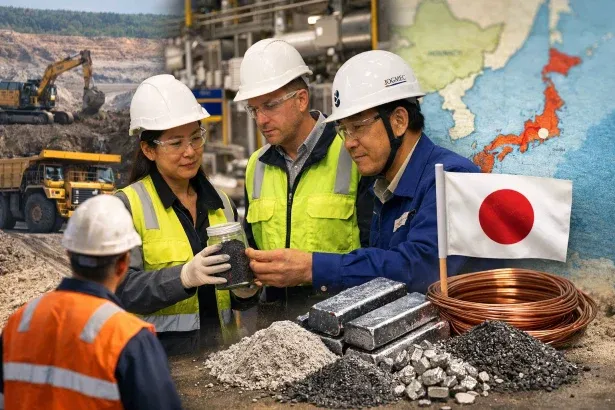
Germanium, a metal essential for fiber optics, infrared night vision, and high-efficiency solar cells, has become a focal point of North American defense policy. Following continued export restrictions from major Asian suppliers, the focus has turned to domestic projects like the Lac Du Km 35 in Quebec.
The Lac Du Km 35 project is being scrutinized by analysts as a potential answer to the copper deficit forecast 2026 which often overlooks the critical byproducts associated with base metal deposits. Germanium recovery is technically complex, but the current price environment: driven by semiconductor demand: has made these once-marginal projects economically viable. For North American supply chains, securing germanium is no longer an option but a national security priority.
4. Mining Tech: Revolutionizing Grassroots Exploration
In the exploration sector, the “low-hanging fruit” has long been harvested. This has forced juniors to look deeper and under cover. Athena Gold’s Laird Lake project serves as a prime example of how modern mining tech is altering the success rate of grassroots exploration.
The integration of airborne magnetic and electromagnetic (EM) surveys, combined with advanced remote sensing, has allowed Athena Gold to identify drill targets that were previously invisible to traditional prospecting. These technologies reduce the environmental footprint of exploration by minimizing the need for extensive ground disturbance during the early stages.
The adoption of eco-friendly mining technology at the exploration level is also attracting a new class of ESG-conscious investors who previously avoided the high-risk, high-impact nature of grassroots mining.
5. Valuation Gap: The Porphyry Opportunity
Perhaps the most significant anomaly in the 2026 market is the valuation gap between the spot price of copper and the enterprise value of major porphyry projects. Large-scale deposits like Poplar (Northwest Copper) and Copper Wolf (Arizona Metals) are currently trading at a fraction of their theoretical replacement value.
Public markets have historically discounted large porphyry projects due to their high capital intensity (Capex) and long lead times. However, with the global copper shortage projected to reach 5 million tons by 2030, these projects are the only assets capable of moving the needle for major producers like BHP or Rio Tinto.
Why the gap exists:
- Market Short-termism: Investors are prioritizing immediate cash flow over long-term resource security.
- Permitting Anxiety: High-profile delays in North America have created a “permitting premium” that weighs down the valuation of pre-production assets.
- Consolidation Lag: While M&A activity is picking up, it has not yet reached the “frenzy” stage required to re-rate the entire sector.
As major miners deplete their existing reserves, the acquisition of assets like Copper Wolf becomes an inevitability. For analysts, the current valuation of these porphyry projects represents one of the most significant “buy-low” opportunities in the critical minerals space.

Conclusion: The Strategic Realignment
The themes of early 2026: ESG accountability, domestic supply chains, and the valuation of “future-facing” commodities: are converging. Whether it is the remediation of the Horne Smelter or the tech-driven discovery at Laird Lake, the industry is moving toward a more sophisticated, transparent, and strategically aligned model.
For stakeholders, the message is clear: the minerals are in the ground, and the demand is at an all-time high. The challenge remains the bridge between the two; a bridge built on technology, policy, and realistic market valuations.
For more in-depth analysis on commodity markets and project updates, visit the Skillings Sitemap or check our latest report on Central Bank Gold Reserves.