Everyone talks about “safe” jurisdictions like Nevada or Western Australia as the only places to park capital. But those markets are crowded, the permits take a decade, and the grades are often a rounding error. If you want the high-grade meat, you have to look where the geology is still giving up its secrets.

Right now, that place is Côte d’Ivoire. Specifically, the Napié Project.
Aurum Resources is currently proving that West Africa remains the frontier for significant gold discoveries. While the majors are bickering over existing assets: much like the ongoing rift between Newmont and Barrick in Nevada: Aurum is quietly putting the drill bit to work. They aren’t just looking for smoke; they’re finding the fire.
With a 30,000-meter drilling program underway, the results coming out of the Tchaga deposit aren’t just good. They’re a loud signal that the Napié Shear is far from fully understood.
The 30,000-Meter Sledgehammer
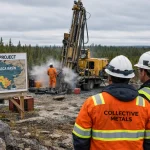
Aurum Resources isn’t playing a cautious game of “wait and see.” They’ve launched a massive 30,000-meter diamond drilling campaign at Napié. To put that in perspective, many juniors struggle to fund 5,000 meters in a calendar year. Aurum is operating two of its own diamond drill rigs.
More Read

That’s a critical distinction. Owning the rigs changes the math.

When you own the equipment, your meterage costs plummet. You aren’t at the mercy of contractor schedules or skyrocketing mobilization fees. This self-reliance allows Aurum to be aggressive. They are targeting more than 130,000 meters of total drilling across their Napié and Boundiali projects through 2025 and into 2026.
The results from the Tchaga deposit have been visceral. We’re talking about intercepts like 17 meters at 9.38 g/t gold and 19.6 meters at 4.36 g/t gold. These aren’t deep, speculative hits. They are relatively shallow and, more importantly, they confirm that the mineralization extends well beyond the boundaries of the current mineral resource estimate (MRE).
More Read


Breaking the 150-Meter Ceiling
There is a common trap in gold exploration: finding a shallow resource and assuming that’s all there is.
At Napié, 93% of the current mineral resource is shallower than 150 meters. For years, the project was treated as a near-surface play. But Aurum’s recent work has tested mineralization to over 400 meters in vertical depth. It’s still open.
This is where the upside lives. If the system holds together at depth: and the latest intercepts suggest it does: the current 868,000-ounce JORC resource is just a baseline. Aurum is now aiming for a combined 4-million-ounce resource estimate across its portfolio.
They are currently sitting on 3.28 million ounces combined between Napié and Boundiali. The bridge to that 4-million-ounce mark is being built one 19-meter intercept at a time.
A Legacy of Insight
At Skillings, we’ve seen these cycles play out for over a century. We’ve watched the “Golden Coast” of West Africa evolve from colonial-era workings to world-class mines operated by the likes of Endeavour and Perseus.
The Napié Project, covering 224 square kilometers, sits right in the middle of this prolific region. It’s located about 30 kilometers from Korhogo, meaning infrastructure isn’t the nightmare it is in more remote parts of the Sahel.
Following the takeover of Mako Gold, Aurum now controls 90% of the project. The state holds the remaining 10%. This consolidated ownership is exactly what you want to see when a project hits the “expansion” phase. It removes the friction of joint-venture disagreements that often paralyze high-potential assets.
The Math of High-Grade Pockets
Let’s look at the numbers. 19 meters at 5.16 g/t gold.
In an open-pit scenario, those are “company-maker” numbers. When you can pull those kinds of grades from shallow depths, the economics of a potential mine shift from “maybe” to “definitely.”
The Napié Shear is 30 kilometers long. To date, Aurum and its predecessors have only tested about 13% of that strike length. That leaves 87% of the primary structure largely untouched. It is a massive land package that has only been tickled by the drill bit.
As part of our “Daily 14” expansion at SMR OPS, we are tracking these mid-tier explorers more closely than ever. Why? Because the majors are running out of easy ounces. If a company like Aurum can prove up 4 million ounces in Côte d’Ivoire, they won’t be independent for long.

Navigating the West African Risk Profile
We can’t talk about West Africa without addressing the “uncomfortable” parts of the conversation. Geopolitical risk is real. However, Côte d’Ivoire has positioned itself as the stable anchor of the region.
Unlike some of its neighbors, the Ivorian government has maintained a consistent mining code and a welcoming stance toward foreign investment. The infrastructure: roads, power, and local expertise: is significantly more advanced than what you’ll find in some of the newer lithium frontiers, such as Rio Tinto’s play in Quebec.
For Aurum, the risk isn’t just political; it’s execution. Can they maintain the pace of 130,000 meters of drilling without diluting shareholders into oblivion?
The answer seems to lie in their rig ownership model. By slashing the cost per meter, they are getting more data for every dollar spent. It’s a lean, aggressive strategy that suits the 2026 gold market.
What Happens Next?
Aurum is on track to deliver an updated mineral resource estimate. This isn’t just a corporate milestone; it’s a valuation catalyst.
The market has a habit of ignoring exploration results until they are codified into a JORC or 43-101 report. Once those high-grade pockets are officially added to the ledger, the conversation changes from “exploration potential” to “development timeline.”
The goal is 4 million ounces. With 3.28 million already in the bag and 30,000 meters of fresh holes being punched into the ground, that target looks increasingly conservative.

The Skillings Perspective: The Long Game
We’ve been reporting on the mining industry long enough to know that geology doesn’t care about market sentiment. You either have the ounces, or you don’t.
Aurum Resources is proving they have the ounces.
The intercepts at Napié: specifically the broad, high-grade zones at Tchaga and Gogbala: suggest a system that is robust and continuous. While the rest of the industry is obsessed with ESG reporting compliance or the latest lithium rebound, the real money is being made by those who can find gold where no one else thought to look deeper.
Napié was thought to be a shallow, 150-meter-deep play. Aurum looked at the same maps and decided to go to 400 meters. That kind of geological conviction is what separates the winners from the also-rans in the junior space.
The “Golden Coast” isn’t just a historical nickname. For Aurum Resources, it’s a roadmap to a 4-million-ounce future.
Final Thoughts
The strategic calculus here isn’t subtle. Aurum is aggressively expanding a known resource in a top-tier jurisdiction using a cost-efficient drilling model.
As we move further into 2026, the demand for high-quality gold assets is only going to intensify. With production declining at many aging majors, projects like Napié are the lifeblood of the future supply chain.
Keep an eye on the upcoming MRE update. If those 19-meter intercepts translate into a significant resource jump, the Napié Project won’t just be an exploration story: it will be a centerpiece of the West African gold narrative for years to come.
The clock is ticking on these high-grade discoveries. Once they are found, they are usually bought. Aurum is making sure the world knows exactly what they’ve found.