By Salini Krishnan

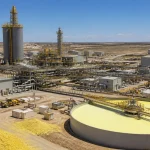
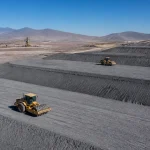
After more than a century of stalled negotiations, complex ownership shifts, and monumental engineering hurdles, the Simandou iron ore deposit in the Republic of Guinea has officially crossed its final major rail and port construction thresholds. The world's largest untapped high-grade iron ore reserve is transitioning from a generational development project into an active seaborne supplier. For global steelmakers, maritime logistics providers, and commodities analysts tracking iron ore mining news 2026, Simandou’s operationalization represents the single most disruptive supply-side event in decades.
With a design capacity scaling toward 120 million tonnes per annum (Mtpa) of premium hematite ore grading above 65% Fe, the project alters the structural dynamics of the Atlantic and Pacific basin ore trade. This deep-dive analysis examines the structural milestones achieved by the project's twin consortia, the technical realities of its multi-billion-dollar infrastructure corridor, and the broader implications for seaborne pricing benchmarks.
What is Simandou? Project Structure and Consortium Divide
Situated in the remote forested highlands of southeastern Guinea, Simandou holds an estimated 2.4 billion tonnes of high-grade iron ore. Because of its exceptionally high iron content and low impurity levels, the deposit is prized by blast-furnace operators seeking to reduce carbon emissions and slag volume compared to lower-grade ores.
The massive ore body is split into four distinct blocks, developed under two parallel operational frameworks:

- Blocks 1 & 2 (Winning Consortium Simandou – WCS): Developed by a consortium comprising Singapore-based Winning International, China Hongqiao Group, and the Guinea government. WCS constructed dedicated mining operations and integrated its logistics chain with the shared transport corridor.
- Blocks 3 & 4 (SimFer): Developed by SimFer, a joint venture between mining major Rio Tinto, the Government of Guinea, and Chalco Iron Ore Holdings (CIOH), a subsidiary of China Aluminum Corporation.
Unlocking these reserves required resolving a fundamental geographical challenge: Simandou lies more than 600 kilometers inland from Guinea’s Atlantic coastline across rugged terrain. Transporting tens of millions of tonnes annually necessitated the simultaneous construction of a trans-national heavy-haul railway and deep-water marine port facilities.


Why It Matters: The 2026 Rail and Port Milestones
The defining milestone for Simandou in 2026 is the physical completion and operational commissioning of its integrated logistics backbone. Without this infrastructure, the multi-billion-tonne resource remained stranded in the interior.

The Trans-Guinean Railway Integration
The 600+ kilometer Trans-Guinean railway (CTG): serving as the common-user heavy-haul corridor connecting the southeastern ranges to the coast: achieved critical mechanical completion and system integration milestones through the first quarter of 2026.
- SimFer Rail Spur: Rio Tinto’s SimFer joint venture completed and fully commissioned its 70-kilometer dedicated rail spur connecting Blocks 3 and 4 to the main Trans-Guinean corridor.
- Mainline Operation: Freight trials and initial ore movements proved the viability of heavy-haul locomotives operating across the challenging terrain, bridging the gap between interior extraction sites and coastal stockpiles.
Port Infrastructure and Maritime Export Realities
Coastal logistics have similarly advanced from blueprint to active maritime trade:
- WCS Morabaya Port: Winning Consortium Simandou achieved a historic milestone when its first commercial cargo of approximately 200,000 tonnes departed the Morebaya river port on the Atlantic coast, arriving at China’s Majishan port. This marked the formal commissioning of WCS's complete mine-rail-port-maritime transport chain.
- SimFer Terminal: SimFer’s dedicated deep-water export terminal at Morebaya reported major structural milestones, with shiploaders installed and wagon-dumping systems nearing final mechanical sign-off. SimFer’s port infrastructure targets full operational commissioning heading into early 2027, following construction completion scheduled for the second half of 2026.
According to operational updates tracked in our daily mining market coverage, these infrastructure achievements convert theoretical reserves into verifiable seaborne volume, injecting initial commercial cargoes into the global market.
Simandou Iron Ore: Supply Impact and Global Pricing Dynamics
The introduction of Simandou’s high-grade hematite arrives at a critical juncture for the steel industry. For years, seaborne markets relied heavily on Australian and Brazilian supply, where average ore grades have faced gradual normalization.
| Project / Entity | Simandou Blocks | Primary Stakeholders | Target Capacity | Logistics Corridor | 2026 Milestone Status |
|---|---|---|---|---|---|
| Winning Consortium Simandou (WCS) | Blocks 1 & 2 | Winning International, China Hongqiao, Guinea Govt | ~60 Mtpa | Shared Trans-Guinean Rail + Morabaya Port | First commercial shipments delivered to China; full chain active. |
| SimFer (Rio Tinto JV) | Blocks 3 & 4 | Rio Tinto, Chalco Iron Ore Holdings, Guinea Govt | ~60 Mtpa | 70km Rail Spur + Dedicated SimFer Port | Rail spur commissioned; port construction finalizing for H2 2026. |
Grade Differentiation and Decarbonization Pressures
Steelmakers across Asia and Europe face mounting regulatory pressures to lower carbon intensity. High-grade direct-shipping ore (DSO) averaging 65% Fe or higher requires less coking coal during the sintering and blast-furnace reduction phases, directly reducing carbon dioxide emissions per tonne of crude steel produced.
Simandou’s 120 Mtpa combined output: once ramped up fully toward its targeted 2028 plateau: will create a new benchmark for high-grade supply. Market analysts note several key structural effects:
- Price Spread Compression: Premium iron ore pricing spreads (such as 65% Fe vs. standard 62% Fe fines) face downward pressure as high-grade supply expands.
- Blend Optimization: Trading desks and steel mills are actively adjusting sinter plant recipes, utilizing Simandou fines to upgrade lower-grade Australian and Brazilian products.
- Seaborne Trade Routes: The Atlantic basin gains a major new African export heavyweight, rebalancing vessel charter economics and Capesize ton-mile demand between West Africa and Asian consuming hubs.

2026 Outlook: Operational Ramp-Up and Identified Risks
While the completion of the rail and port infrastructure marks a historic victory for project stakeholders, industry observers emphasize that the operational ramp-up carries distinct execution risks.
Logistics Bottlenecks and Fleet Scaling
Achieving a steady-state export volume of 120 Mtpa requires flawless coordination between underground/open-pit extraction fleets, continuous wagon-loading facilities, heavy-haul locomotive turnaround times, and marine transshipment efficiency. Railway capacity constraints, seasonal weather events in the Guinean highlands, and maintenance protocols on the 600+ km rail corridor will be closely monitored by market analysts throughout late 2026 and 2027.
Regulatory and Macroeconomic Variables
As outlined in broader mining operations news, resource nationalism and regulatory compliance remain vital focal points in West Africa. Both Rio Tinto and WCS operate under strict local content, environmental, and infrastructure-sharing agreements established with the Guinean government. Maintaining harmonious tripartite relations between state authorities and multinational mining consortia is essential to sustaining long-term export schedules.
Conclusion
The successful execution of Simandou's rail and port infrastructure in 2026 ends decades of speculation and establishes Guinea as a premier global iron ore exporter. By delivering 120 million tonnes per annum of high-grade hematite to the seaborne market, Simandou redefines feedstock economics for global steel producers navigating the energy transition. For operators, investors, and policymakers, tracking the pace of this operational ramp-up is critical to understanding the future trajectory of global commodity markets.

Social Media Snippet (LinkedIn / X)
Simandou’s rail and port milestones in 2026 mark the official transition of the world’s largest high-grade iron ore mega-project from development to export. With 120 Mtpa of premium 65% Fe hematite heading to global steelmakers, how will this reshape seaborne trade flows and grade premiums? Read our full deep-dive analysis on Skillings Mining Intelligence. #IronOre #MiningNews #Simandou #Commodities #Steelmaking